
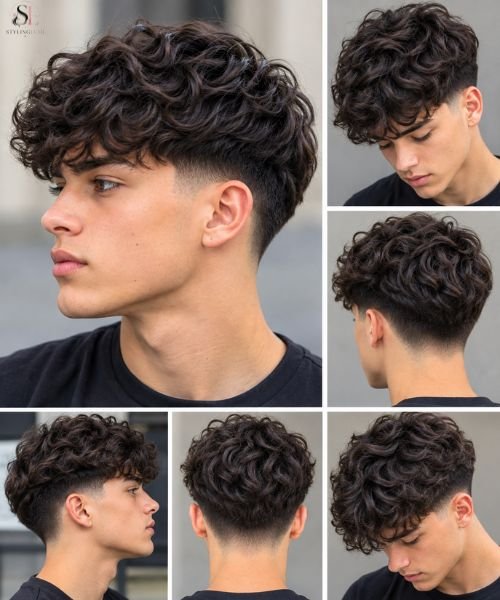
A low taper fade for wavy hair keeps your natural waves on top while gradually shortening the hair around the sideburns, temples, and neckline. The taper stays low, so you keep more weight and texture around the sides and back than you would with a mid or high fade.
This makes it especially useful for Type 2A, 2B, and 2C wavy hair. You can wear the top messy, slicked back, parted, fringed, cropped, or left completely natural. The key is choosing a taper height and top length that work with your actual wave pattern rather than fighting it.
Below, you’ll find 25 variations, plus face-shape guidance, barber instructions, a five-minute styling routine, product advice, and a maintenance plan.
What Is a Low Taper Fade for Wavy Hair, and Which Wave Type Does It Suit Best?
A low taper fade for wavy hair combines two things: a low taper around the edges and naturally wavy hair left longer on top. The taper gradually gets shorter near the ears and neckline while the top retains enough length for the waves to bend and move naturally.
The haircut is particularly versatile because the fade does not remove too much hair from the sides. That matters with wavy hair because removing too much can make the top look disproportionately large or eliminate the soft shape that makes waves attractive.
What Is a Low Taper Fade for Wavy Hair?
Think of the haircut as a controlled transition rather than a complete fade across the sides.
Your barber normally keeps the taper concentrated around:
- The sideburn area
- Just around the ears
- The lower temple area
- The neckline
- The very bottom of the back
The exact starting point depends on your hairline and head shape. There isn’t one universal measurement for every barber, so showing a reference photo is useful.
For the top, around 2–4 inches gives many wavy hairstyles enough length to show movement, although shorter crops and longer flow styles can fall outside that range.
The biggest advantage is that your natural wave pattern remains the main feature. The taper simply cleans the areas that tend to look bulky or untidy as the hair grows.
Also read: Low Taper Fade Long Hair: 35 Best Styles for Every Face Shape & Hair Type
Low Taper vs. Mid Taper vs. High Fade vs. Skin Fade: Which Is Best for Wavy Hair?
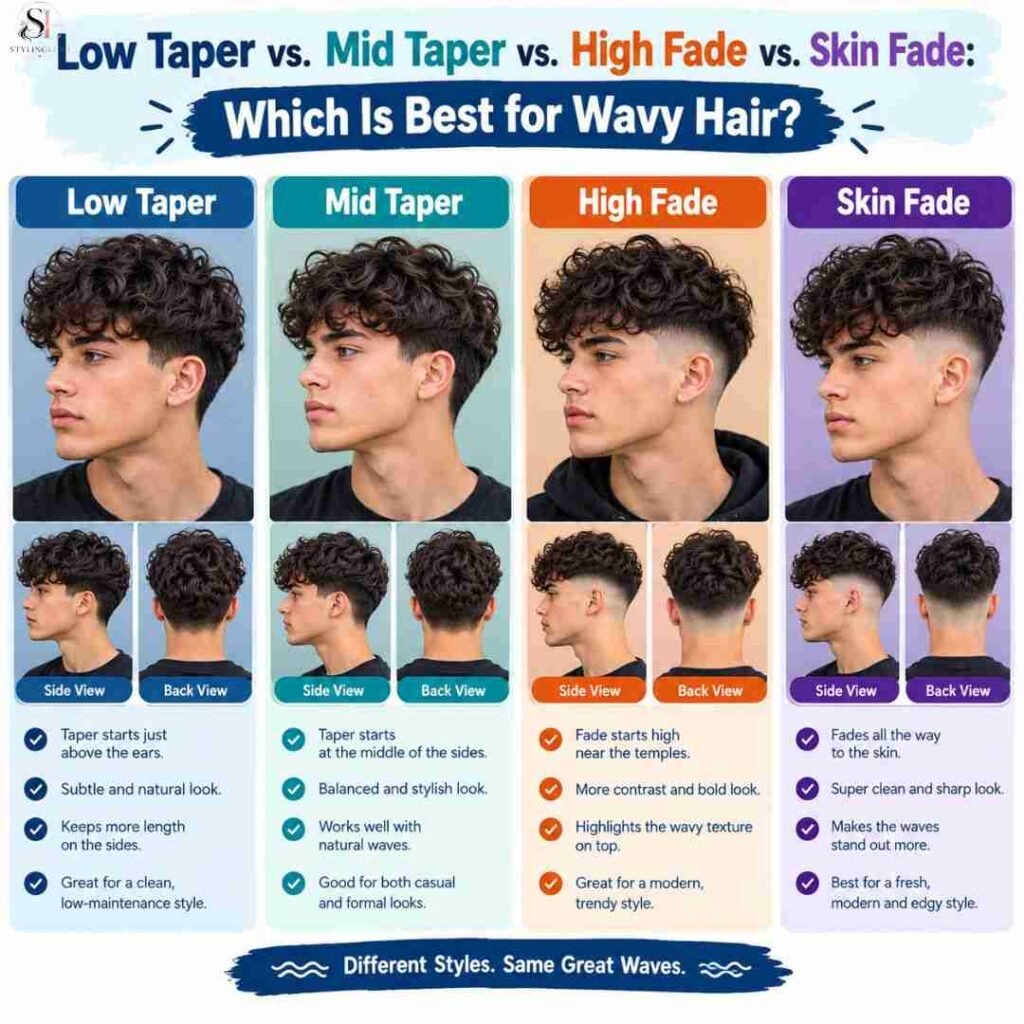
The difference is mainly how high the shortening travels and how much hair remains around the sides.
| Haircut | Where the blend focuses | Amount of side weight | Overall effect |
|---|---|---|---|
| Low taper | Sideburns, temples and neckline | High | Natural and subtle |
| Mid taper | Higher around the temples/sides | Medium | More contrast |
| High fade | Much higher on the sides | Low | Bold and sharp |
| Skin fade | Blends down to bare skin | Very low | Maximum contrast |
For most men who specifically want to show off natural waves, a low taper is a practical starting point because it preserves more of the surrounding hair.
A mid taper can work when you want more definition around the sides. A high fade creates a much stronger contrast and can make thick waves look more dramatic. A skin fade is the most aggressive option and requires more precise upkeep.
Don’t tell your barber only, “Give me a low fade.” If preserving your waves matters, say exactly where you want the taper and how much side weight you want to keep.
Why a Low Taper Fade Works So Well for Wavy Hair (Types 2A, 2B, and 2C)
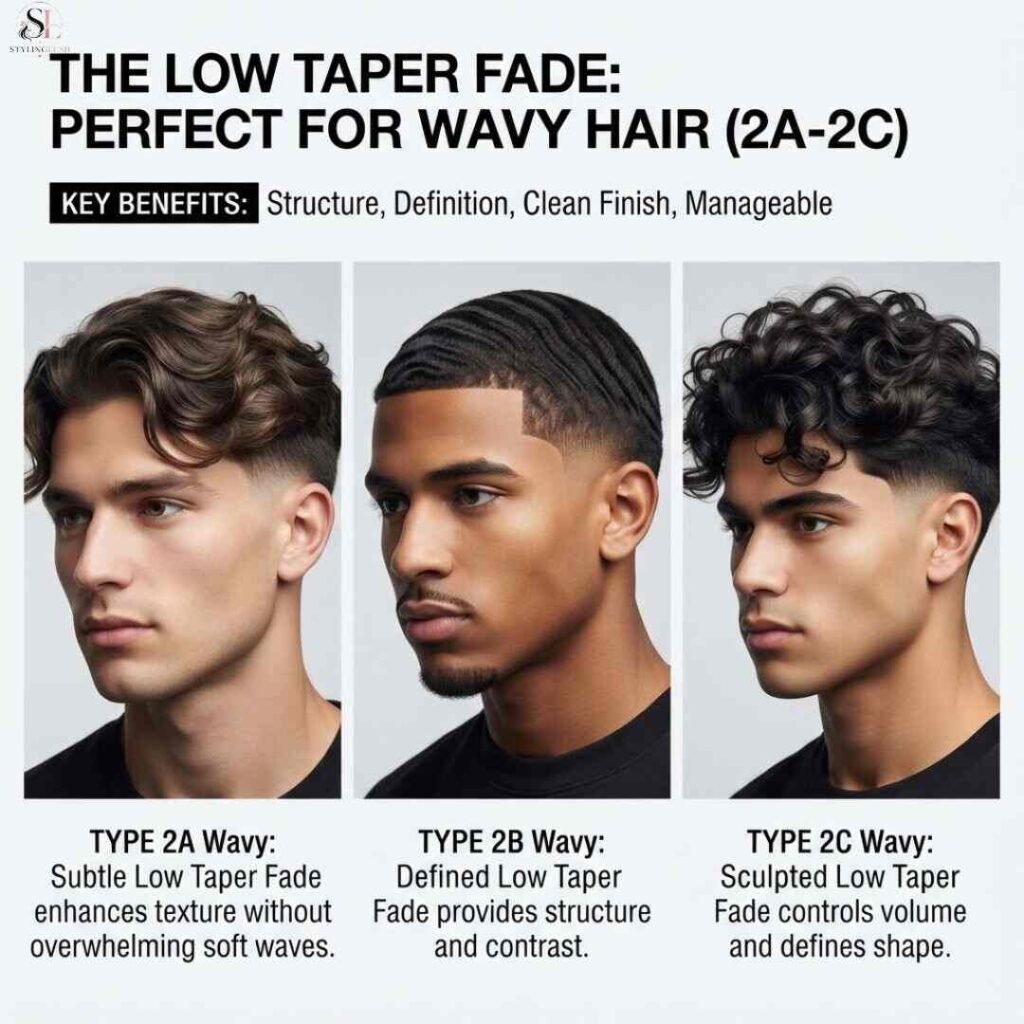
Wavy hair naturally sits between straight and curly hair. 2A waves are usually loose and subtle, 2B waves have a more obvious S-shaped pattern, and 2C waves are stronger and may begin to resemble loose curls.
A low taper works across all three because it doesn’t require the wave pattern to be extremely defined.
| Wave type | Typical appearance | Good top approach | Taper advice |
|---|---|---|---|
| 2A | Loose, soft waves | Medium length with light texture | Keep the taper very soft |
| 2B | Noticeable S-waves | 2–4 inches with layers | Low taper with moderate contrast |
| 2C | Strong waves, occasional curls | Medium/long textured top | Keep enough side weight |
For 2A hair, avoid over-thinning the top because it can make already-loose waves look flat.
For 2B hair, layering and texture can help individual waves separate. With 2C hair, your barber needs to respect shrinkage and natural volume rather than cutting the hair as though it were straight.
25 Best Low Taper Fade Styles for Wavy Hair (2026)
1. Classic Wavy Low Taper Fade
The classic wavy low taper fade keeps everything simple. The sides and back are gradually tapered close to the ears and neckline, while the top stays around medium length so the natural waves remain the main feature. It gives you a clean appearance without making the haircut look overly sharp or artificial.
This is a particularly useful choice if you want one haircut that works for school, work, casual outings, and special occasions. You can wear the waves naturally or add a little product for more definition.
Best wave type: 2A, 2B, and 2C
Best for: Oval, square, and rectangular faces
Top length: Around 2–3 inches
Styling: Light mousse or sea-salt spray
What to tell your barber:
“Keep my natural wave pattern on top and give me a low taper around the ears and neckline.”
2. Messy Tousled Wavy Low Taper
If you prefer a relaxed, effortless haircut, try the messy tousled version. The top is left longer and textured so the waves can move in different directions instead of being forced into one shape.
The low taper gives the messy top some structure. This prevents the haircut from looking simply overgrown. A small amount of matte cream can separate the waves without making them look stiff.
Best wave type: 2A and 2B
Best for: Oval and round faces
Top length: 2.5–4 inches
Styling: Sea-salt spray and light texture cream
This is especially good for people who want their hair to look styled without spending a long time in front of the mirror.
3. Short Wavy Low Taper Fade
The short wavy taper is designed for men who don’t want to deal with a lot of daily styling. The top is kept relatively short, but enough length remains for the natural wave pattern to appear.
The shorter top also makes the haircut look neat and sporty. It works particularly well when your waves are naturally strong because you don’t need much length to show texture.
Best wave type: 2B and 2C
Can also work for: 2A with naturally visible texture
Best for: Square, oval, and diamond faces
Styling: Matte clay or texture powder
Ask your barber not to cut the top completely straight across. Some texture on top helps the waves stand out.
4. Wavy Blowout Low Taper
A wavy blowout combines volume with a clean low taper. Instead of allowing the waves to fall flat, the hair is lifted upward and slightly backward during styling.
The taper keeps the sides controlled while the top creates height and movement. This can make a round face appear longer because the extra volume draws the eye upward.
Best wave type: 2B and 2C
Best for: Round, oval, and heart-shaped faces
Top length: 3–4 inches
Styling: Blow dryer with diffuser, mousse, or lightweight volume cream
Don’t overload the hair with heavy products because they can flatten the waves.
5. Wavy Slick Back Low Taper
The wavy slick back is a more polished version of the low taper. Instead of brushing the hair flat, you sweep the waves backward while allowing some natural texture to remain visible.
This style can work particularly well for professional settings because the taper gives the haircut a clean outline while the waves stop it from looking too formal.
Best wave type: 2A and 2B
Best for: Square and rectangular faces
Top length: 3–4 inches
Styling: Lightweight pomade or styling cream
For a softer appearance, use your fingers rather than a fine comb.
6. Low Taper Wavy Mullet
The wavy mullet with a low taper is a more adventurous choice. The sides remain controlled around the ears, while the back is left noticeably longer. The natural waves make the transition from the top to the back look softer. This style is particularly effective when the hair has enough density to create movement in the back.
Best wave type: 2B and 2C
Best for: Oval and heart-shaped faces
Top: Medium length
Back: Longer and layered
Styling: Sea-salt spray and light curl cream
Tell your barber that you want a low taper, not a high fade, so the sides don’t become too disconnected from the longer back.
7. Wavy Textured Crop With Low Taper
A textured crop keeps the front and top relatively short while using point-cutting or texturing to emphasize movement. The low taper creates a clean transition around the sides. It is an excellent choice if you want something modern but don’t want long hair.
Best wave type: 2A and 2B
Best for: Oval, square, and round faces
Top length: 1.5–2.5 inches
Styling: Matte paste
Keep the fringe slightly irregular rather than perfectly straight. This lets the natural wave create texture.
8. Wavy Fringe Low Taper
The wavy fringe brings the hair forward toward the forehead. Instead of creating a straight, flat fringe, the natural waves give the front a softer and more textured appearance. It is particularly useful for people who want their hairstyle to add some width around the forehead.
Best wave type: 2B and 2C
Best for: Oval, diamond, and longer faces
Top length: 2–3 inches
Styling: Light curl cream
Avoid heavy gel because it can turn a soft wavy fringe into a stiff-looking block.
9. Middle-Part Wavy Low Taper
The middle part is a natural match for wavy hair because the waves can fall to both sides of the face. The low taper keeps the sides and neckline tidy while leaving enough length on top for the center part.It has a relaxed, modern appearance and can be styled casually or more neatly.
Best wave type: 2A and 2B
Best for: Oval, heart, and rectangular faces
Top length: 3–5 inches
Styling: Lightweight styling cream
Ask your barber to preserve enough length around the front so the hair can naturally separate.
10. Side-Part Wavy Low Taper
A side part gives wavy hair a more traditional appearance. The natural waves add texture, while the part creates direction. This is a good option if you want something that can easily move between professional and casual environments.
Best wave type: 2A and 2B
Best for: Square, oval, and rectangular faces
Top length: 2.5–4 inches
Styling: Matte cream or light pomade
A natural side part generally looks less rigid than a sharply shaved part.
11. Wavy Quiff With Low Taper
The wavy quiff combines front height with natural texture. The hair at the front is lifted upward and slightly backward, while the rest of the top follows the wave pattern. The low taper prevents the sides from competing with the height on top.
Best wave type: 2B and 2C
Best for: Round and oval faces
Top length: 3–4 inches
Styling: Mousse and blow dryer
Use your fingers to shape the front instead of completely flattening the waves with a brush.
12. Low Taper With Long Wavy Top
If you don’t want to sacrifice your length, this variation keeps the top noticeably longer while cleaning up the sides and neckline. The longer waves create more movement and can be worn down, pushed back, parted, or loosely swept to one side.
Best wave type: 2A, 2B, and 2C
Best for: Oval and rectangular faces
Top length: 4+ inches
Styling: Curl cream or lightweight leave-in product
This style needs more maintenance than a short cut, but the extra length gives you many styling options.
13. Wavy Faux Hawk With Low Taper
The wavy faux hawk directs the hair toward the center of the head without creating the extreme shaved sides of a traditional mohawk. The natural waves give the center section plenty of texture and volume.
Best wave type: 2B and 2C
Best for: Round and oval faces
Top: Medium to long
Sides: Low taper
Styling: Matte paste or texture cream
Ask for the top to remain connected rather than heavily disconnected.
14. Wavy Caesar With Low Taper
A wavy Caesar combines a short forward fringe with a textured top. The low taper gives it a modern finish. Because the haircut is relatively short, it is convenient for men who don’t want a complicated styling routine.
Best wave type: 2B and 2C
Best for: Oval and square faces
Top length: Around 1.5–2 inches
Styling: Matte clay
The natural wave prevents the short top from looking completely flat.
15. Wavy Comb Over Low Taper
The wavy comb over uses a side direction rather than a strict part. The waves are swept across the top while the taper keeps the lower sides clean. It is a versatile option because you can make it neat with pomade or relaxed with your fingers.
Best wave type: 2A and 2B
Best for: Oval, square, and rectangular faces
Top length: 3 inches or more
Styling: Lightweight pomade
Don’t comb the hair completely flat if you want the wave pattern to remain visible.
16. Low Taper With Natural Wavy Flow
This style is all about letting your hair move naturally. The barber cleans up the temples and neckline but doesn’t aggressively remove the texture from the top. The result looks relaxed and natural rather than heavily styled.
Best wave type: 2A, 2B, and 2C
Best for: Almost all face shapes
Top length: 3–5 inches
Styling: Light leave-in cream
It is particularly suitable for men who dislike the feeling of heavy styling products.
17. Wavy Pompadour With Low Taper
A modern wavy pompadour gives the front significant height while allowing some wave texture to remain. Unlike a traditional slick pompadour, the modern version looks softer and more natural. The low taper keeps the sides from becoming too bulky.
Best wave type: 2B
Can work for: Strong 2A and 2C
Best for: Round and oval faces
Styling: Blow dryer, mousse, and lightweight pomade
This style requires more styling time but can create a dramatic finished look.
18. Wavy Shag With Low Taper
A wavy shag uses layers to create movement throughout the top and back. Adding a low taper around the ears gives the traditionally relaxed shag a cleaner modern edge. This style works particularly well when your hair naturally has plenty of volume.
Best wave type: 2B and 2C
Best for: Oval, heart, and diamond faces
Length: Medium to long
Styling: Sea-salt spray and curl cream
Ask for layers that follow your natural wave rather than aggressive thinning.
19. Wavy Bro Flow With Low Taper
The bro flow is longer and more relaxed. The hair flows backward from the forehead, allowing the waves to create natural movement. Adding a subtle low taper around the ears and neckline gives the style more structure without removing its laid-back character.
Best wave type: 2A and 2B
Best for: Oval and rectangular faces
Top length: 4–6+ inches
Styling: Light cream or leave-in conditioner
This is one of the better options if you want to grow your hair while still keeping a clean outline.
20. Wavy Undercut With Low Taper
This is a stronger contrast style. The top remains long and wavy while the sides are kept significantly shorter. The low taper can be incorporated around the temples and neckline to soften the transition.It creates a bold appearance without requiring the entire side to be taken extremely high.
Best wave type: 2B and 2C
Best for: Oval and square faces
Top: 3–5 inches
Styling: Matte clay or curl cream
This style works especially well with thick wavy hair.
21. Wavy Ivy League With Low Taper
The wavy Ivy League combines a relatively short, neat haircut with enough length to reveal natural waves. The top can be side-swept or lightly pushed back. It is a practical choice for anyone who wants a classic haircut with modern texture.
Best wave type: 2A and 2B
Best for: Oval and square faces
Top length: 2–3 inches
Styling: Light styling cream
Keep the taper subtle so the overall haircut remains classic.
22. Wavy Textured Mohawk With Low Taper
The textured mohawk is bolder than the faux hawk. The center section remains longer and more prominent, while the sides are kept tight.
Using a low taper rather than taking the sides extremely high gives the style a slightly more wearable appearance.
Best wave type: 2B and 2C
Best for: Oval and round faces
Top: Medium length
Styling: Texture paste or curl cream
Strong waves make the center section look fuller without requiring excessive product.
23. Low Taper With Wavy Curtains
Wavy curtains bring the front down toward both sides of the face. The low taper keeps the area around the ears clean while the longer top creates a soft frame. This style is especially attractive when the waves naturally separate in the center.
Best wave type: 2A and 2B
Best for: Oval, heart, and rectangular faces
Top length: 3–5 inches
Styling: Lightweight cream
Don’t force a perfectly symmetrical part. Your natural hair movement can make the curtains look more effortless.
24. Low Taper With Defined 2C Waves
This version is designed specifically for deeper waves. Instead of cutting the top short, keep enough length for the 2C pattern to form properly.
The taper cleans the perimeter while the top remains full and textured. Moisture and definition are particularly important because deeper waves can become frizzy when they are dry.
Best wave type: 2C
Can work for: Strong 2B
Best for: Oval, square, and heart faces
Top length: Around 3–4 inches
Styling: Curl cream, mousse, or lightweight gel
Avoid excessive brushing after the waves have formed because it can disrupt the pattern.
25. Low Taper With Fluffy Wavy Top
The fluffy wavy top is one of the most youthful and casual options. The top is left full, soft, and slightly messy, while the low taper provides a clean contrast around the ears and neck. It works particularly well when your hair naturally has good density and volume.
Best wave type: 2A and 2B
Can work for: Softer 2C hair
Best for: Round, oval, and heart faces
Top length: 3–4 inches
Styling: Mousse or lightweight texture cream
The goal is volume without stiffness. Avoid heavy waxes that make fluffy waves collapse.
Quick Guide: Which Wave Type Should You Choose?
| Wave Type | Best Low Taper Styles |
|---|---|
| 2A – Loose waves | Classic, slick back, middle part, side part, curtains, bro flow |
| 2B – Defined waves | Tousled, blowout, quiff, textured crop, mullet, shag |
| 2C – Deep waves | Short taper, blowout, mullet, textured crop, faux hawk, defined waves |
Which Low Taper Fade Style Suits Your Face Shape?
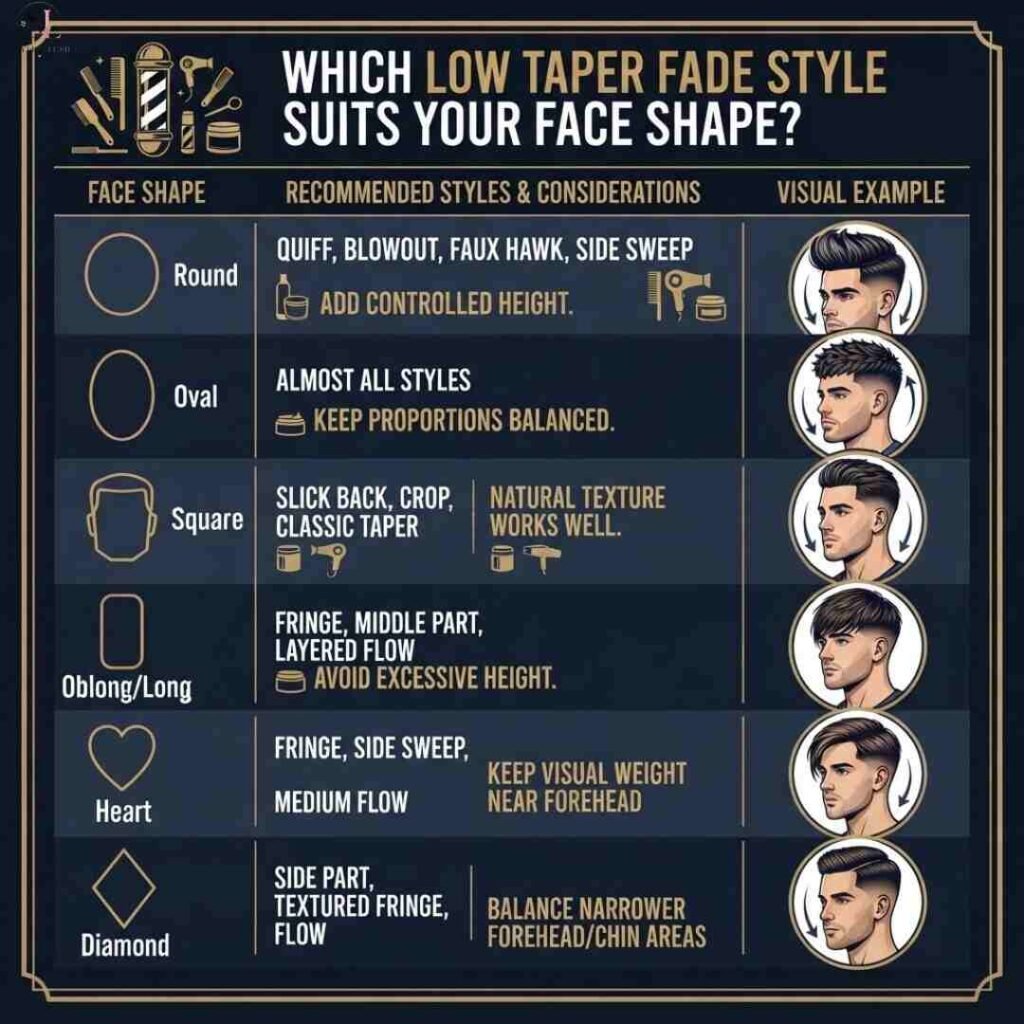
Face shape should guide the top’s volume, direction, and length, rather than determining a haircut by itself.
| Face shape | Useful wavy styles | What to consider |
|---|---|---|
| Round | Quiff, blowout, faux hawk, side sweep | Add controlled height |
| Oval | Almost all 25 styles | Keep proportions balanced |
| Square | Slick back, crop, classic taper | Natural texture works well |
| Oblong/long | Fringe, middle part, layered flow | Avoid excessive height |
| Heart | Fringe, side sweep, medium flow | Keep some visual weight near the forehead |
| Diamond | Side part, textured fringe, flow | Balance narrower forehead/chin areas |
For a round face, don’t automatically choose a high fade. You can create height with a wavy quiff while keeping the taper low.
For a longer face, a textured fringe can visually reduce the amount of exposed forehead. The haircut should be adjusted to your actual proportions rather than following a rigid face-shape rule.
How to Ask Your Barber for a Low Taper Fade on Wavy Hair
The easiest way to get the haircut you want is to describe four things: taper height, shortest area, top length, and texture.
Try this barber script:
“I want a low taper around the sideburns and neckline. Keep the taper low and don’t take it high into the sides. I want to keep the natural weight and waves on top. Leave about [your preferred length] on top and use scissors or light point-cutting to remove bulk without destroying the wave pattern. Keep my natural hairline unless I ask for a line-up.”
Then show your barber a front, side, and back reference photo if possible.
If you have strong 2C waves, mention how much your hair shrinks when dry. Wet hair can appear significantly longer and straighter than it does after drying.
If you’re unsure about the length, ask your barber to start longer. Removing another half-inch is easier than waiting weeks for hair to grow back.
How to Style a Low Taper Fade on Wavy Hair (5-Minute Morning Routine)
You don’t need a complicated routine.
Minute 1: Re-wet.
Mist your hair with water or dampen it lightly. You don’t need to soak it.
Minute 2: Apply product.
Use a small amount of lightweight mousse, curl cream, or styling cream. Spread it through the top rather than loading the roots with product.
Minute 3: Shape the waves.
Scrunch the hair upward with your hands. For a side part or slick-back variation, direct the hair where you want it while keeping the natural wave.
Minute 4: Dry.
Air-dry if you want a softer finish. Use a diffuser on low or medium airflow if you need more volume or faster drying.
Minute 5: Finish.
Once dry, separate a few sections with your fingers. Add a tiny amount of matte cream if you need control. Avoid repeatedly touching your hair while it dries. Excessive handling is one of the easiest ways to turn defined waves into frizz.
Best Products for a Low Taper Fade on Wavy Hair
Choose your product based on the result you want rather than the haircut name.
| Product | Best for | Finish |
|---|---|---|
| Lightweight mousse | Volume and definition | Light |
| Curl cream | Soft wave definition | Natural |
| Sea salt spray | Texture and volume | Matte/textured |
| Styling cream | Everyday control | Natural |
| Matte clay | Stronger separation | Matte |
| Pomade | Slick styles | Medium/high shine |
| Leave-in conditioner | Dry or coarse waves | Soft |
For loose 2A waves, start with mousse or a lightweight texture spray.
For 2B hair, curl cream or styling cream can define the S-pattern without making it stiff.
For 2C hair, a leave-in conditioner followed by curl cream may provide better control, especially if your hair tends to become dry.
Use less product than you think you need. You can always add another small amount.
Low Taper Fade Wavy Hair Maintenance Guide
A low taper is relatively forgiving as it grows, but your waves and your edges need different types of maintenance.
How Often Should You Get a Low Taper Fade Trimmed?
For a crisp appearance, many people can schedule a taper cleanup about every 2–4 weeks, depending on how quickly their hair grows and how sharp they want the edges. You don’t necessarily need a complete haircut every time.
Between full cuts, you can ask for a taper cleanup around the sideburns and neckline while leaving the top untouched. If you prefer a softer grown-out look, you can extend the time between appointments.
Weekly Wavy Hair Care Routine
A simple weekly routine is enough for many people:
- Wash according to your scalp and hair needs rather than a rigid schedule.
- Condition regularly to keep waves flexible.
- Use a leave-in conditioner if your hair feels dry.
- Avoid aggressive towel rubbing.
- Detangle gently with fingers or a wide-tooth comb.
- Use a diffuser when you need controlled drying.
- Avoid excessive heat without protection.
- Refresh waves with water instead of repeatedly adding product.
Your haircut can be perfect and still look poor if the hair itself is extremely dry or overloaded with product.
How to Adapt Your Wavy Low Taper Fade for Different Climates
Humid weather:
Humidity can make wavy hair expand and frizz. Use a lightweight anti-frizz cream and avoid excessive brushing once the hair is dry.
Dry weather:
Your waves may lose softness. A moisturizing conditioner and leave-in product can help maintain flexibility.
Hot weather:
Keep the top slightly shorter if you don’t enjoy managing volume. The low taper can remain the same.
Cold or dry indoor air:
Reduce excessive washing and pay attention to moisture if your hair becomes brittle or rough.
Common Mistakes to Avoid with a Low Taper Fade on Wavy Hair
Taking the taper too high
If you specifically want a low taper, a blend that travels far into the sides defeats the purpose. Tell your barber to keep the taper concentrated low.
Cutting the wavy top too short
Waves need enough length to form their pattern. Cutting too aggressively can leave your hair looking almost straight and uneven.
Over-thinning the top
Thinning shears are not automatically bad, but excessive thinning can disrupt a wave pattern and create unwanted frizz.
Styling wavy hair when it is completely dry
Dry brushing can break apart wave clumps and make the hair look fluffy. Shape the hair while damp whenever possible.
Using too much heavy product
A thick layer of wax or pomade can flatten natural waves. Start with a small amount and add more only if necessary.
Ignoring shrinkage
A barber should understand how your hair looks when dry. If your waves shrink significantly, don’t choose the final length based only on wet hair.
Copying someone else’s haircut exactly
The same style can look different because of hair density, growth direction, hairline, head shape, and wave strength. Use photos as references, not as an exact blueprint.
Forgetting the neckline
A good low taper depends heavily on a clean lower perimeter. An untidy neckline can make an otherwise excellent haircut look overgrown.
Frequently Asked Questions
Is a low taper fade good for wavy hair?
Yes. A low taper can work particularly well with wavy hair because it cleans the sideburns and neckline while preserving natural texture and weight on top and around the sides.
What wave type is best for a low taper fade?
Types 2A, 2B, and 2C can all work. The styling approach changes with the strength of the wave: 2A usually needs more help with volume, while 2C may need more moisture and weight control.
How long should wavy hair be for a low taper?
There is no single required length. Around 2–4 inches on top is a useful range for many medium wavy styles, while crops can be shorter and flow or mullet styles can be considerably longer.
Should I get a low taper or mid taper for wavy hair?
Choose a low taper when you want to preserve more side weight and keep the appearance subtle. A mid taper removes more hair higher on the sides and creates stronger contrast.
Does a low taper fade work with thick wavy hair?
Yes. Thick wavy hair can work very well with a low taper. The important part is controlling excess bulk without removing so much weight that the natural wave shape disappears.
How often should I maintain a low taper fade?
A cleanup every 2–4 weeks is a reasonable starting point for keeping the edges sharp. Your actual schedule depends on growth speed and how polished you want the taper to look.
What should I tell my barber for a low taper with waves?
Say that you want a low taper around the sideburns and neckline, with the taper kept low and the natural wave pattern preserved on top. Then specify your preferred top length and whether you want a natural edge, line-up, part, fringe, or another finish.
Can I get a low taper fade with long wavy hair?
Absolutely. A low taper can be paired with long waves, a bro flow, a wavy mullet, a middle part, or a longer slick-back style. The taper simply cleans the lower edges while leaving most of the length intact.
Is a low taper fade low maintenance?
The haircut itself is relatively easy to maintain compared with a very high or skin fade, but your waves still need regular care. Keeping the top moisturized and using the right styling technique usually matters more than applying lots of product.
Final Takeaway
A low taper fade for wavy hair works because it doesn’t try to remove the feature that makes wavy hair interesting. The taper cleans the edges while the natural waves provide movement, volume, and character.
If you’re choosing your first version, start with the classic wavy low taper, textured fringe, side sweep, or natural wavy flow. Once you know how your hair behaves, you can move toward more specific options such as a blowout, pompadour, mullet, hard part, or faux hawk.
Most importantly, tell your barber exactly how low you want the taper, how much length you want to keep, and that you want your natural wave pattern preserved. A clear request and a good reference photo can make a bigger difference than simply saying, “low taper fade.”
2 thoughts on “Low Taper Fade for Wavy Hair: 25 Best Styles (2026 Guide)”