

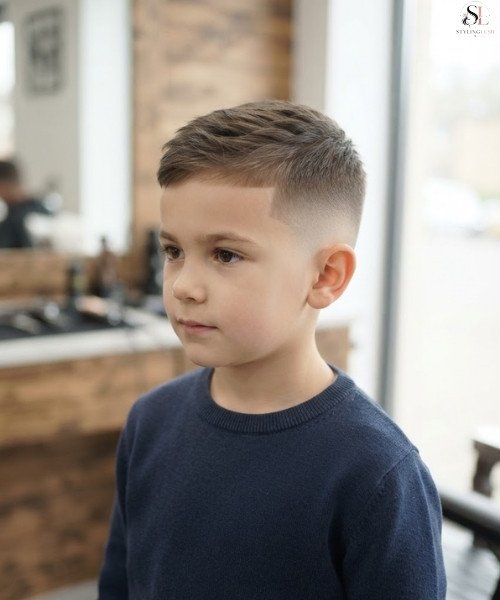
A low taper fade for kids and boys is a clean haircut that gradually shortens the hair around the sideburns, temples, and neckline while keeping most of the sides and top longer. Unlike a high fade, the taper stays low, so it doesn’t dramatically change the overall shape of a child’s head. This makes it a popular choice for parents who want something modern but still neat enough for school.
The great thing about a low taper is how easily it can be customized. A boy can wear it with a textured crop, curly top, side part, crew cut, Afro, waves, broccoli cut, faux hawk, or even a modern mullet. The right choice depends on his age, hair texture, face shape, school dress code, and how much styling he is willing to do every morning.
For younger children, comfort should come before fashion. A toddler doesn’t need a complicated fade or shaved design that takes a long time in the barber chair. Older boys and teenagers can handle more detailed styles, but parents should still check school rules before choosing an extreme variation.
What is a low taper fade for kids, and at what age can boys get one?
There is no universal minimum age for a boy to get a low taper fade. A child can have a subtle taper when he is very young, but the more important question is whether he can sit safely and comfortably while the barber works around his ears, temples, and neckline. For babies and toddlers, a basic trim or very soft taper is usually more practical than a detailed fade.
By around school age, many boys can comfortably get a complete low taper and choose a specific hairstyle for the top. Teenagers have even more options because they can usually communicate their preferences and handle daily styling themselves. Parents should also consider the school’s grooming policy because a haircut that is acceptable at one school may not be permitted at another.
What Is a Low Taper Fade for Kids & Boys?
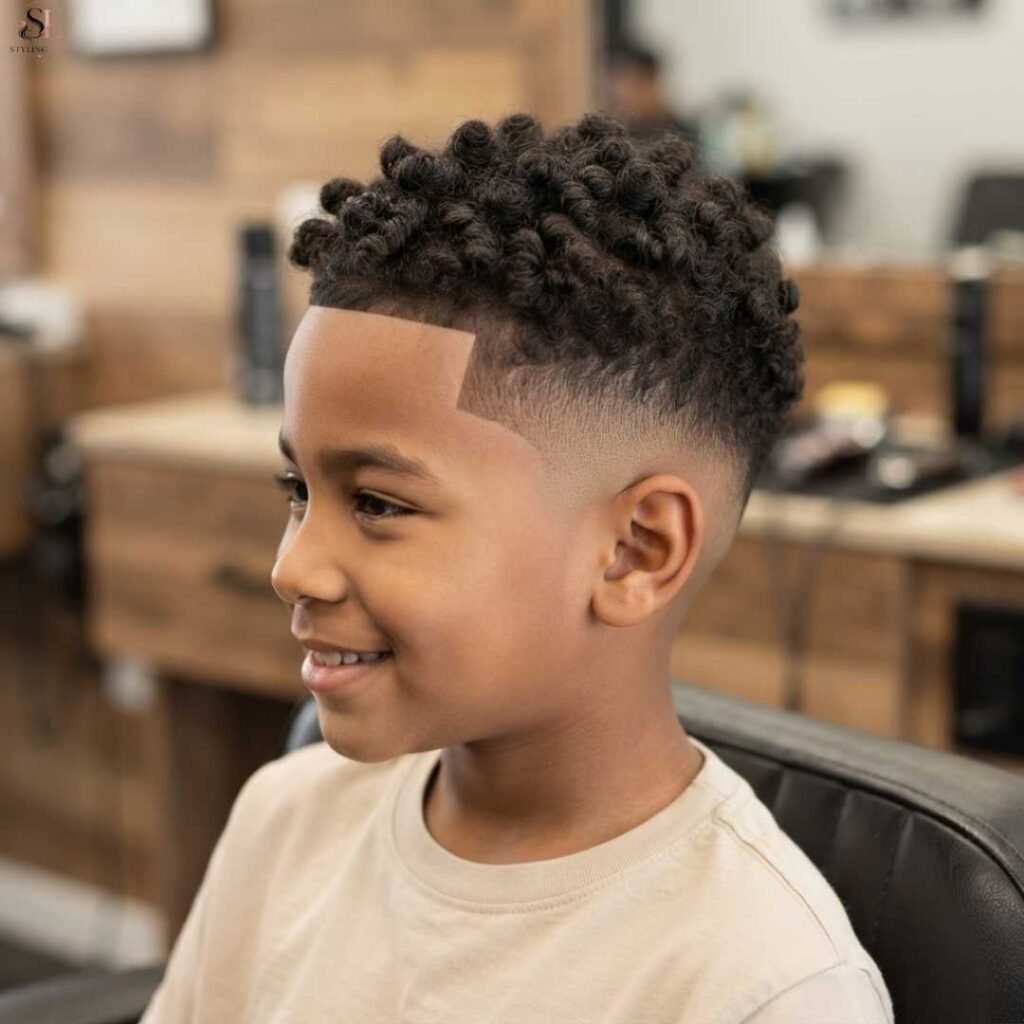
A low taper fade gradually reduces hair length around the lowest parts of the haircut while leaving more length higher up. The transition normally focuses on the sideburns, temples, and neckline rather than taking the short section high onto the sides. This gives the haircut a clean outline without removing a large amount of hair.
For boys, this makes the low taper extremely flexible. The top can remain short and practical or longer and textured, depending on what the child likes. A barber can also adjust the taper based on the child’s hair density and growth pattern. For example, thick hair may need some weight removed, while fine hair usually benefits from keeping as much density as possible.
How Does a Low Taper Fade Actually Work?
A barber creates a low taper by gradually moving from longer hair into shorter lengths near the edges. Different clipper guards are normally used to create a smooth transition rather than leaving a sudden line between long and short hair. The final edge around the sideburns and neckline can then be cleaned with a trimmer for a sharper finish.
The exact clipper numbers aren’t identical for every child because hair texture and desired finish matter. A skin-close taper is also not necessary for every boy. If you want a softer school haircut, ask the barber to leave a little hair at the shortest point instead of taking the area completely down to skin.
The most important instruction is to tell the barber where you want the taper to stop. You can say, “Keep the taper low around the sideburns and neckline, blend it softly, and don’t let the fade climb high onto the sides.” That gives the barber a much clearer starting point.
Also read: Low Taper Fade Long Hair: 35 Best Styles for Every Face Shape & Hair Type
What Is the Difference Between a Taper and a Fade?
Although people often use “taper” and “fade” as interchangeable terms, there is a useful difference. A traditional fade usually changes the hair length across a larger section of the sides, creating a stronger contrast between the short lower area and longer upper hair. A taper normally concentrates the gradual shortening around the edges.
This distinction is especially useful when choosing a child’s haircut. If you say “low taper” rather than simply “fade,” you’re communicating that you want the short transition to remain close to the natural edges. This can preserve more of the child’s original haircut shape and create a more conservative appearance.
| Feature | Low Taper | Mid Fade | High Fade |
|---|---|---|---|
| Transition position | Very low | Middle of sides | High on sides |
| Amount of hair removed | Less | Moderate | More |
| Overall appearance | Subtle | Noticeable | Dramatic |
| School suitability | Often easier | Depends on rules | More likely to need checking |
| Maintenance | Moderate | Moderate | Often more frequent |
What Makes the Low Taper Fade Different from Mid and High Fades?
The biggest difference is the height of the transition. A low taper keeps the shorter section close to the sideburns and neckline, while a mid fade moves higher around the middle of the head. A high fade can start near the upper sides or temples, leaving a much larger area of very short hair.
For children, this difference changes the entire appearance of the haircut. A low taper keeps more visual weight around the sides, which can make it look softer and more natural. It is therefore a useful choice when parents want a modern haircut without the dramatic appearance of a high fade.
Why Is the Low Taper Fade So Popular for Boys Right Now?
The low taper has become one of the most recognizable modern boys’ haircuts because it works with so many different top styles. A boy doesn’t have to completely change his hairstyle to get the taper. He can keep his curls, waves, fringe, side part, Afro, or textured top and simply clean up the edges.
Social media has also played a major role in making the haircut familiar to younger audiences. Boys see versions of the style on TikTok, YouTube, Instagram, sports content, gaming videos, and among their classmates. Because the taper is easy to combine with other hairstyles, it has remained popular beyond the original trend.
The TikTok Effect: How a Viral Meme Made Every Kid Want This Haircut
The phrase “low taper fade” became widely recognizable through viral short-form videos and memes. The haircut was repeatedly referenced online, which helped turn an ordinary barbering term into a hairstyle that many children specifically ask for by name. Some boys may even show a meme or video instead of a traditional haircut reference.
However, parents should remember that a viral haircut isn’t automatically the right haircut for every child. The hair texture, density, head shape, and school requirements still matter. A good barber should adapt the trend rather than copying it blindly.
If your child shows you a social-media picture, point out the exact part he likes. Maybe he wants the low taper, the textured fringe, the curls, or the amount of length on top. This gives the barber useful information without forcing an unrealistic copy.
Why Parents Love This Haircut Too
Parents tend to appreciate hairstyles that look neat without demanding too much work every morning. A low taper can provide that balance because the edges are cleaned up while the top can remain relatively easy to manage. It also works with both short and medium-length hairstyles.
Another advantage is that the taper doesn’t necessarily dominate the entire haircut. If your child changes his mind about the top later, the same basic taper can remain. This means you can move from a crew cut to a textured crop or from a short top to curls without completely changing the haircut structure.
What Are the Best Low Taper Fade Styles for Kids & Boys in 2026?
There isn’t one universal best style. The ideal haircut should match the child’s natural hair rather than forcing his hair to behave like a reference photo. Straight hair can support crops and side parts, while curls and Afro-textured hair often look better when the natural pattern is preserved.
The 15 options below cover simple school cuts as well as trendier styles for older boys. If your child is young or has a strict school dress code, start with one of the conservative options. Teenagers can usually experiment more with texture, length, and shape.
1. Low Taper Fade with Textured Crop
A textured crop is a strong option for boys who want a modern hairstyle without spending much time styling it. The barber keeps the top relatively short and creates small variations in length so the hair has movement rather than lying completely flat. The low taper then cleans up the sideburns and neckline without taking the sides too high.
This style works particularly well with straight and wavy hair, although the top length should be adjusted for curls. For a school-friendly finish, ask the barber to keep the texture controlled instead of making the top extremely choppy. A small amount of lightweight styling cream can enhance the texture when needed.
2. Low Taper Fade with Curly Top
A curly top with a low taper allows the child’s natural curls to remain the focus. Instead of cutting the curls away, the barber cleans around the temples and neckline and leaves enough length on top for the curl pattern to form. This creates a sharp edge while preserving the softness and volume of curly hair.
Parents should be careful when choosing the top length because curls shrink as they dry. A length that looks reasonable when wet may appear much shorter once the hair returns to its natural shape. Tell the barber whether your child wears his curls naturally, brushed out, or defined with a curl product.
3. Low Taper Fade with Comb Over
A comb-over creates a neat, classic appearance and is particularly useful for school-age boys. The hair is left long enough on top to move naturally toward one side, while the low taper keeps the lower edges clean. The style doesn’t need to be extremely slick or shiny to look polished.
If your child’s hair naturally grows toward one side, ask the barber to work with that direction. For younger boys, a natural comb-over is usually easier than a sharply defined part that requires daily styling. A lightweight cream can provide control without making the hair stiff.
4. Low Taper Fade with Pompadour
A pompadour adds noticeable volume toward the front and top, making it a more styling-focused choice. The barber needs to leave enough length at the front for the hair to lift, while the low taper provides a clean transition around the edges. This version usually suits older boys better because it requires more time in the morning.
For a child, avoid making the pompadour excessively tall or rigid. A softer shape looks more natural and is easier to manage. Use a lightweight styling product and blow-dry the front upward if the child is old enough to safely use a dryer with supervision.
5. Low Taper Fade with Buzz Cut
A buzz cut with a low taper is one of the easiest hairstyles for busy families. The top is kept short, so there is little or no need for styling, while the taper gives the sideburns and neckline a more finished appearance. It is especially practical for boys who play sports or dislike spending time fixing their hair.
The barber can choose a uniform buzz length on top and create a softer transition toward the edges. If your child’s school has strict grooming rules, this is one of the safest options to discuss. It is also relatively easy to maintain because there is little length to become unruly.
6. Low Taper Fade with French Crop
The French crop keeps the top short and textured with a forward fringe. When combined with a low taper, it creates a clean but youthful hairstyle that doesn’t require much styling. Straight and slightly wavy hair often makes the texture particularly easy to manage.
Tell the barber how you want the fringe to sit because it can be short, medium, straight, or textured. For school, a controlled fringe that sits naturally on the forehead is usually easier than an exaggerated version. The taper should remain low so the haircut retains a balanced shape.
7. Low Taper Fade with Mohawk / Faux Hawk
A faux hawk creates more personality while remaining less extreme than a traditional mohawk. The hair through the center is kept longer, while the sides become shorter and gradually transition into the low taper. Styling the middle section upward creates the characteristic shape.
For younger boys, keep the height moderate so the hairstyle remains playful rather than dramatic. Older boys can use a stronger styling product if their school permits it. If the child attends a strict school, avoid shaved patterns or an exaggerated central strip because those details can make the haircut less conservative.
8. Low Taper Fade with Side Part
The side part is one of the best choices when parents want a haircut that looks modern but still traditional. The low taper cleans the edges while the longer top is arranged toward one side. Depending on the child’s hair, the part can be natural or more clearly defined.
For younger boys, I recommend starting with a natural part. It requires less daily work and grows out more smoothly. If your child is older and enjoys styling his hair, a more defined part can add structure, but always check school rules before requesting a shaved part line.
9. Low Taper Fade with Afro Top (for Black Kids)
A low taper with an Afro top keeps the natural volume and texture while making the edges look cleaner. The barber can shape the Afro according to its density and curl pattern and taper the sideburns and neckline without dramatically reducing the top.
This style requires a barber who understands Afro-textured hair because the cutting process can differ from straight or loosely wavy hair. Parents should explain whether the child wears his hair naturally rounded, shaped, or stretched. Moisture is also important, so the home routine should focus on maintaining healthy, manageable texture rather than simply adding styling products.
10. Low Taper Fade with Broccoli Cut
The broccoli cut usually features a fuller, rounded top with visible curls or waves and relatively short sides. The low taper is a natural match because it cleans the lower edges while leaving the volume that gives the hairstyle its identity.
This style is especially popular with younger boys and teenagers who want something playful and trend-driven. However, the top should still be shaped according to the child’s actual hair texture. If the hair is straight, the barber may need to create texture through cutting and styling rather than expecting natural curls.
11. Low Taper Fade with Crew Cut
A crew cut is one of the most practical low taper combinations for boys. The top is kept short enough to require very little styling, while the taper gives the edges a neat and finished appearance. This makes it particularly suitable for active children.
Ask the barber to keep the top gradually shorter toward the back if you want a traditional crew-cut shape. For strict schools, avoid unnecessary designs or extremely sharp contrasts. The result should be clean, simple, and easy for your child to maintain without help every morning.
12. Low Taper Fade with Slicked-Back Top
A slicked-back top needs enough length for the hair to move backward, so it is generally better for older boys and teenagers. The low taper keeps the sides and neckline clean while the longer top creates a more mature appearance.
The key is not to overload the hair with gel. A lightweight cream or suitable pomade can provide control while keeping some natural movement. If the hair is very fine, slicking everything backward may make the scalp more visible, so a textured or side-swept alternative may be better.
13. Low Taper Fade with Spiky Top
Spiky hair can be a fun choice for boys with straight or thick hair. The barber leaves enough length for small sections to be lifted, then the low taper creates a clean frame around the hairstyle.
You don’t need large amounts of strong gel to create the effect. Start with a small amount of lightweight product and shape the hair with the fingers. For school, keep the spikes relatively short and natural instead of creating a dramatic, stiff hairstyle.
14. Low Taper Fade with Modern Mullet
A modern mullet keeps additional length toward the back while shortening the sides. Combining it with a low taper creates a softer transition and can make the style easier to wear than a highly disconnected mullet.
This option is usually more appropriate for teenagers because younger children’s schools may have stricter grooming expectations. Before choosing it, check the school handbook. If the rules are conservative, ask the barber for a shorter, more controlled back rather than an exaggerated mullet.
15. Low Taper Fade with 360 Waves (for Black Boys)
A low taper can frame 360 waves by cleaning the edges while the wave pattern remains across the top and sides. However, the haircut is only one part of achieving this style. Waves require regular brushing, moisture, and consistent hair care.
This makes the style more suitable for older boys who can participate in their own routine. The barber should understand how the child’s hair grows and avoid cutting away the progress of the wave pattern. Parents should also focus on scalp and hair health rather than trying to force waves quickly.
Which Low Taper Fade Works Best for Your Child’s Hair Type?
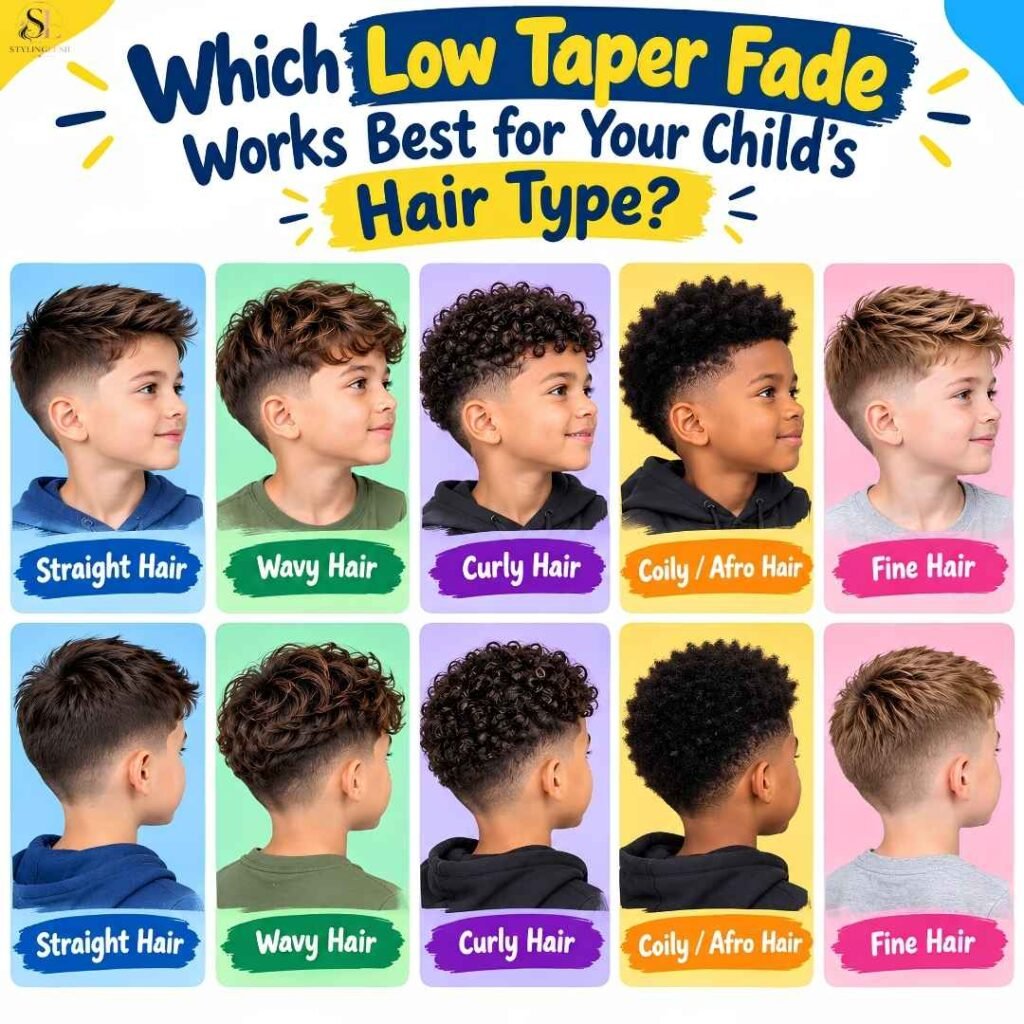
Hair type should be one of the first things you consider before choosing a haircut. The same top length can behave completely differently on straight, wavy, curly, fine, thick, or tightly coiled hair.
A good barber should examine the child’s natural density and growth direction before deciding how much to remove. Don’t choose a haircut only because it looks good in a photograph. Choose a shape that your child’s hair can naturally support.
Low Taper Fade for Curly Hair Boys
Curly hair usually needs enough length to show its natural pattern. If the barber cuts the top too short, the curls may disappear and the hair can appear uneven as it grows. A low taper is useful because the edges can be cleaned without disturbing the curls on top.
Ask the barber to preserve the child’s natural curl shape and avoid unnecessary thinning. After the haircut, a small amount of curl-friendly product can help define the curls. The goal should be soft, healthy-looking curls rather than a stiff layer of product.
Low Taper Fade for Straight Hair Boys
Straight hair gives boys a large number of options because it can easily be directed forward, sideways, upward, or backward. Textured crops, side parts, comb-overs, crew cuts, and spiky tops can all work with a low taper.
The main issue is hair density. Thick straight hair may need some weight removed, while fine straight hair usually needs the barber to preserve fullness. If your child has fine hair, avoid excessive thinning because it can make the top look even flatter.
Low Taper Fade for Wavy Hair Boys
Wavy hair already has natural movement, so the haircut should work with that movement rather than trying to eliminate it. A medium-length textured top paired with a low taper can create a relaxed appearance without requiring much styling.
Ask the barber to leave enough length for the waves to show after drying. If the top is cut too short, the natural wave may disappear. A lightweight styling cream can enhance the texture without making the hair greasy or stiff.
Low Taper Fade for Thick Hair Boys
Thick hair can look excellent with a low taper because there is plenty of volume to work with. However, too much density can make the top and sides look bulky if the haircut isn’t shaped correctly.
A barber may remove some internal weight or create controlled texture. The important thing is to avoid over-thinning. Removing too much can produce unwanted frizz or make the hair difficult to control as it grows.
Low Taper Fade for Fine Hair Boys
Fine hair benefits from keeping useful density. If the barber removes too much hair through aggressive thinning, the top can look sparse or flat.
Short textured styles are often helpful because they give fine hair a little more visual movement. A side part or short crop can also work well. Avoid extremely heavy products because they can weigh fine hair down and make it appear thinner.
Low Taper Fade for Black Kids (Afro / 4C Hair)
Afro-textured and 4C hair can look excellent with a low taper when the natural texture is respected. The barber can clean the temples, sideburns, and neckline while leaving the top full and naturally shaped.
Because tightly coiled hair can shrink considerably, parents should discuss the desired finished appearance rather than focusing only on a measurement while the hair is stretched or wet. Moisture, gentle detangling, and suitable products are important parts of maintaining the finished haircut.
What Is the Best Low Taper Fade for Each Age Group?
A good children’s haircut should match the child’s stage of development. A three-year-old needs something different from a twelve-year-old, even if both want a low taper.
You should consider how long the child can sit still, whether he can style his own hair, how frequently he needs trims, and whether his school has strict grooming rules.
Baby Taper Fade: Is It Appropriate for Babies Under 2?
Babies under two generally don’t need a detailed taper. If parents want a cleaner appearance around the ears and neckline, a very subtle taper can be considered, but the haircut should remain simple and quick.
The biggest concern at this age is movement. Babies can suddenly turn their heads, become frightened by clippers, or dislike the cape and buzzing sound. If the child becomes distressed, it’s better to stop and try again another time rather than force the haircut.
Toddler Taper Fade (Ages 2–5): What Works Best?
Toddlers usually do best with simple styles that can be completed quickly. A soft low taper combined with a crew cut, short crop, or naturally curly top is generally more practical than a detailed design.
Parents should also avoid choosing a style that requires perfect daily styling. A toddler may not cooperate with brushing, blow-drying, or applying several products every morning. The best toddler haircut is one that still looks good after the child has been playing for an hour.
Little Boy Taper Fade (Ages 5–7) Playful But Neat
Boys between five and seven are often beginning to develop strong preferences about their appearance. They may want a haircut they’ve seen on a friend, cartoon character, athlete, or social media.
This is a good age to offer a few choices rather than asking an open-ended “What haircut do you want?” You can show three suitable options, such as a textured crop, side part, and curly top, and let the child choose. That gives him some independence while keeping the final decision practical.
School-Age Boys Taper Fade (Ages 8–12) The Core Audience
School-age boys can usually handle more detailed hairstyles and explain what they like. This is also the age when school rules become particularly important because grooming policies may be enforced more closely.
A low taper with a textured crop, curls, side part, crew cut, broccoli top, or controlled faux hawk can work well. Let the barber know about the school’s requirements before cutting so the style can be kept appropriate from the beginning.
Teen Taper Fade (Ages 13–17) Style-Driven Choices
Teenagers often want their haircut to express their personality. They may follow specific trends and arrive at the barbershop with screenshots of their favorite style.
Instead of rejecting the trend immediately, discuss how it can be adapted. A teenager might keep the low taper but choose a more conservative top, or keep the textured style while removing a shaved design that isn’t allowed at school.
Quick Age Reference Guide
| Age | Good choices | Main consideration |
|---|---|---|
| Under 2 | Simple trim, subtle taper | Comfort |
| 2–5 | Soft taper, crew cut, short curls | Speed |
| 5–7 | Crop, side part, curls | Playfulness |
| 8–12 | Most low taper styles | School rules |
| 13–17 | Textured, waves, mullet, curls | Personal style |
Which Low Taper Fade Suits Your Child’s Face Shape?
Face shape can help you choose the proportions of the hairstyle, but it shouldn’t be treated as a strict rule. Hair texture, density, and the child’s preference are often more important.
The goal is to create balance. You can use the top’s length and volume to change how the face appears while keeping the taper itself low.
Low Taper Fade for Round Faces
For round faces, adding some height or vertical texture on top can create a more balanced appearance. A textured crop, modest faux hawk, or slightly longer top can help draw the eye upward.
Try not to create excessive width around the sides. Because a low taper already preserves more side hair than a high fade, it can be a good option if the barber keeps the sides controlled rather than overly bulky.
Low Taper Fade for Oval Faces
Oval faces are highly flexible, so most low taper variations can work. Instead of worrying too much about face shape, focus on the child’s natural hair and daily routine.
A crew cut, curly top, textured crop, side part, or longer style can all be adapted. If you’re unsure, ask the barber which top length best follows the child’s natural head shape.
Low Taper Fade for Square Faces
Square faces already have strong angles around the forehead and jaw. A low taper can complement that structure without making the haircut look excessively sharp.
Adding natural texture to the top can soften the overall appearance. Avoid over-engineering the shape with too many hard lines if you’re looking for an age-appropriate children’s haircut.
Low Taper Fade for Heart-Shaped Faces
Heart-shaped faces are usually wider around the forehead and narrower toward the chin. A balanced top and controlled sides can help distribute the visual weight.
A textured fringe or side part can work well because it doesn’t add excessive height to the forehead. Keep the taper subtle and let the top’s natural movement create balance.
How Do You Tell the Barber What Low Taper Fade You Want?
The easiest way to communicate the haircut is to break it into four parts: taper height, shortest length, top length, and top style.
Don’t rely on the haircut name alone. Two people can ask for a “low taper” and have completely different ideas about how short the edges should be or how much hair should remain on top.
The Complete Parents’ Barber Scripts
For a conservative school haircut, say:
“I want a low taper around the sideburns and neckline. Keep the taper low and soft, don’t take it high on the sides, and leave the top neat enough for school.”
For curly hair:
“Please preserve his natural curls on top. I only want the sideburns, temples, and neckline cleaned with a low taper. Don’t cut the curls too short.”
For a textured crop:
“Keep the taper low and leave enough length on top for a short textured crop. I want natural movement rather than a very sharp or dramatic fade.”
For a teenager:
“Give him a clean low taper with a smooth blend. Keep the top long enough for his style and don’t turn the taper into a mid or high fade.”
Essential Questions to Ask the Barber Before the Cut
Before the haircut starts, ask how high the taper will go and whether the barber plans to take the shortest section down to skin. If you don’t want a skin-close finish, say so clearly before the clippers are used.
Ask how much length will remain on top and whether the barber recommends changing the top length because of your child’s hair texture. You can also ask how the haircut will grow out over the next few weeks.
If school is the main concern, tell the barber directly. A professional can usually make the haircut more conservative without making it boring.
What NOT to Say at the Barbershop
Avoid vague instructions such as “Give him something cool” or “Do the TikTok haircut.” These phrases don’t tell the barber how high the taper should be, how short the sides should become, or what should happen to the top.
Don’t simply say “make it short” if you want to preserve length. Instead, show a reference photo and explain what you like about it. If you only like the taper from the photo but want your child’s top to remain different, say that clearly.
How Do You Maintain a Low Taper Fade for Kids at Home?
The taper itself doesn’t need complicated daily maintenance. Most of the work involves keeping the top clean, healthy, and in the correct shape.
How often the hair should be washed depends on the child’s hair and activity level. A child who plays sports every day may need a different routine from a child with dry or curly hair.
The Complete Weekly Home Maintenance Routine
Start by washing the hair according to the child’s scalp and hair needs. Use a suitable shampoo and conditioner rather than washing excessively simply because the haircut is short.
After washing, gently dry the hair. Straight hair can generally be combed into place, while curly and coily hair often benefits from gentle handling and appropriate moisturizing products.
Check the neckline and sideburns during the week. You don’t need to cut them yourself, but noticing when the taper has grown out helps you schedule the next barber appointment before the haircut becomes difficult to shape.
How to Do a Quick At-Home Touch-Up Between Barber Visits
Be careful when attempting clipper work at home. A low taper looks simple, but blending different lengths evenly requires practice and proper lighting.
If you’re experienced, you may be comfortable cleaning obvious stray hairs around the neckline. However, avoid trying to recreate the entire taper unless you know exactly how to blend it.
One uneven section can force the barber to cut the hair shorter to correct it. For most parents, allowing the taper to grow slightly and refreshing it professionally is the safer option.
How to Keep Curly Hair Looking Fresh Between Trims
Curly hair should be handled gently because repeated brushing and rough drying can disturb the curl pattern. Use a suitable moisturizing or curl-defining product when needed, but don’t overload the hair.
Detangle carefully and work with the natural curl pattern. If the curls look dry, focus on moisture rather than immediately adding stronger hold.
The taper itself doesn’t need special styling. Keeping the curls healthy and defined will usually make the haircut look fresh even as the edges begin to grow.
Signs It Is Time for a Barber Visit
The most obvious sign is that the tapered area no longer looks clean. You may notice the sideburns becoming thicker, the neckline losing its shape, or the transition becoming difficult to see.
Another sign is that the top has become difficult to style. If the child suddenly needs more product or spends much longer fixing his hair, the original proportions may have grown out.
Many boys can go approximately 3–5 weeks between taper appointments, but faster-growing hair may require an earlier visit. There’s no need to follow a rigid schedule if the haircut still looks good.
How Much Does a Kid’s Low Taper Fade Haircut Cost?
The price of a children’s low taper depends heavily on location, barber experience, shop type, and how much detailing is involved. A simple low taper usually takes less work than a haircut that includes a detailed design, hard part, or extensive styling.
Because prices vary, it’s better to ask the barbershop directly rather than relying on a universal price. Some shops have a separate children’s price, while others charge based on the haircut itself.
Kids Taper Fade Price Breakdown
| Service | Typical price level |
|---|---|
| Basic children’s haircut | Lower |
| Simple low taper | Low–moderate |
| Taper with detailed styling | Moderate |
| Taper with shaved design | Moderate–higher |
| Premium barber appointment | Higher |
The most effective way to control cost is to choose a haircut that grows out well. A simple low taper without a complex design may remain presentable longer and require less frequent detailing.
Smart Ways to Save Money on Kids’ Taper Fades
You don’t necessarily need to take your child to the barber every two weeks. If the haircut still looks neat, allow the edges to grow slightly before booking another appointment.
Avoid unnecessary designs if you’re trying to reduce cost. A clean taper with a good top style can look just as attractive without additional lines or patterns.
You can also ask the barber for a haircut that grows out naturally. This is especially useful for younger boys who don’t need perfectly sharp edges every day.
Is a Low Taper Fade Haircut School-Appropriate for Boys?
A low taper is often easier to make school-appropriate than a high fade or dramatic shaved design because the transition stays low and the overall haircut can remain conservative. However, there is no universal school rule about fades.
Some schools only require hair to be neat, while others specifically restrict extreme styles, shaved designs, unusual lengths, or hairstyles considered distracting. Parents should check the actual school handbook instead of assuming a haircut is allowed.
What Most School Dress Codes Say About Fade Haircuts
School dress codes differ considerably. Some policies use broad language such as “neat and appropriate,” while others provide more detailed grooming requirements.
The important thing is to identify whether the school restricts shaved designs, extreme contrasts, excessive length, or particular styles. If the wording is unclear, asking the school directly is better than discovering the problem after the haircut.
A low taper gives parents a useful middle ground because it can be made very subtle while still looking modern.
The Safest Low Taper Fade Choices for Strict Schools
If your child’s school is strict, start with a low taper combined with a simple top. A crew cut, short textured crop, natural curls, side part, or modest comb-over can all provide a polished appearance without drawing excessive attention.
Avoid shaved designs, exaggerated hard parts, extremely high transitions, and dramatic disconnected shapes. You can still give the child a modern haircut without choosing the most noticeable version of the trend.
School-Safe Fade Checklist for Parents
Before leaving the barbershop, check whether the taper stays low and whether the sides have been taken higher than you expected. Look at the haircut from the front, sides, and back because school rules may apply to the entire shape.
Also check for shaved designs, hard lines, or unusual lengths that might violate the dress code. Make sure the top can be maintained easily before school each morning.
Most importantly, compare the finished haircut with the actual school policy rather than relying on what other children are wearing.
How Do You Prepare Your Child for Their First Taper Fade Haircut?
A first taper can be exciting, but the buzzing sound of clippers may make some children nervous. Preparing your child beforehand can reduce anxiety and make the appointment easier for everyone.
Explain the haircut in simple terms and show a picture. Let your child know that the barber will shorten the hair around the sides and back while leaving the top longer.
Step-by-Step First Barbershop Visit Preparation
Start by showing your child the hairstyle and explaining what will happen. Avoid making the haircut sound mysterious because unfamiliar sounds and tools can make young children nervous.
Choose a barber who has experience working with children. A patient barber will understand that a child may need a short break or may not sit perfectly still.
For the first taper, avoid complicated designs. A simple low taper with a manageable top is easier to complete and gives the child a positive first experience.
Low Taper Fade for Kids with Sensory Sensitivity
Some children are particularly sensitive to buzzing clippers, vibrating tools, loose hair, neck brushes, or water sprays. These sensations can be uncomfortable even when the haircut itself is not painful.
Tell the barber about these sensitivities before starting. Depending on the child, it may help to introduce the clippers gradually, take short breaks, use scissors where practical, or avoid unnecessary products.
Never make finishing the haircut more important than the child’s comfort. A calm first experience can make future barber visits much easier.
What Are the Best Styling Products for a Kids’ Low Taper Fade?
Children generally need much less styling product than adults. The best product is usually the lightest one that gives the desired amount of control.
The product should also match the child’s hair type. Curly hair may benefit from moisture and definition, while fine straight hair may need only a tiny amount of lightweight texture.
Product Recommendations by Hair Type
| Hair type | Suitable product type | Purpose |
|---|---|---|
| Straight | Lightweight styling cream | Soft control |
| Wavy | Light cream | Enhance texture |
| Curly | Curl cream | Definition and moisture |
| Thick | Light pomade or cream | Control bulk |
| Fine | Lightweight volumizer | Add body |
| Afro/4C | Moisturizing leave-in | Hydration and definition |
Start with a very small amount and add more only if necessary. Too much product can make a child’s hair greasy, heavy, or difficult to wash.
For younger children, styling products may not be necessary at all. If the haircut looks good naturally, letting the hair remain product-free can be the simplest option.
Products to Always Avoid for Kids’ Hair
Avoid unnecessarily harsh products, excessive fragrance when your child is sensitive to scents, and formulas that create heavy buildup. Strong adult styling products aren’t automatically better simply because they provide stronger hold.
You should also avoid using excessive amounts of gel, wax, or pomade. Children’s hairstyles usually need only light control.
If a product causes itching, redness, burning, or another reaction, discontinue it. When in doubt, choose a simpler routine with fewer products.
What Are the Best Father-Son Matching Low Taper Fade Ideas?
Father-son matching haircuts don’t need to be identical. The easiest way to coordinate the styles is to use the same low taper while choosing different tops based on age and hair type.
For example, Dad could have a low taper with a textured top while his son has a low taper with a crew cut. The shared taper creates the matching element without forcing a child to copy an adult hairstyle.
Another option is a low taper with a side part for Dad and a low taper with natural curls for the child. This works particularly well when father and son have different hair textures.
What Is the Best Low Taper Fade for Each Season?
The low taper itself can remain similar throughout the year, but the top length can change according to weather and activity.
For summer, short crops, crew cuts, and buzz cuts are practical for boys who spend lots of time outdoors. They reduce styling time and are easier to manage after sports.
For spring and fall, textured crops, waves, curls, and side parts provide more flexibility. These seasons are ideal for medium-length tops because the weather is usually easier to manage.
During winter, you may prefer a slightly longer top, especially if your child regularly wears hats. There’s no need to dramatically change the taper simply because the season changes.
Frequently Asked Questions
Is a low taper fade good for boys?
Yes. A low taper is a versatile option because it cleans the sideburns, temples, and neckline without removing a large amount of hair from the sides. It can be paired with almost any suitable top style.
What age can a boy get a low taper fade?
There is no fixed minimum age. Babies and toddlers may have difficulty sitting still, so a simple trim or subtle taper is usually more practical. School-age boys can generally handle more detailed versions.
Is a low taper fade school-safe?
It can be, especially when the taper is kept low and the haircut doesn’t include shaved designs or extreme contrasts. However, every school has different rules, so parents should check the current dress code.
How long does a low taper fade last?
Many boys can keep a low taper looking neat for around three to five weeks. Hair-growth speed, taper sharpness, and the hairstyle on top can make this period shorter or longer.
What is the best low taper fade for curly-haired boys?
A low taper with a natural curly top is an excellent option. Keep enough length for the curls to form and ask the barber not to remove unnecessary volume from the top.
Is a low taper better than a high fade for kids?
If your goal is a subtle, school-friendly haircut, a low taper is often the easier choice. It keeps more hair on the sides and creates a less dramatic transition.
Can toddlers get a low taper fade?
Yes, but simplicity is usually better. A toddler may become uncomfortable or restless during a long appointment, so a soft taper with a short, manageable top is generally more practical.
How should parents ask a barber for a low taper?
Explain that you want the taper to remain low around the sideburns and neckline, tell the barber how short you want the edges, and specify how much length should remain on top. A reference photo can make the request even clearer.
Can Black boys with 4C hair get a low taper?
Absolutely. A low taper can work beautifully with Afro and 4C hair when the barber understands the child’s natural texture. The edges can be cleaned while the top remains full and natural.
How often should boys get a low taper?
A practical starting point is around every three to five weeks, but there is no mandatory schedule. If the taper still looks neat, there is no need to rush back to the barber.
Final Takeaway
A low taper fade for kids and boys gives parents and children a useful combination of style, flexibility, and practicality. The taper stays low around the edges, allowing the top to remain short, medium-length, curly, wavy, textured, or naturally full.
For toddlers, choose comfort and simplicity over complicated designs. For school-age boys, focus on styles that fit the school dress code while still giving the child some freedom. Teenagers can experiment more with modern textures, waves, mullets, and longer tops when those styles are allowed.
The most important thing is communication with the barber. Don’t simply say “low taper.” Explain how low you want it, how short the edges should be, how much length you want to keep on top, and whether the haircut needs to meet strict school requirements.
A good children’s haircut should look good on the day it is cut, but it should also grow out naturally, feel comfortable, require reasonable maintenance, and suit the child’s actual hair.
1 thought on “Low Taper Fade for Kids & Boys: 15+ School-Safe Styles, Barber Tips & Complete Parent Guide (2026)”