


A mid taper fade for long hair keeps the length and personality of your hair on top while gradually shortening the hair around the temples, sideburns, and neckline. It gives long hair a cleaner outline without turning the sides into a full skin fade.
For most long hairstyles, the top should be at least 5–6 inches long if you want noticeable movement, while styles such as a man bun, ponytail, or longer flow may need 8–12 inches or more. The ideal length depends on your texture and the style you want to create.
The key is balance. Your barber needs to remove enough bulk around the sides to make the long top stand out, but not take so much away that the haircut starts looking disconnected.
What is a mid-taper fade for long hair, and how long should the top be?
A mid taper fade for long hair is a haircut where the taper begins around the middle of the sideburn and temple area and gradually gets shorter toward the edges. The longer hair remains on top and can be worn loose, parted, swept back, tied up, braided, or styled into a textured look.
For the top, 5–6 inches works well for flowing styles, while 7–10+ inches gives you more options for ponytails, buns, long curtains, and half-up styles.
| Desired style | Approximate top length |
|---|---|
| Long textured fringe | 5–7 inches |
| Curtains | 6–8 inches |
| Slick back | 6–9 inches |
| Long flow | 6–10 inches |
| Man bun | 8–12+ inches |
| Ponytail | 8–12+ inches |
| Long curls/locs | Varies by texture and desired length |
These are practical starting points rather than strict rules. Curly hair often appears shorter because of shrinkage, so it may need considerably more actual length than straight hair.
What Is a Mid Taper Fade for Long Hair?
A mid taper fade combines a medium-height taper with longer hair on top. Instead of fading the entire side from the temple down, the barber concentrates the taper around specific areas such as the sideburn, temple, and neckline.
This makes it different from a traditional mid fade. A mid fade generally removes more hair from the sides, while a mid taper preserves more of the side structure.
That difference matters when you have long hair. You want the sides cleaned up enough to frame the top, but you usually don’t want the entire side shaved away.
Also read: Low Taper Fade for Wavy Hair: 25 Best Styles (2026 Guide)
Where Does the Mid Taper Start on the Head?
A mid taper generally begins around the middle portion of the sideburn and temple area, rather than extremely low near the ear or extremely high toward the upper temple.
The exact starting point varies according to head shape, hair density, and the look you’re after. Your barber may move the transition slightly higher or lower to keep the haircut balanced.
If you’re growing long hair, tell your barber not to chase the taper too high. Once the taper climbs too far into the side of the head, you can lose the fuller silhouette that makes long hair look substantial.
Mid Taper vs Low Taper for Long Hair
The biggest difference is where the taper begins.
| Feature | Mid taper | Low taper |
|---|---|---|
| Taper position | Middle temple/side area | Lower around sideburn |
| Overall appearance | More noticeable and structured | Softer and more subtle |
| Long hair contrast | Strong | Gentle |
| Side bulk removal | Moderate | Minimal |
| Good for | Defined, modern looks | Natural, conservative looks |
| Styling effect | Frames the top strongly | Keeps more side fullness |
Choose a mid taper when you want the haircut to look clearly cleaned up from the front and side. A low taper is useful when you want your long hair to dominate the overall shape.
Why the Mid Taper Fade Works Specifically for Long Hair
Long hair can look heavy around the ears and neck when the sides are allowed to grow without shaping. A mid taper gives those areas a deliberate outline while leaving the main length untouched.
It also creates contrast. The shorter perimeter makes the longer hair appear fuller and more intentional without requiring you to cut several inches from the top.
1. Bulk Reduction Without Length Loss
One of the biggest advantages is that you can remove unwanted thickness around the edges without sacrificing the length you’re trying to grow. For example, someone with 9-inch hair may want to keep nearly all of that length but dislike how thick the area around the ears becomes. A mid taper can clean up that problem while preserving the long top. Ask your barber to remove perimeter bulk without aggressively thinning the long top.
2. Visual Frame and Focus
The taper creates a frame around the longer hair. When the sideburn and temple areas are cleaner, the eye naturally follows the longer hair above them. This can make a curtain, slick back, flow, or long fringe look more deliberate.
3. Scalp Health and Airflow
A shorter taper around the sides and neckline can make those areas feel less covered, particularly if your hair is very thick. However, a taper isn’t a treatment for scalp conditions. If you have persistent itching, scaling, pain, or other scalp problems, speak with a qualified healthcare professional rather than relying on a haircut.
4. Maximum Styling Flexibility
The long top can be changed without changing the taper. You can wear it down one day, slick it back the next, create a middle part later, or tie it into a bun once the length allows.
How Long Does Your Hair Need to Be on Top?
For most long-hair taper styles, 5–6 inches is a useful minimum starting point. If you want a genuine ponytail or man bun, you’ll generally need substantially more length. Straight hair may need around 8–12 inches depending on how tightly you want it tied, while curly or coily hair can require more because of shrinkage. The important question isn’t simply “How many inches?” It’s “What style do you want to achieve?”
28 Mid Taper Fade Long Hair Styles for Men in 2026
1. Mid Taper Fade with Curtain Hair
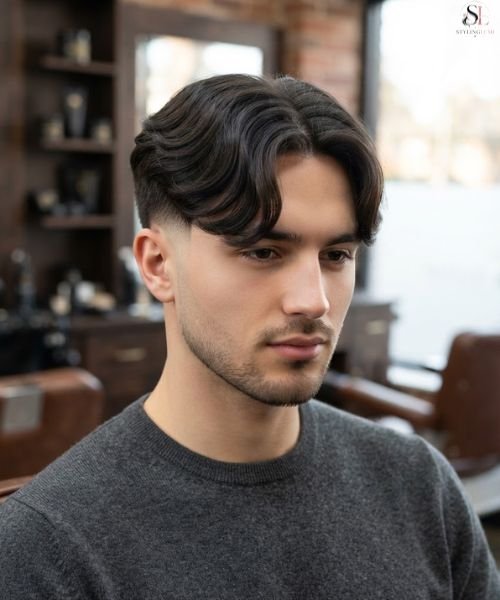
The mid taper fade with curtain hair combines a clean, controlled perimeter with a longer center-parted top. The hair is usually allowed to fall naturally toward both sides of the face, creating the classic curtain effect. The taper around the temples makes the hairstyle look cleaner without taking attention away from the long top.
For the best result, keep roughly 6–8 inches of length at the front. Straight and wavy hair are particularly easy to style this way, while curly hair can create a more textured version of the look.
What to tell your barber:
“Keep my front and top long enough for a middle part. Give me a medium taper around the temples and sideburns, but don’t take the taper too high. Keep the sides connected to the longer top.”
How to style: Create a center part while your hair is damp, then blow-dry each side away from the part. Finish with a lightweight styling cream for natural movement.
2. Mid Taper Fade with Slick Back
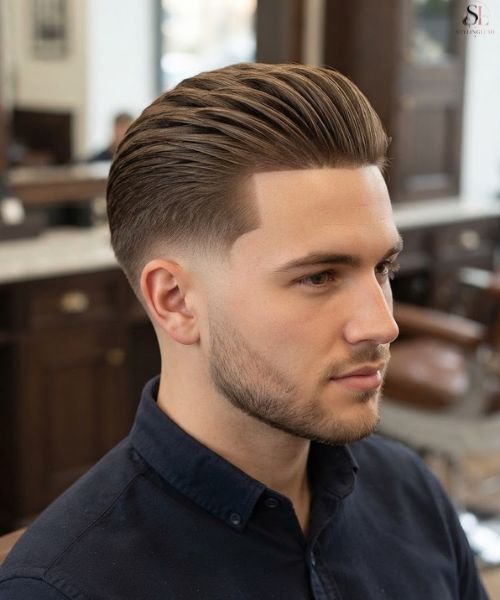
A slick back turns long hair into a cleaner, more polished hairstyle. The long top is brushed backward from the forehead, while the mid taper removes some of the bulk around the temples and sideburns.
Aim for approximately 6–9 inches of top length if you want enough hair to sweep completely backward. Thick hair may need subtle internal weight removal so it doesn’t become too heavy.
What to tell your barber:
“I want to keep my long top for a slick back. Give me a medium taper around the temples and neckline, and don’t shorten the top more than necessary. Keep enough length for me to push everything backward.”
How to style: Apply styling cream or pomade to damp hair. Comb backward while blow-drying in the same direction. Finish with a small amount of product to control flyaways.
3. Mid Taper Fade with Man Bun
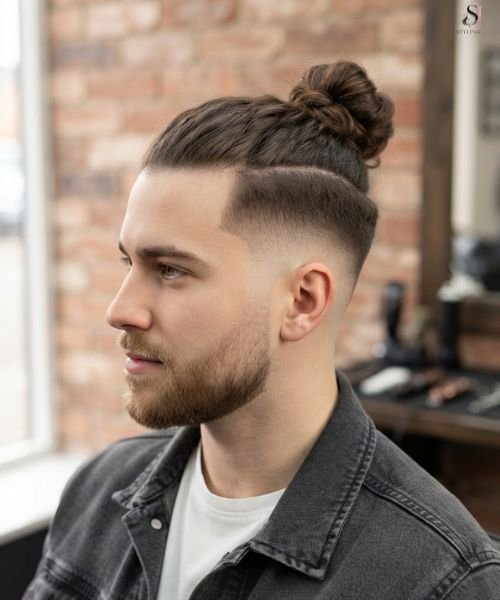
The man bun is one of the best options when your priority is keeping significant length. Instead of cutting the top short, the barber cleans the perimeter while allowing the long hair to remain long enough to tie.
You generally need around 8–12 inches or more depending on where you want the bun to sit. Curly hair may require additional length because curls shrink when they dry.
What to tell your barber:
“I’m growing my hair for a man bun. Keep as much length as possible on top and don’t cut into the length. I only want a controlled mid taper around the temples, sideburns, and neckline.”
How to style: Pull the hair backward and gather it at the crown or slightly lower. Use a soft hair tie rather than wrapping it extremely tightly.
4. Mid Taper Fade with Wavy Long Hair Flow
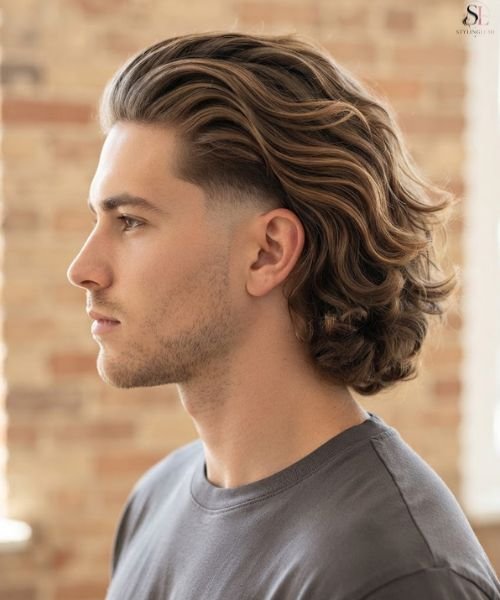
Long wavy hair has natural movement, making the flow hairstyle look relaxed rather than heavily styled. The mid taper cleans the areas around the ears while the waves continue through the top and back.
A top length of around 6–10 inches can work depending on your wave pattern. Don’t remove too much weight from naturally wavy hair because excessive thinning can make the waves look uneven.
What to tell your barber:
“Keep my natural waves and most of my length. I want a medium taper around the temples and neckline, but don’t over-thin the long hair.”
How to style: Apply leave-in conditioner or lightweight wave cream to damp hair. Scrunch gently and allow it to air-dry or use a diffuser.
5. Mid Taper Fade with Curly Long Hair
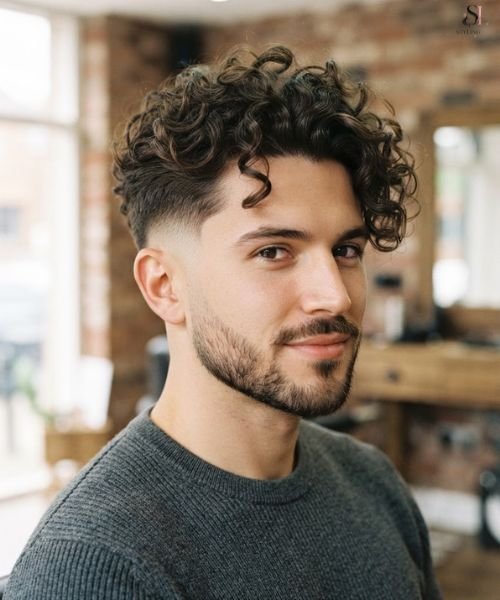
Long curls combined with a clean mid taper create a strong contrast between the textured top and neat perimeter. The curls can be worn loose, pushed backward, parted in the middle, or tied when enough length is available. Curly hair needs special attention because 6 inches of stretched hair won’t necessarily look like 6 inches when the curls contract.
What to tell your barber:
“Please judge the length based on how my curls naturally sit. Keep the curls long and only clean up the temple, sideburn, and neckline areas with a controlled mid taper.”
How to style: Use curl cream or leave-in conditioner on wet or damp hair. Scrunch the curls instead of brushing them repeatedly.
6. Mid Taper Fade with Ponytail
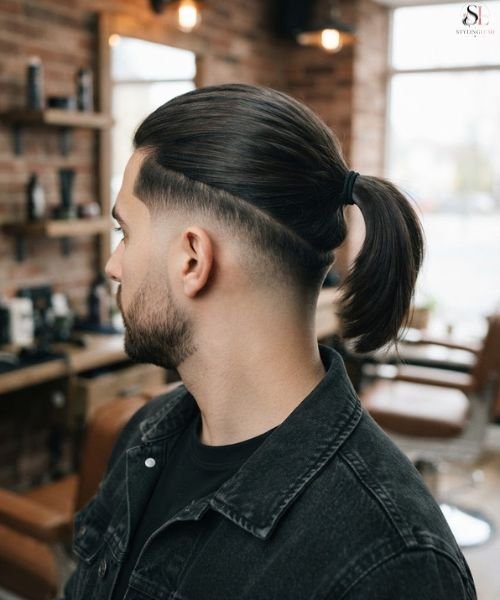
A ponytail paired with a mid taper gives very long hair a cleaner outline. The long hair remains the main feature while the taper prevents the temples and neckline from becoming excessively bulky. For a secure ponytail, you’ll usually need 8–12 inches or more, depending on your hair texture and where you want to tie it.
What to tell your barber:
“I want to grow my hair for a ponytail, so don’t remove length from the top or back. Just clean the temples, sideburns, and neckline with a medium taper.”
How to style: Brush the hair backward or slightly downward and secure it with a soft elastic. For a looser look, leave a little natural volume around the crown.
7. Mid Taper Fade Mullet (Modern Mullet)
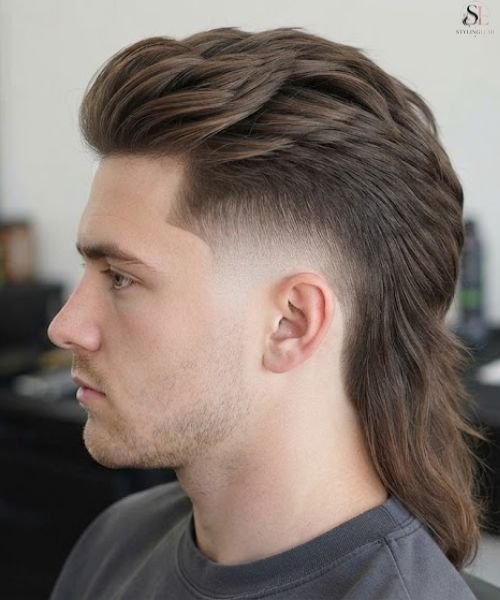
The modern mullet keeps noticeable length toward the back while the sides and temples are cleaner. Adding a mid taper creates a sharper transition without turning the haircut into a completely disconnected style. The top can remain around 5–7 inches, while the back is allowed to grow considerably longer.
What to tell your barber:
“I want a modern long mullet with a medium taper around the temples. Keep the back noticeably long and don’t blend away the length in the back.”
How to style: Use a texture cream or sea salt spray. Scrunch or twist sections of the hair to emphasize movement.
8. Mid Taper Fade with Middle Part
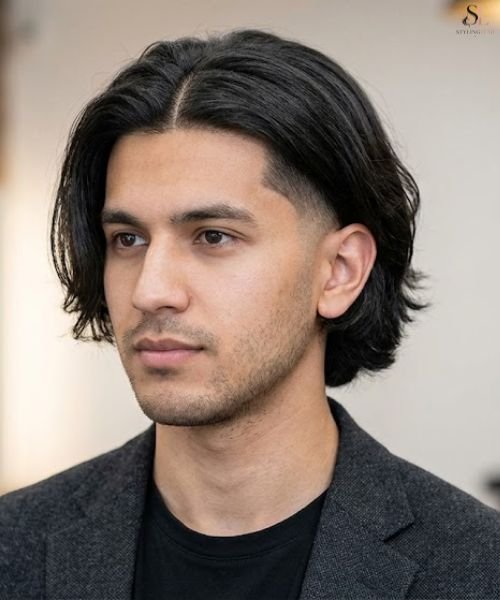
The middle-part version is slightly simpler than curtain hair because the emphasis is on a clean center separation rather than dramatic volume around the face. A 6–8 inch top gives enough length for the hair to fall naturally on both sides. Straight hair creates a cleaner appearance, while waves make it more relaxed.
What to tell your barber:
“Keep enough length at the front and crown for a natural middle part. Give me a mid taper around the temples and neckline and preserve the side length.”
How to style: Find your natural part while damp. Blow-dry both sections outward and slightly backward.
9. Mid Taper Fade with Side Part
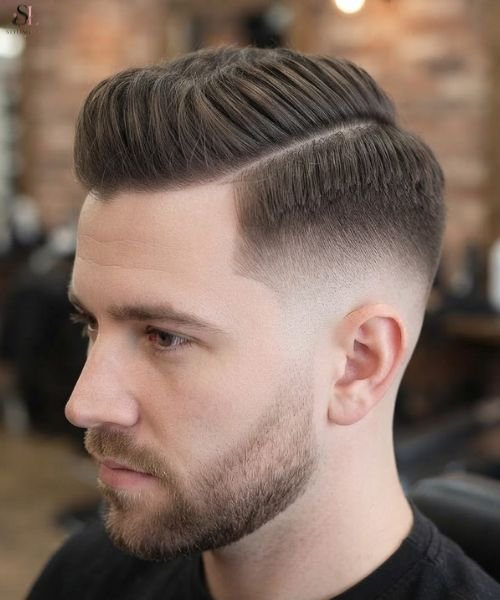
A side part adds structure to long hair without requiring the dramatic volume of a pompadour. The long top sweeps toward one side while the taper keeps the area around the ear clean. This style works particularly well with straight or slightly wavy hair.
What to tell your barber:
“Keep the top long enough for a side part and side sweep. Give me a medium taper, but leave enough side length so the long hair still looks full.”
How to style: Apply a small amount of styling cream and create the part with a comb. Blow-dry the longer section in the direction you want it to fall.
10. Mid Taper Fade with Long Textured Fringe
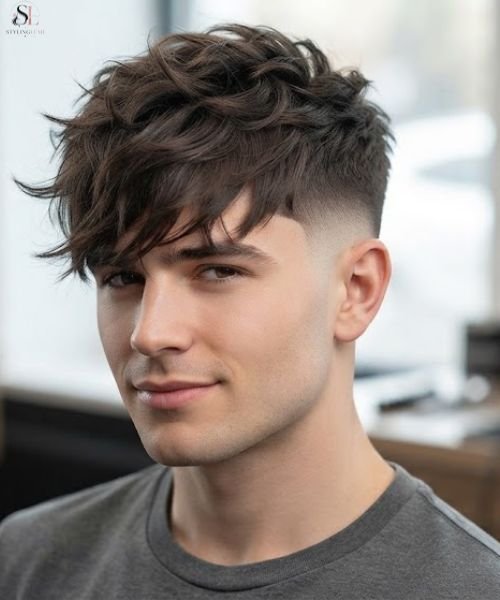
A long textured fringe allows some of the hair to fall toward the forehead instead of being pushed backward. Texture prevents the fringe from looking like one solid, heavy block. Keep approximately 5–7 inches at the front, depending on how far down you want the fringe to fall.
What to tell your barber:
“Keep the fringe long, but add controlled texture so it moves naturally. I want the mid taper to stay around the temples rather than climbing too high.”
How to style: Apply a lightweight matte cream to damp hair. Use your fingers to separate the fringe rather than making every strand perfectly straight.
11. Mid Taper Fade with Quiff
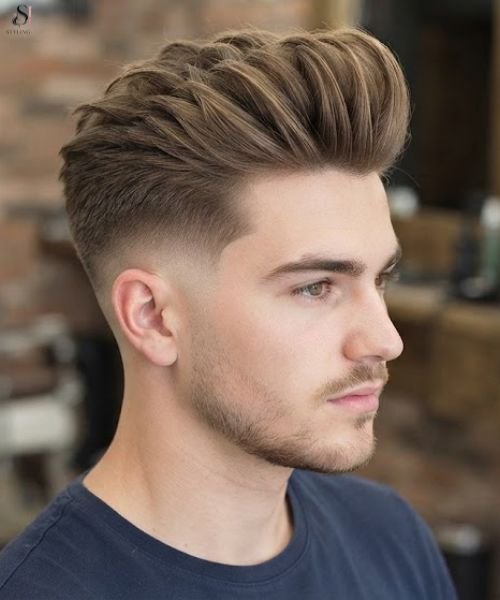
A long quiff uses the extra length at the front to create height and volume. The mid taper makes the lifted front stand out because the temple area is kept cleaner. You’ll generally want 6–8 inches around the front if you want a noticeable quiff.
What to tell your barber:
“Keep plenty of length at the front for a quiff. Reduce some bulk if necessary, but don’t shorten the visible length. Give me a medium taper around the sides.”
How to style: Blow-dry the front upward and backward. Apply a small amount of matte paste or styling cream after the hair has cooled.
12. Mid Taper Fade with Pompadour
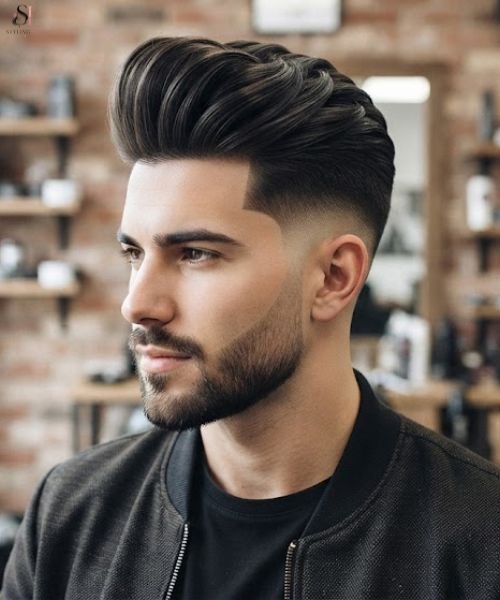
A pompadour takes the quiff concept further by creating a fuller, smoother shape through the front and top. This style works best when the hair is thick enough to maintain volume or when you’re comfortable using a blow dryer and styling product.
What to tell your barber:
“I want to keep the top long and full enough for a pompadour. Give me a clean mid taper but don’t make the sides too short.”
How to style: Apply a pre-styler to damp hair, then blow-dry upward and backward using a brush. Finish with pomade for control.
13. Mid Taper Fade with Messy Textured Flow
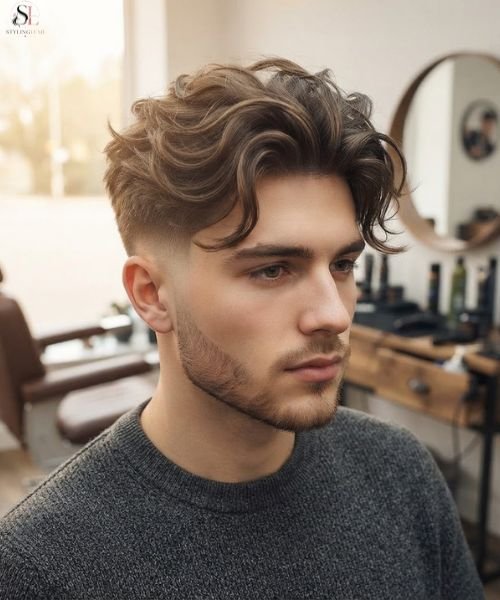
This is the low-effort-looking option for people who don’t want their long hair to appear overly styled. The top is allowed to move naturally while the taper keeps the perimeter controlled. It’s especially good for thick, wavy, and slightly curly hair.
What to tell your barber:
“Keep the long natural flow on top. I want some texture, but don’t remove too much length. Give me a soft mid taper around the temples and neckline.”
How to style: Apply texture cream or a small amount of matte product. Use your fingers to separate the hair and let it fall naturally.
14. Mid-Taper Fade with Comb-Over
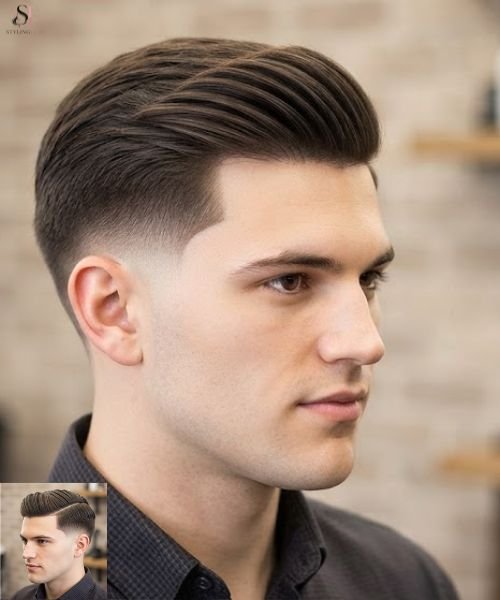
A long comb-over takes advantage of the length by directing most of the hair from one side across the head. Unlike a short traditional comb-over, this version can retain plenty of movement. A 6–9 inch top gives you more control over the direction.
What to tell your barber:
“Keep the top long enough for a long comb-over. Don’t cut too much from the side. I want the mid taper to clean the perimeter while keeping the main length.”
How to style: Create your part while the hair is damp. Blow-dry across the head and finish with a light styling cream.
15. Mid Taper Fade with Dreadlocks (Locs)
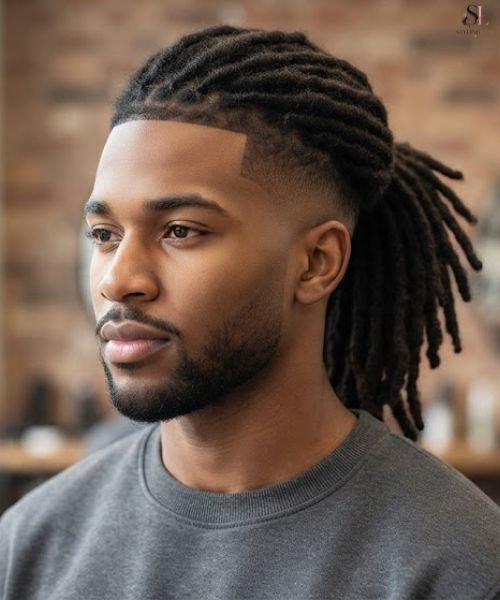
Long locs combined with a taper create a clean contrast between the locs and the surrounding hair. The taper can be concentrated around the temples, sideburns, and neckline. The exact approach depends heavily on how the locs are maintained.
What to tell your barber:
“Keep my locs intact and preserve their length. I want the surrounding hair cleaned with a medium taper without cutting into the loc structure.”
How to style: Follow your normal loc maintenance routine. Avoid putting unnecessary tension on the roots.
16. Mid Taper Fade with Box Braids
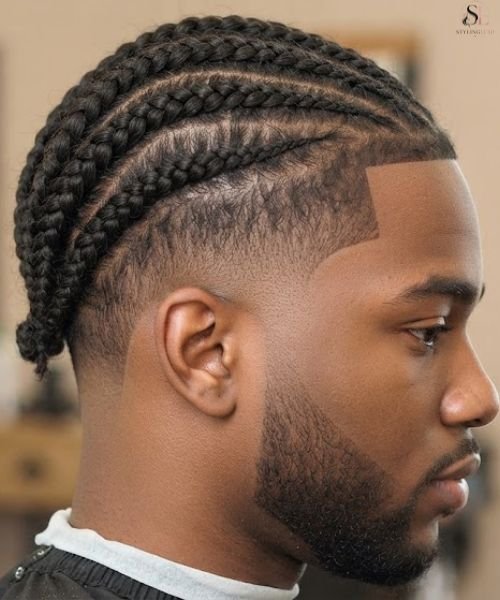
Box braids can look especially defined when the areas around the temples and neckline are neatly tapered. The main consideration is keeping enough hair at the roots to support the desired braid pattern. The taper shouldn’t interfere with areas that need to remain full.
What to tell your barber:
“I want the braids to remain full and long. Clean the temples and neckline with a controlled mid taper, but don’t take the taper into the sections needed for the braids.”
How to style: Keep the braids moisturized according to your normal routine and avoid excessive tension.
17. Mid Taper Fade with Long Afro
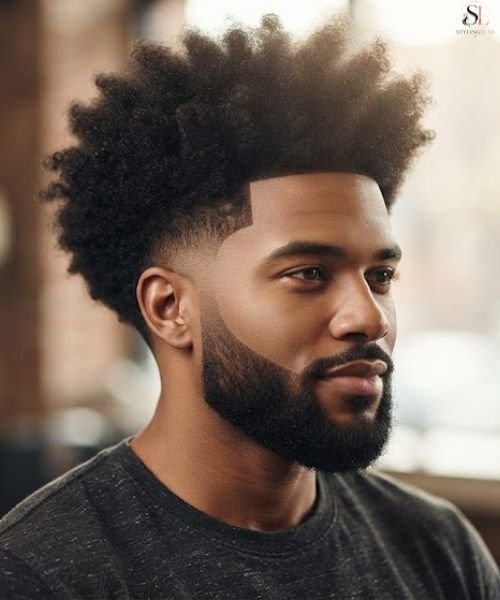
A long afro with a mid taper creates a strong shape: substantial natural volume on top and a cleaner perimeter around the sides. The barber should work with your natural curl pattern rather than trying to make the hair behave like straight hair.
What to tell your barber:
“Preserve the natural volume and shape of my afro. I want a medium taper around the perimeter without making the top or sides too narrow.”
How to style: Use a suitable moisturizer or leave-in product and shape the hair gently with your fingers or a pick.
18. Mid Taper Fade with Blow Back
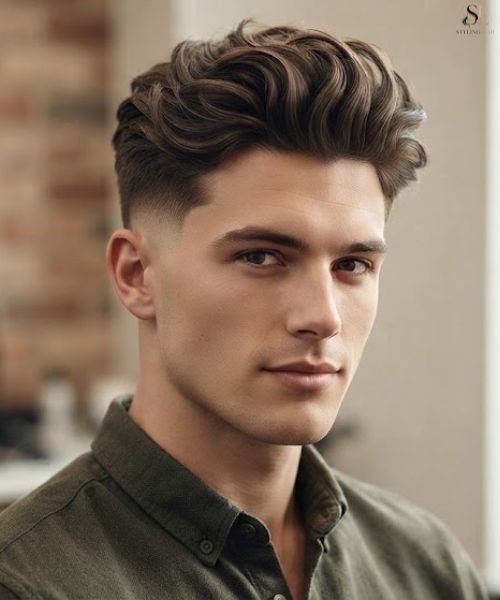
The blow-back style sends the long top backward while maintaining a softer, more natural finish than a tightly slicked-back hairstyle. It’s ideal for hair that already has some natural thickness or wave.
What to tell your barber:
“Keep enough length on top for a loose blow-back. I want movement rather than a flat slick back, with a medium taper around the temples and neckline.”
How to style: Apply a lightweight pre-styler and blow-dry backward. Use your fingers instead of flattening everything with a comb.
19. Mid Taper Fade with Faux Hawk
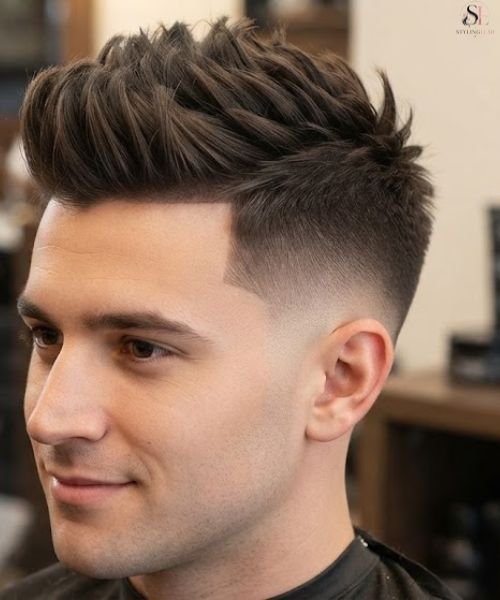
A long faux hawk keeps the center of the hair visually dominant while the sides are controlled. Unlike a traditional mohawk, the transition can remain softer and more wearable.
What to tell your barber:
“Keep the center section long and textured. Give me a mid taper on the sides, but don’t create a completely shaved disconnect.”
How to style: Work a matte styling product through damp hair and push the center upward and slightly backward.
20. Mid Taper Fade with Half-Up Style
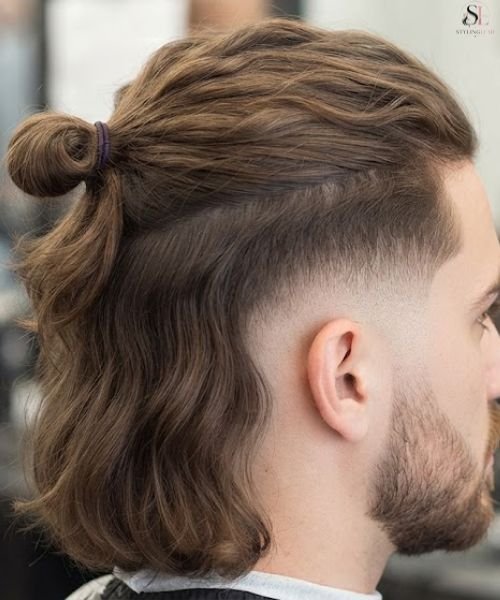
The half-up hairstyle is perfect during the awkward stages of growing long hair. You can pull the upper section backward while leaving the remaining hair loose. The mid taper keeps the visible perimeter neat even when the majority of the hair is long.
What to tell your barber:
“I want to keep enough length to wear a half-up style. Preserve the top and back and only clean the temples and neckline with a medium taper.”
How to style: Separate the upper half around the crown and secure it loosely. Leave the bottom section natural.
21. Mid Taper Fade with Side Swept Long Hair
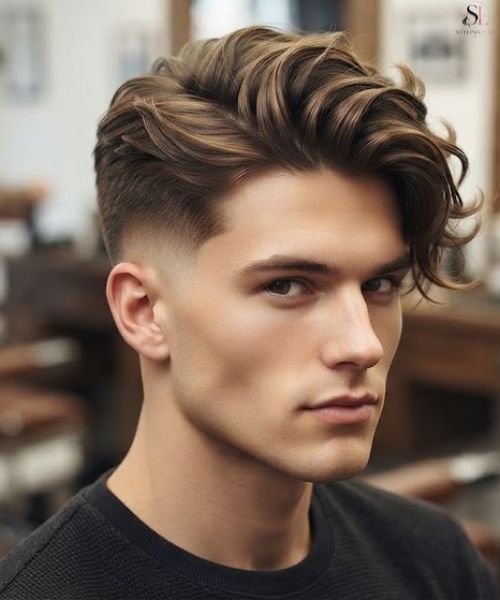
Side-swept long hair creates movement across the forehead and gives the hairstyle a softer appearance than a strict side part. It works particularly well with wavy hair because the natural texture makes the sweep look effortless.
What to tell your barber:
“Keep the front and sides long enough to sweep across naturally. I want the taper mainly around the temple, sideburn, and neckline.”
How to style: Apply a light cream to damp hair and direct everything toward one side while blow-drying.
22. Mid Taper with Drop Fade (Long Top)
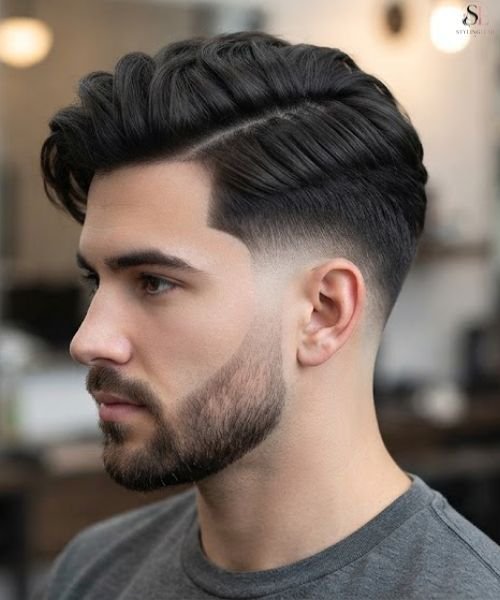
This combination needs clarification because a drop fade and taper aren’t exactly the same haircut. A drop fade usually follows the shape of the head and removes more hair around the sides, while a taper concentrates the shortening around selected perimeter areas. If you want both elements, show your barber a reference photo.
What to tell your barber:
“I want the long top preserved, with a medium taper around the temple and a drop-style transition where appropriate. Please keep the side profile connected to the long top.”
How to style: The long top can be worn slicked back, parted, or textured depending on its length.
23. Mid Taper with Burst Fade (Long Hair)
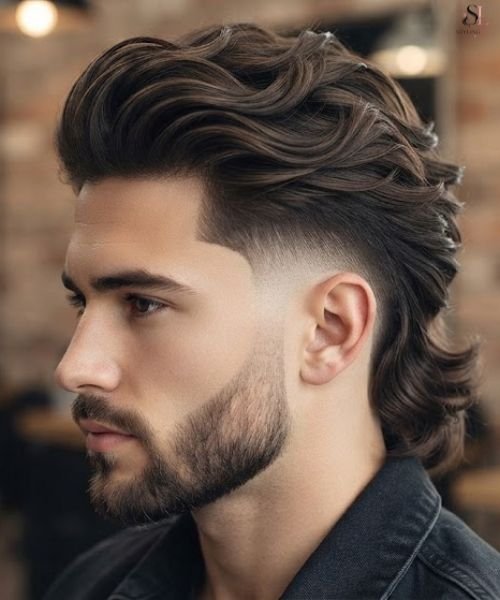
A burst fade curves around the ear and creates a more noticeable shape than a standard taper. Combining this idea with long hair creates a dramatic side profile. Because a burst fade removes more hair around the ear, make sure your barber understands how much exposure you’re comfortable with.
What to tell your barber:
“I want to keep the long top and back. Keep the burst area controlled around the ear and don’t take the fade higher than the reference.”
How to style: Long hair can be pushed backward, left curly, or shaped into a textured flow.
24. Mid Taper Fade with Blonde Long Hair
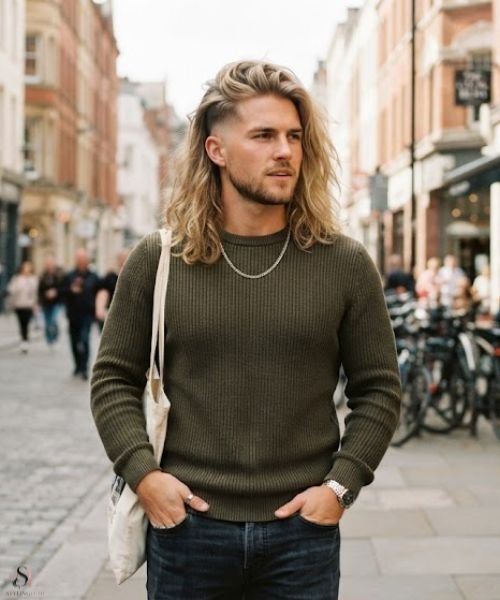
Blonde long hair paired with a mid taper creates a softer visual contrast than very dark hair against the scalp. The haircut works especially well when the long top has natural movement, waves, or layers.
What to tell your barber:
“Keep my blonde length intact and create a clean medium taper around the temples and neckline. I don’t want the taper to remove too much visible side length.”
How to style: Use lightweight products that don’t make blonde hair look greasy or weighed down.
25. Mid Taper Fade with Permed Long Hair
A perm can turn straight long hair into waves or curls, giving the taper a completely different appearance. The barber should consider the new texture because the hair can appear shorter and fuller after curling.
What to tell your barber:
“My hair is permed, so please work with the curl pattern instead of cutting it like straight hair. Keep the top long and give me a controlled mid taper.”
How to style: Apply curl cream to damp hair, scrunch gently, and let the curls dry naturally or use a diffuser.
26. Mid Taper Fade with Highlights (Long Hair)
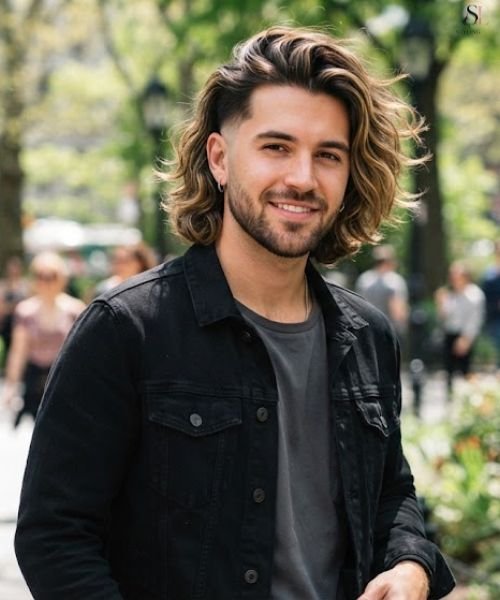
Highlights can make long hair look more dimensional, especially when the hair has waves or layers. The taper should remain relatively clean and simple so the longer highlighted hair stays the main visual feature.
What to tell your barber:
“Keep the highlighted length on top and preserve the movement. I want the medium taper to clean the perimeter without taking attention away from the color.”
How to style: Use a lightweight cream or leave-in product to separate the highlighted strands and show their movement.
27. Mid Taper Fade with Hard Part (Long Hair)
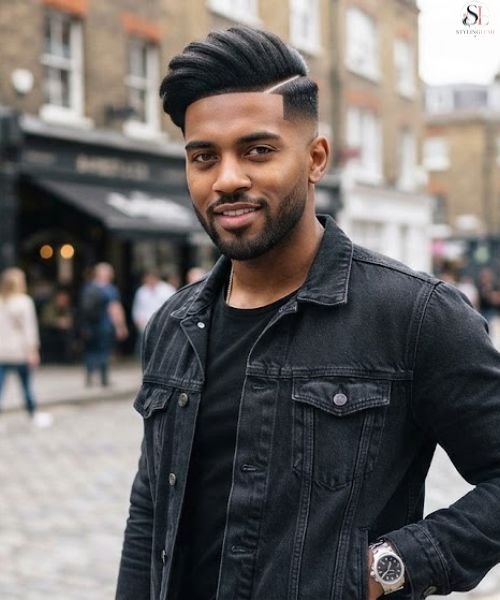
A hard part adds a clearly defined line to a longer hairstyle. The contrast between the sharp part and flowing hair creates a more structured appearance. The downside is that a hard part is less flexible than a natural part because the line has to be maintained as it grows.
What to tell your barber:
“I want a clean hard part that follows where my hair naturally separates. Keep the top long and flowing, with a medium taper around the sides.”
How to style: Comb the long section away from the hard part. Use pomade or styling cream if you need additional control.
28. Mid Taper Fade with Long Hair and Beard Combo

Adding a beard creates another transition that your barber needs to consider. The sideburn can either gradually connect the haircut to the beard or remain clearly separated. The longer your beard is, the more important this transition becomes.
What to tell your barber:
“I want the long hair preserved, with a medium taper around the temple and sideburn. Blend the sideburn naturally into my beard without making the connection too heavy.”
How to style: Keep the long hair styled according to your texture and maintain the beard separately. A small amount of beard balm can help control stray hairs.
Mid Taper Fade for Long Hair by Hair Type
Different textures respond differently to the same haircut. The taper itself can remain similar, but the top length, layering, and styling method may need to change.
| Hair type | What works well | Main consideration |
|---|---|---|
| Straight | Curtains, slick back, flow, side part | Can look flat without volume |
| Wavy | Flow, curtains, messy texture | Preserve natural wave pattern |
| Curly | Long curls, half-up, curly flow | Account for shrinkage |
| Thick | Long flow, slick back, textured styles | Control bulk without over-thinning |
Does Mid Taper Fade Work for Straight Long Hair?
Yes. Straight long hair provides plenty of control for curtains, slick backs, side parts, ponytails, and flowing styles.
The main issue is weight. Very straight hair can fall flat when it becomes long, so your barber may use subtle layering or internal weight removal.
Does Mid Taper Fade Work for Wavy Long Hair?
Wavy hair is particularly suited to relaxed long styles because the natural bend creates movement. Keep the top long enough for the waves to form instead of cutting them too short. Avoid brushing the hair dry if you want the natural wave pattern to remain defined.
Does Mid Taper Fade Work for Curly Long Hair?
Absolutely. Curly hair can create a striking contrast with a clean taper. However, curly hair needs special consideration because it can shrink significantly. Tell your barber whether you normally wear your curls stretched, defined, or completely natural.
Does Mid Taper Fade Work for Thick Long Hair?
Yes, and it can be especially useful for controlling thick perimeter areas. The important distinction is between removing bulk and removing length. Ask your barber to reduce unnecessary weight strategically instead of aggressively thinning the entire top.
Best Mid Taper Fade for Your Face Shape
Your face shape shouldn’t dictate the haircut completely, but it can help you decide where to add or reduce visual volume.
Oval Face
An oval face is generally flexible with long hairstyles. Curtains, slick backs, middle parts, flows, and textured styles can all work depending on your hair texture. You have more freedom to choose based on maintenance and personal preference.
Round Face
A little height and controlled side volume can create a more elongated appearance. A mid taper with a quiff, slick back, or textured top can help keep the sides from looking overly wide. Avoid creating unnecessary horizontal bulk around the cheeks.
Square Face
A square face can handle structured hairstyles well. A mid taper paired with a slick back, side part, or textured long top can emphasize the naturally strong angles of the face. Softer waves can also balance a very structured look.
Heart-Shaped Face
A heart-shaped face is typically wider around the forehead and narrower toward the chin. Long side-swept hair, curtains, or a softer textured flow can help distribute visual weight. Avoid creating excessive height at the crown if it makes the forehead appear disproportionately wide.
Diamond Face
A diamond shape often benefits from styles that add controlled fullness around the forehead and jaw area. Long textured hair, curtains, and side-swept styles can work well. Keep the taper clean without making the sides excessively narrow.
Oblong / Long Face
If your face is already long, avoid automatically adding a huge amount of height. A middle part, flowing sides, waves, or a textured fringe can add horizontal movement. A mid taper should remain moderate so the sides don’t become extremely narrow.
How to Ask Your Barber for a Mid Taper Fade with Long Hair
Don’t simply say “mid taper fade” and sit down. Long hair requires more specific instructions because you are trying to preserve length.
Tell your barber:
- Where you want the taper to begin.
- How much top length you want to preserve.
- Whether you want the sides connected to the long top.
- Whether you want the neckline natural or cleaned up.
- Whether you want the sideburn blended into the beard.
- What hairstyle you plan to wear afterward.
The Exact Script: What to Say Word for Word
You can say:
“I want a mid taper around the temples, sideburns, and neckline, but I want to keep my long hair on top. Please don’t take the taper too high or remove too much length from the sides. Keep the transition soft and blended, preserve the length on top, and clean up the neckline. I want enough length for [curtains/slick back/ponytail/man bun/flow].”
If you have a specific reference, add:
“Please use this photo as the shape reference, but keep my natural hair length and texture.”
That last part is important because copying the taper from a photo without considering your own hair density can produce a very different result.
What Clipper Guard Numbers Are Used for Mid Taper Fade?
There is no single guard sequence that every barber uses. Guard numbers are tools, not a universal definition of a mid taper.
A barber might use a trimmer for the lowest outline and then progressively longer clipper guards to create the blend. Exact numbers depend on hair density, color, texture, and how soft or sharp you want the transition.
Instead of saying only “use a number 1,” describe the result you want: soft, natural, sharp, low exposure, or close to the skin.
How to Style Long Hair with a Mid Taper Fade
The best styling routine depends on your hair texture and desired finish. Long hair usually responds better to controlled preparation than simply applying a large amount of product.
Daily Styling Routine
Start with clean, towel-damp hair.
- Detangle gently with your fingers or a wide-tooth comb.
- Apply a small amount of leave-in conditioner or styling product if needed.
- Create your part or desired direction.
- Blow-dry if you need volume or stronger direction.
- Apply a small amount of finishing product.
- Check the taper and sideburn area with a mirror.
Don’t keep adding product because the hair isn’t behaving immediately. Long hair often needs the correct drying direction more than extra product.
Best Products for Long Hair + Mid Taper Fade
| Product | Best for | Finish |
|---|---|---|
| Leave-in conditioner | Dry or textured hair | Soft |
| Styling cream | Everyday control | Natural |
| Sea salt spray | Fine/wavy hair | Textured |
| Matte paste | Messy styles | Low shine |
| Pomade | Slick styles | Medium/high shine |
| Curl cream | Curly hair | Defined |
| Light hair oil | Dry-looking lengths | Smooth/shiny |
Use the smallest amount that gives you the control you need. Too much product can weigh long hair down.
Step-by-Step: How to Style a Slick Back
- Start with damp, not soaking-wet, hair.
- Apply a small amount of styling cream or another suitable product.
- Comb the hair backward from the forehead.
- Blow-dry backward while following the direction with your fingers or brush.
- Focus on the roots if you need additional lift.
- Add a small amount of finishing product.
- Run your hands through the lengths to soften the result.
For a natural slick back, don’t flatten every strand against the scalp.
Step-by-Step: How to Style Curtain Hair
- Start with damp hair.
- Find your natural center part.
- Separate the hair into two sections.
- Blow-dry each side away from the center.
- Direct the front slightly outward and backward.
- Allow the ends to retain natural movement.
- Finish with a light cream if needed.
If your hair refuses to hold a middle part, train it gradually rather than forcing it with heavy product.
How to Maintain a Mid Taper Fade with Long Hair
The long top may need less frequent cutting than the taper itself.
Keep the perimeter fresh while allowing the main length to continue growing. If your goal is maximum length, tell your barber not to “clean up” the top by taking several inches off during every visit.
How Often Should You Get a Mid Taper Fade Trimmed?
Many people refresh a mid taper approximately every 2–4 weeks when they want the taper to remain crisp. If you prefer a softer, grown-out appearance, you can wait longer. The longer top may only need a shape or split-end trim every several weeks or months depending on your goals.
How to Grow Your Hair Long Enough for This Style
Hair growth takes time, so consistency matters more than constantly changing your haircut.
During the growing phase:
- Keep the taper clean if you want a neat appearance.
- Avoid unnecessary top-length cuts.
- Minimize excessive heat.
- Detangle gently.
- Use conditioner appropriate for your hair.
- Protect the ends from excessive friction.
- Trim damaged ends when necessary rather than automatically removing large amounts of length.
If your goal is a ponytail or bun, plan around the awkward stages rather than cutting the length off whenever it becomes difficult to style.
Common Mistakes to Avoid
Taking the taper too high: This can make the haircut look more like a traditional fade and reduce the long-hair effect.
Cutting too much from the top: Tell your barber exactly how much length you want to preserve.
Using the wrong guard as the main instruction: Guard numbers don’t communicate the entire desired shape.
Ignoring shrinkage: Curly and coily hair can appear dramatically shorter when dry.
Over-thinning thick hair: Excessive thinning can create uneven texture and make long hair difficult to control.
Forgetting the neckline: A long hairstyle can still look unfinished if the neckline isn’t intentionally shaped.
Copying someone else’s haircut exactly: Hair density, texture, head shape, and existing length all affect the result.
Using too much styling product: Long hair can become heavy and greasy-looking when overloaded.
How Much Does a Mid Taper Fade Cost for Long Hair?
The price varies significantly by location, barber experience, salon type, and the amount of work required. A straightforward taper may cost less than a detailed long-hair transformation involving extensive shaping, styling, braids, loc work, or color. In many cases, the long hair itself doesn’t determine the price; the time and technical work involved do. Before the appointment, ask whether the quoted price includes the taper, top shaping, beard blending, and styling.
Frequently Asked Questions
Is a mid taper good for long hair?
Yes. A mid taper can clean up the temples, sideburns, and neckline while allowing you to preserve substantial length on top. It’s especially useful when you want long hair to look intentional rather than bulky around the edges.
How long should hair be for a mid taper fade?
For many loose long hairstyles, around 5–6 inches on top provides a useful starting point. Man buns, ponytails, and other tied styles generally require considerably more length.
Does a mid taper make long hair look shorter?
The taper itself doesn’t necessarily shorten the top. However, removing too much hair from the sides or taking the transition too high can make the entire haircut appear shorter.
Is a mid taper better than a low taper for long hair?
They create different effects rather than one universally being better. A mid taper gives more visible structure around the sides, while a low taper preserves more side fullness and creates a subtler appearance.
Can you get a mid taper with curly long hair?
Yes. Curly long hair can pair very well with a mid taper. The barber should account for shrinkage and your natural curl pattern before deciding how much hair to remove.
How often should a mid taper be maintained?
If you want a consistently sharp outline, a refresh every 2–4 weeks is a practical starting point. You can wait longer if you prefer a softer, grown-out taper.
Can I grow a man bun with a mid taper?
Yes. The taper can be maintained while the top continues growing. The important part is telling your barber that preserving top length is your priority.
What should I show my barber?
Bring a clear reference photo showing the side and back whenever possible. Then explain your own desired top length, hair texture, taper height, neckline preference, and the hairstyle you eventually want to wear.
This version keeps your full structure intact while adding specific barber language, measurements, comparisons, styling instructions, maintenance guidance, and decision-making tables rather than filling the word count with repetition.
2 thoughts on “Mid Taper Fade for Long Hair: 20+ Best Styles +Expert Barber Guide (2026)”