

A high taper fade with design turns a clean, sharp haircut into something much more personal. The taper keeps the sides and back tight while a razor-cut detail adds visual interest around the temple, sideburn, or back of the head. You can keep the design subtle with one clean line or make it stand out with geometric shapes and freestyle patterns. In this guide, you’ll find 29 distinct high taper fade design ideas, plus advice on matching a design to your hair type and face shape, choosing the right placement, explaining your idea to your barber, styling the top, and keeping the cut looking fresh.
What Is a High Taper Fade With Design?
A high taper fade with design combines a high taper around the temples and back of the head with one or more shaved details. Unlike a traditional taper that gradually shortens the hair without a visible pattern, the design creates an intentional line or shape in the faded area.
The high placement makes the haircut look especially clean because the taper removes more hair around the upper sides while leaving length on top. Your barber can then use a trimmer or razor to carve the design into the shorter section.
The design can be extremely simple. A single diagonal slash may be enough, while more ambitious cuts can include curves, zigzags, geometric shapes, double lines, or freestyle artwork.
Your hair texture also affects the final result. Straight hair often shows sharp lines clearly, while curly, coily, and textured hair can create a stronger contrast between the design and the surrounding fade.
29 High Taper Fade Design Ideas
The designs below are written so the reader can understand what the design actually looks like, how it would be styled, where it should go, and what to tell the barber.
Simple Designs
Single Diagonal Slash
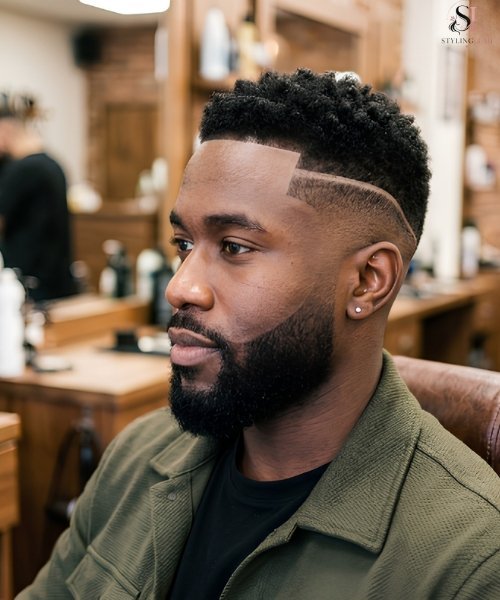
The single diagonal slash is one of the cleanest ways to add detail to a high taper fade. Your barber creates one narrow line through the faded temple area, usually angling it slightly backward. The line doesn’t need to be long; a shorter slash often looks sharper because it doesn’t overwhelm the haircut.
How it would style: This design works with almost any top. Try a textured crop for a modern finish, a short quiff if you want more height, or natural curls if you prefer texture. With straight hair, a small amount of matte clay can add separation without taking attention away from the razor line.
Best for: Straight, wavy, curly, and coily hair.
Best face shapes: Oval, square, and round.
Design placement: Temple or upper side of the fade.
Ask your barber: “Give me a high taper fade with one thin diagonal razor line through the temple. Keep it sharp, clean, and slightly angled backward.”
Double Slash
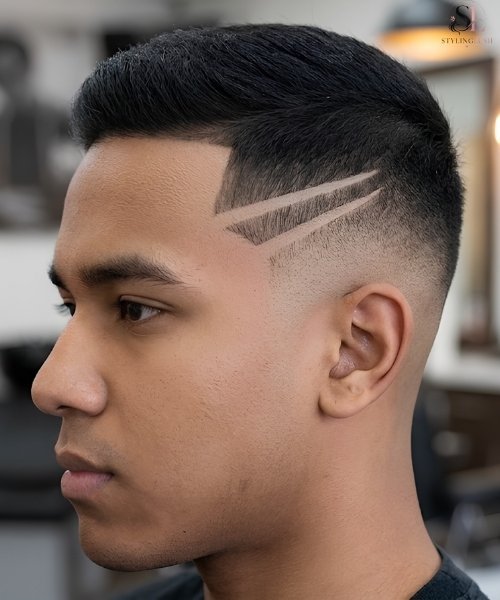
The double slash takes the basic line design and adds a second parallel line. The two lines should have enough space between them to remain clearly visible as the hair grows. Your barber can make them short and subtle or longer and more noticeable.
How it would style: A textured top creates the best contrast. Try pushing a short quiff upward or styling a crop forward with a matte product. If you have curly hair, don’t flatten the curls; let their volume contrast with the clean double lines.
Best for: Medium to thick hair.
Best face shapes: Oval, square, and round.
Design placement: Temple or upper side.
Ask your barber: “Add two thin parallel razor lines to the high taper. Keep the spacing even and the lines sharp.”
Curved Temple Line
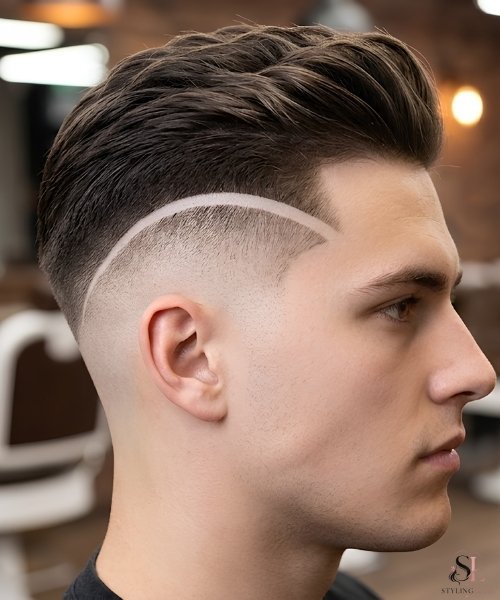
This design replaces straight angles with one smooth curve that follows the natural contour of your temple. It gives the haircut movement and looks slightly softer than a geometric design.
How it would style: Wavy and curly hair are excellent matches because the natural movement on top echoes the curved detail on the side. Use a lightweight curl cream or styling cream rather than a heavy product. With straight hair, a side-swept or textured top keeps the overall haircut balanced.
Best for: Wavy, curly, and straight hair.
Best face shapes: Oval, heart, and square.
Design placement: Around or just behind the temple.
Ask your barber: “Add one smooth curved line around my temple and make it follow the shape of my head.”
Short Vertical Line
A short vertical line offers a very subtle design option. Instead of covering a large section of the taper, the barber creates a small straight mark close to the temple or sideburn.
How it would style: Keep the top simple. A short crop, textured fringe, or small curly top lets the line act as an accent rather than competing with the hairstyle.
Best for: All hair types.
Best face shapes: Most face shapes.
Design placement: Temple or sideburn area.
Ask your barber: “Put one short, narrow vertical razor line into the high taper and keep it subtle.”
Lightning Bolt
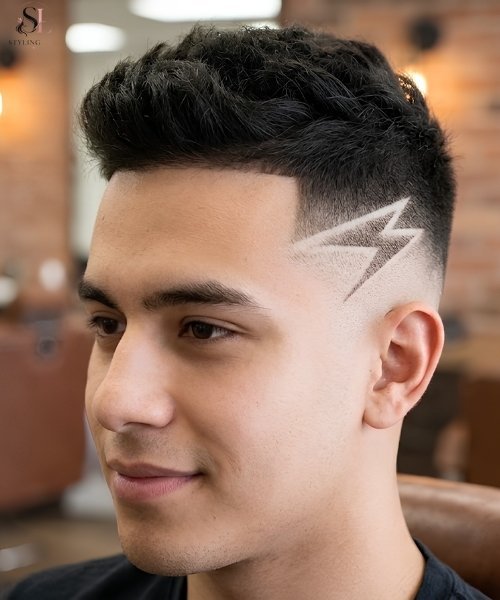
The lightning bolt has several sharp turns that create a compact zigzag shape. It gives a basic high taper a more energetic and youthful appearance.
How it would style: Pair it with a textured, messy, or spiky top. Apply matte clay or paste and use your fingers to create separation. Curly hair can be left natural so the sharp design contrasts against the softer curl pattern.
Best for: Thick, straight, curly, and coily hair.
Best face shapes: Round, oval, and square.
Design placement: Temple or upper side.
Ask your barber: “Create a small lightning-bolt shape in the high taper. Keep the corners sharp and the design compact.”
Temple Notch
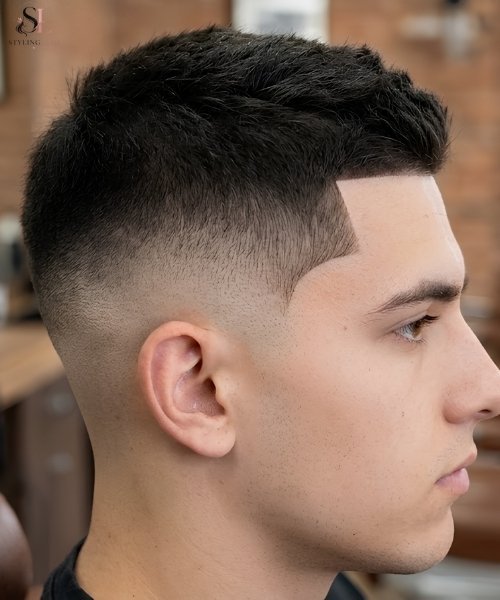
A temple notch is one of the easiest designs to wear because it doesn’t look like a large graphic pattern. Your barber simply removes a small section of hair to create a clean break in the taper.
How it would style: Because the design is subtle, you can pair it with almost anything. A side part gives it a polished appearance, while a messy textured top makes it more casual.
Best for: All hair types.
Best face shapes: All face shapes.
Design placement: Temple.
Ask your barber: “Add a small notch to the temple and blend the surrounding taper smoothly.”
Three Short Lines
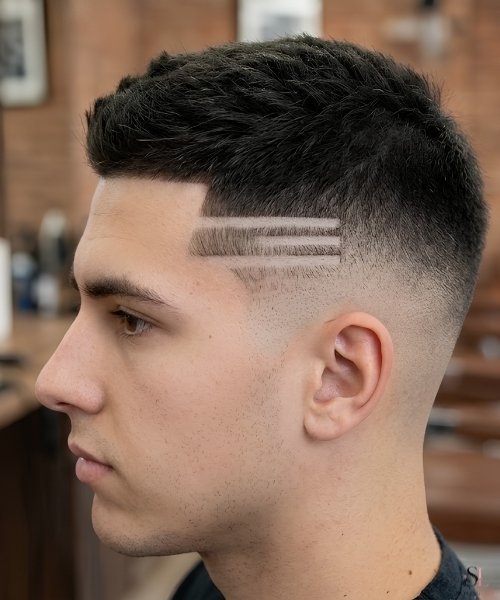
Three short lines create a layered effect while keeping the design relatively simple. They can run diagonally in the same direction or be slightly staggered.
How it would style: A textured crop or short quiff works particularly well. Keep some volume on top so the sides remain visually clean.
Best for: Straight, wavy, and curly hair.
Best face shapes: Oval and square.
Design placement: Temple or side of the fade.
Ask your barber: “Add three short, evenly spaced razor lines at a slight angle. Keep them narrow and clean.”
Side V-Line
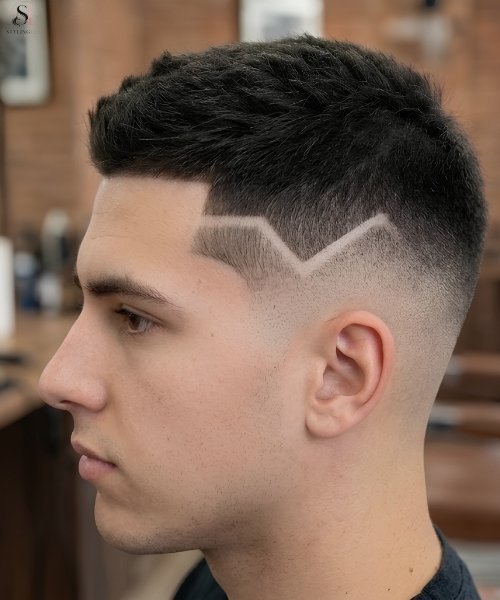
The side V-line consists of two lines that meet at a point, creating a small V shape. The pointed design gives the high taper a more structured appearance.
How it would style: A short textured top works well because it adds movement above the geometric detail. With curly or coily hair, keep the natural texture full on top for stronger contrast.
Best for: Thick, curly, coily, and straight hair.
Best face shapes: Oval, square, and round.
Design placement: Upper temple or side.
Ask your barber: “Create a small V-shaped razor design in the high taper. Keep both sides of the V balanced.”
Parallel Curves
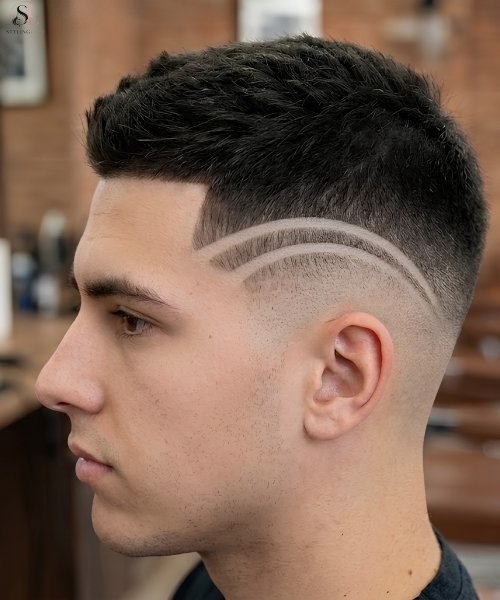
Parallel curves use two or more curved lines that follow the contour of the head. The result looks more fluid than straight razor designs.
How it would style: This design looks especially good with wavy or curly hair. Let your natural texture move freely and use a lightweight styling cream to keep the top defined.
Best for: Wavy and curly hair.
Best face shapes: Oval and square.
Design placement: Temple or side.
Ask your barber: “Create two smooth curved lines that follow the shape of my head and keep the spacing consistent.”
Small Cross Design
A small cross uses two intersecting lines to create a compact symbol. The design should stay relatively small so it looks intentional rather than crowded.
How it would style: A short crop, textured top, or curly hairstyle gives the haircut enough personality without creating too much visual competition.
Best for: All hair types.
Best face shapes: Oval and square.
Design placement: Temple or side of the taper.
Ask your barber: “Make a small, clean cross in the faded area with thin, even lines.”
Intermediate Geometric Designs
Chevron Design
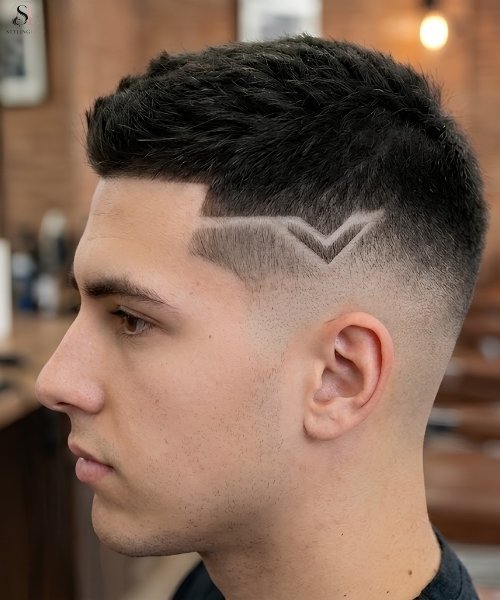
A chevron consists of two angled lines that meet toward the center, forming a V-like pattern. It has more structure than a simple slash but doesn’t require an enormous shaved area.
How it would style: A textured crop, short quiff, or messy top creates a strong contrast with the angular design. Straight hair benefits from matte clay, while curly hair can stay natural on top.
Best for: Medium to thick hair.
Best face shapes: Round, oval, and square.
Design placement: Temple to upper side.
Maintenance: The angles need regular cleanup to remain crisp.
Ask your barber: “Give me a clean chevron carved into the high taper. Keep both sides symmetrical and the lines narrow.”
Triple Diagonal Pattern
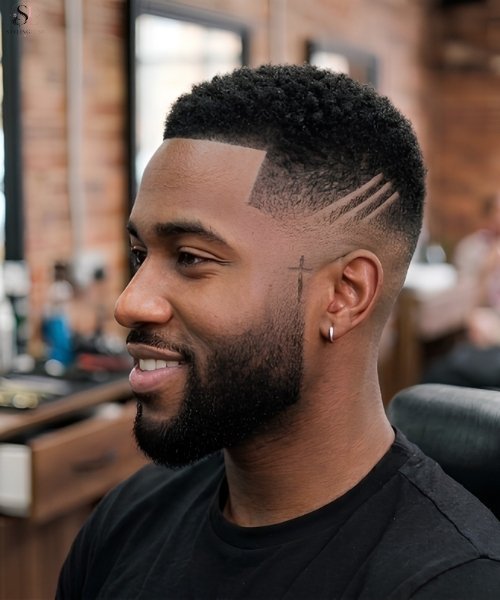
Three diagonal lines create a stronger visual effect while keeping the design organized. The barber needs to maintain consistent angles and spacing so the pattern doesn’t look uneven.
How it would style: Pair it with a short quiff or textured crop. The top should have enough volume to balance the additional detail on the side.
Best for: Thick and medium-density hair.
Best face shapes: Oval and square.
Design placement: Temple or side.
Ask your barber: “Add three diagonal razor lines with equal spacing and matching angles.”
Double V Design
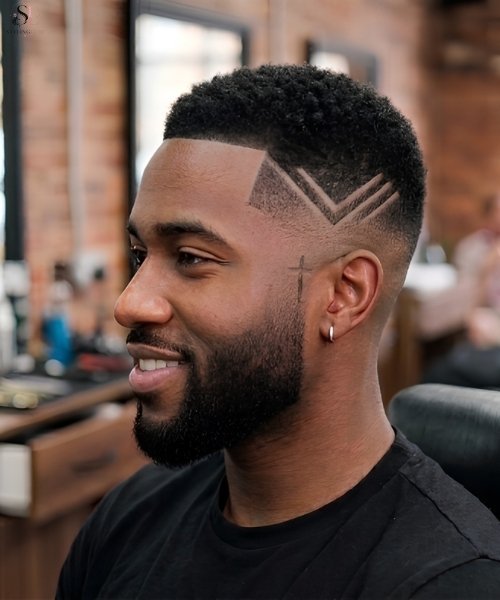
The double V takes the V-line concept further by using two pointed shapes. The design looks more detailed when the two Vs have similar proportions.
How it would style: A textured top or short curly style keeps the haircut modern. Avoid overly complicated styling because the design already provides a strong focal point.
Best for: Thick, curly, and straight hair.
Best face shapes: Oval and square.
Design placement: Upper temple.
Ask your barber: “Create two small V shapes in the taper and keep them aligned without making the pattern too large.”
Geometric Triangle
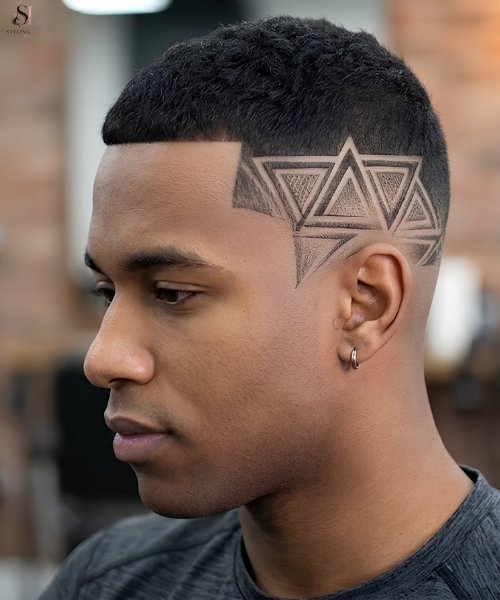
A triangle creates a strong three-sided shape in the fade. Your barber needs to keep the three edges clean and proportionate because uneven angles can quickly make the design look unfinished.
How it would style: A short textured crop works especially well. For straight hair, use matte paste to create separation; for curly hair, keep the top natural and defined.
Best for: Straight, thick, and curly hair.
Best face shapes: Square and oval.
Design placement: Side of the high taper.
Ask your barber: “Carve a small geometric triangle into the faded area with clean, even sides.”
Split Line Design
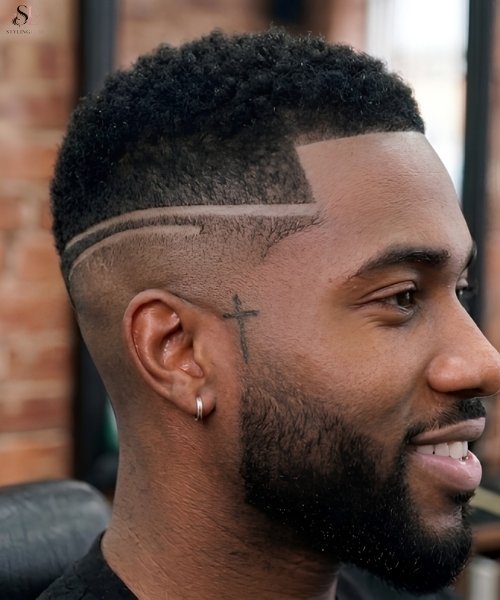
The split line begins as one main razor line before branching into two smaller lines. It adds complexity without covering the entire side.
How it would style: Keep the top moderately textured. A side-swept top can make the main line appear connected to the direction of the hairstyle.
Best for: Straight and wavy hair.
Best face shapes: Oval and round.
Design placement: Temple moving toward the side.
Ask your barber: “Create one main line that splits into two smaller lines near the end. Keep the branches clean and separated.”
Diamond Detail
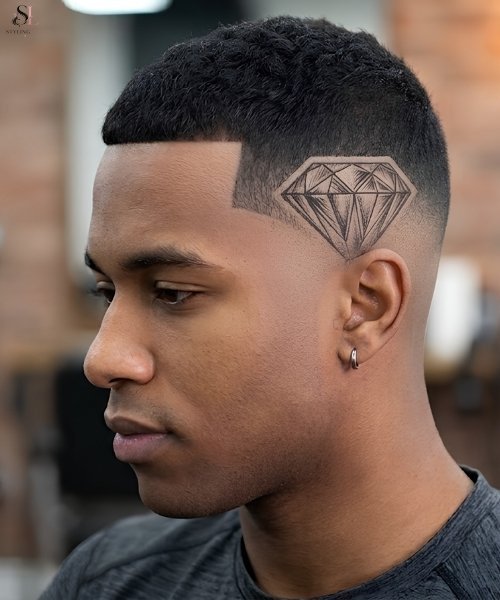
A small diamond creates four clean edges inside the fade. It looks more intricate than a slash while still fitting into a relatively small area.
How it would style: A clean crop or short textured top keeps attention on the diamond. With curly hair, the natural volume on top creates a strong contrast against the precise shape.
Best for: Medium and thick hair.
Best face shapes: Oval and square.
Design placement: Temple or upper side.
Ask your barber: “Carve a small diamond into the taper and keep all four corners sharp and balanced.”
Zigzag Pattern
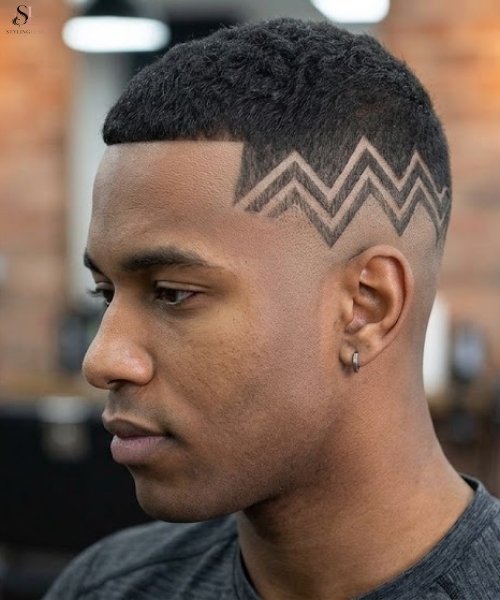
A zigzag design uses several connected angles to create movement. The pattern can be short and compact or stretched slightly backward across the fade.
How it would style: A messy textured top or spiky hairstyle matches the energetic nature of the pattern. Keep the product matte so the hair doesn’t look overly slick.
Best for: Thick, straight, and wavy hair.
Best face shapes: Round and oval.
Design placement: Temple toward the side.
Ask your barber: “Give me a compact zigzag design with sharp turns and enough space between each section.”
Arrow Design
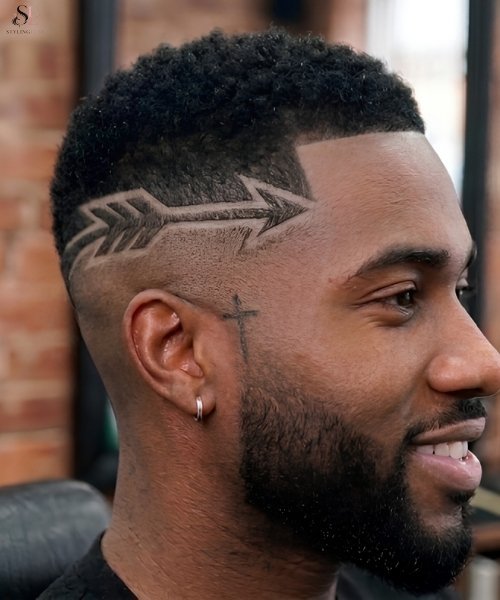
An arrow design uses angled lines that meet at a point, creating a directional shape. It can point forward, backward, or slightly upward depending on the haircut.
How it would style: A forward textured crop makes the arrow look connected to the direction of the hairstyle. A quiff gives it a more lifted appearance.
Best for: Straight, wavy, and thick hair.
Best face shapes: Round, oval, and square.
Design placement: Front temple or upper side.
Ask your barber: “Create a small arrow shape and point it slightly toward the direction my hair is styled.”
Boxed Line Design
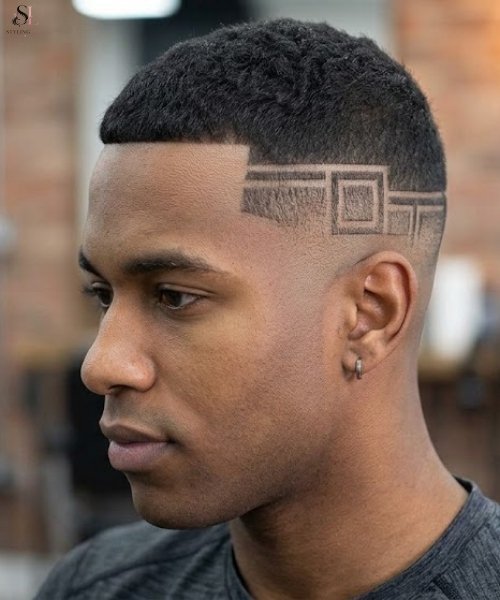
This design uses rectangular or box-like lines to create a structured pattern. It works best when the barber has enough faded space to keep the corners visible.
How it would style: A neat crop or short quiff balances the structured side. Keep the top controlled rather than extremely messy.
Best for: Straight and thick hair.
Best face shapes: Square and oval.
Design placement: Side of the high taper.
Ask your barber: “Create a small boxed geometric pattern in the fade with clean corners and even lines.”
Layered Arc Design
Several curved lines are stacked close together to create a layered arc. The design has movement without the sharpness of triangles and zigzags.
How it would style: This is an excellent choice for wavy or curly hair. Use a lightweight cream to enhance the natural movement on top and avoid making the hairstyle too rigid.
Best for: Wavy, curly, and coily hair.
Best face shapes: Oval and heart.
Design placement: Temple and upper side.
Ask your barber: “Create two or three smooth layered arcs that follow the curve of my head.”
Advanced Freestyle Designs
Freestyle Wave
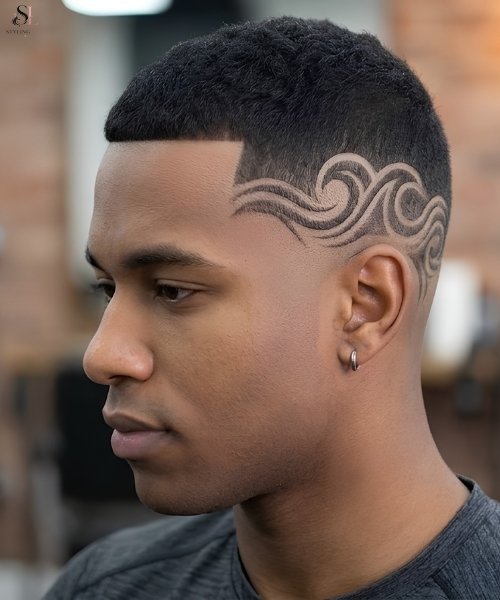
The freestyle wave uses flowing lines that curve naturally through the faded area. Unlike a geometric design, it doesn’t need perfectly symmetrical shapes, allowing your barber to adapt it to the contours of your head.
How it would style: This design looks excellent with curly or wavy hair because the movement continues from the design into the top. Leave the curls or waves natural rather than forcing them into a stiff style.
Best for: Wavy and curly hair.
Best face shapes: Oval and heart.
Design placement: Temple toward the side or back.
Ask your barber: “Create a flowing freestyle wave that follows the shape of my head and blends naturally into the high taper.”
Swooping Curve
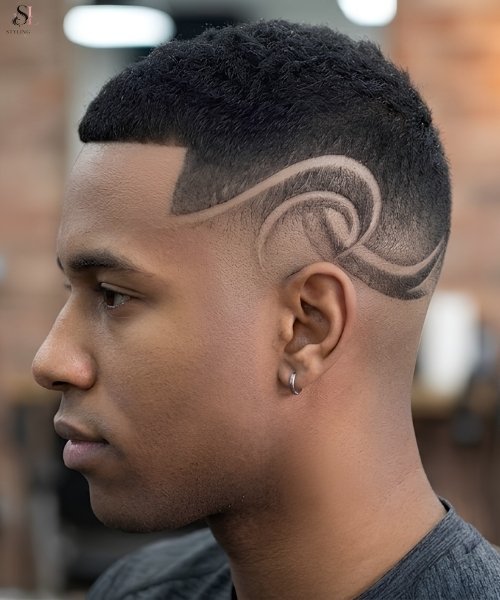
The swooping curve is a longer, sweeping line that moves backward through the taper. It can create the impression that the design flows with the haircut instead of sitting separately on the side.
How it would style: A slicked-back, side-swept, or longer textured top works particularly well. The direction of the top can mirror the direction of the curved design.
Best for: Medium to long hair on top.
Best face shapes: Oval and square.
Design placement: Temple toward the back.
Ask your barber: “Create one long sweeping curve that follows the direction of my hairstyle.”
Abstract Razor Pattern
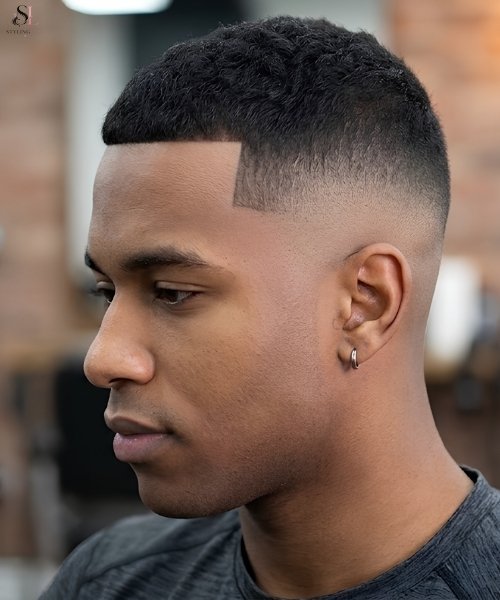
An abstract pattern combines different line lengths, angles, and curves into one custom design. There isn’t one fixed shape, so the barber can build the pattern around your taper and head shape.
How it would style: Keep the top relatively simple. A textured crop or natural curls allow the design to become the main feature without making the entire haircut feel crowded.
Best for: All hair types.
Best face shapes: Depends on the final design.
Design placement: Temple, side, or back.
Ask your barber: “I want an abstract freestyle design with a mix of sharp and curved lines, but keep enough negative space so it doesn’t look crowded.”
Spiderweb-Inspired Pattern
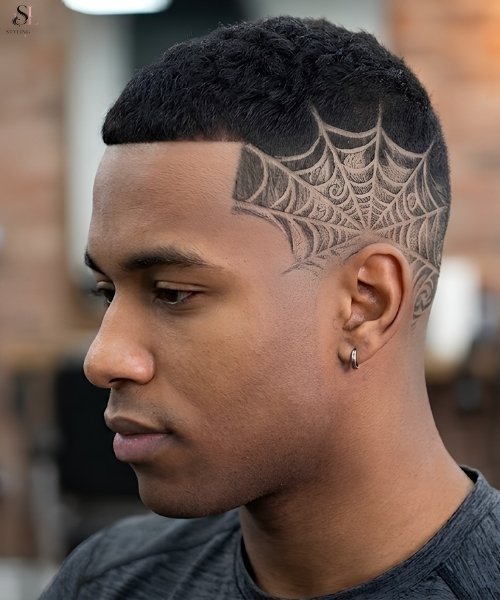
This design uses several thin lines that branch outward from a central point, creating a web-like appearance. It requires precision because too many thick lines can make the pattern difficult to read.
How it would style: A short textured top works best because it keeps the overall haircut controlled. You can also pair it with curls for a stronger texture-versus-precision contrast.
Best for: Thick, curly, and coily hair.
Best face shapes: Oval and square.
Design placement: Side or back of the taper.
Ask your barber: “Create a small spiderweb-inspired pattern with thin lines and plenty of space between each section.”
Flame-Inspired Design
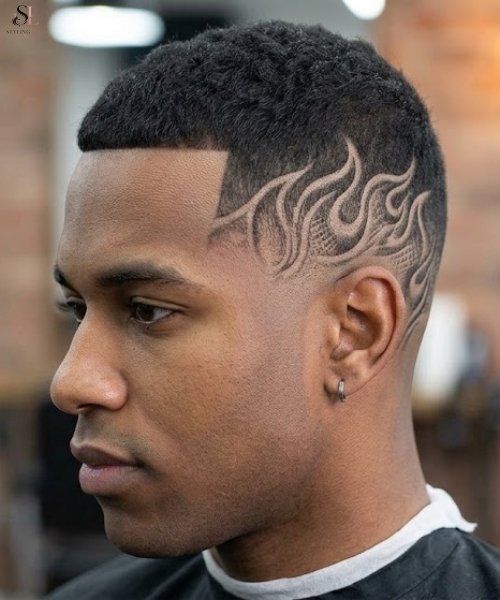
A flame-inspired pattern uses curved, pointed shapes that suggest flames without trying to create a literal picture. The design can rise upward through the fade or flow backward.
How it would style: This is one of the strongest matches for a messy, spiky, or textured top. Use matte styling clay to create separation and movement above the design.
Best for: Thick, straight, wavy, and coily hair.
Best face shapes: Round and oval.
Design placement: Temple toward the side or back.
Ask your barber: “Create a compact flame-inspired design with curved points that flow backward through the high taper.”
Crown-Inspired Pattern
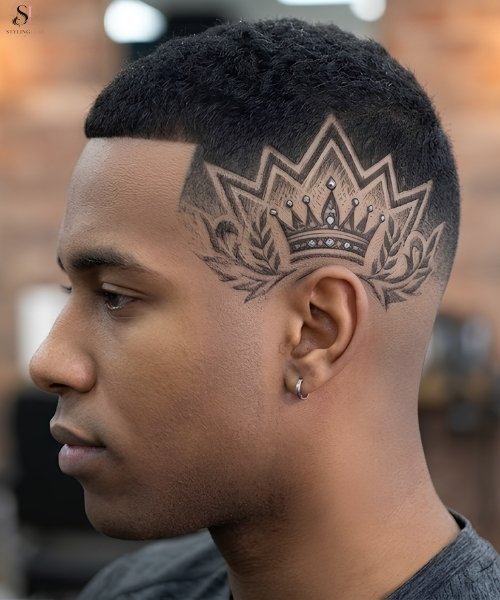
A crown-inspired design adds several small points or arches to suggest a crown shape. It gives you a personalized, playful detail without requiring a large illustration.
How it would style: A clean quiff or textured top makes the crown design stand out. You can also wear the top naturally curly for a more relaxed look.
Best for: Medium to thick hair.
Best face shapes: Oval and square.
Design placement: Temple, side, or rear section of the taper.
Ask your barber: “Create a small crown-inspired pattern with clean points and keep the design proportional to the side of my head.”
Flowing S-Curve
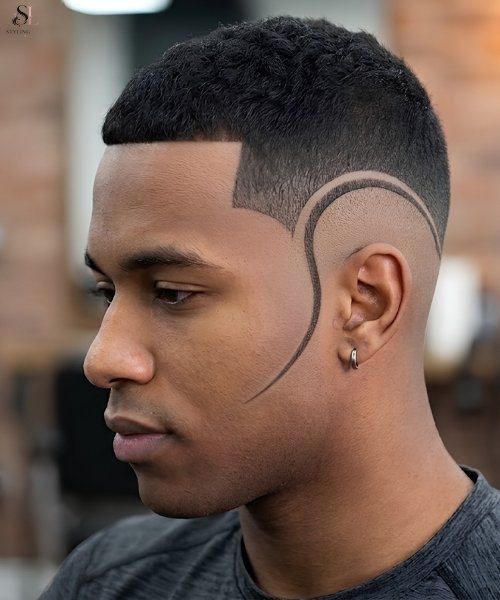
The S-curve creates one continuous line that bends in two directions. It looks artistic and works particularly well when you want something different from the usual straight slash.
How it would style: A wavy or curly top is the natural match because the entire haircut has movement. With straight hair, use a textured finish rather than a completely flat style.
Best for: Wavy, curly, and straight hair.
Best face shapes: Oval, heart, and square.
Design placement: Temple toward the side.
Ask your barber: “Create one smooth S-shaped line through the high taper and keep the curve fluid rather than angular.”
Multi-Line Freestyle
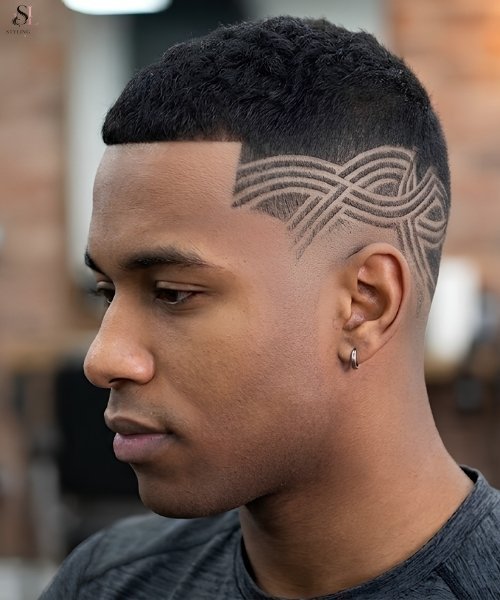
The multi-line freestyle design combines several short lines moving in different directions. Your barber can adjust the pattern to fit the available faded area instead of following a rigid template.
How it would style: Keep the top textured but not overly complicated. A messy crop, short quiff, or natural curly top gives the haircut enough volume while allowing the design to remain visible.
Best for: Thick, curly, coily, and wavy hair.
Best face shapes: Oval and square.
Design placement: Temple, side, or rear section.
Ask your barber: “Give me a custom multi-line freestyle design with different angles, but keep the pattern balanced and leave enough negative space.”
Custom Signature Design
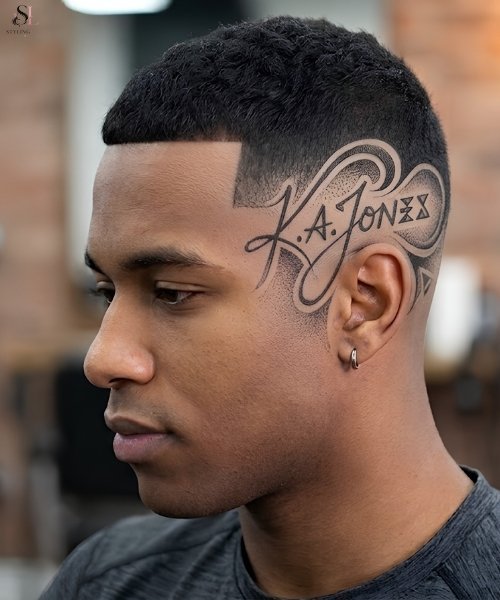
A custom signature design is the most personal option. Instead of copying a standard pattern, your barber creates something around a symbol, initials, abstract shape, or personal idea. The best designs use the natural space created by the high taper rather than forcing a complicated image into a small area.
How it would style: Keep the top relatively clean so the custom design gets the attention it deserves. A textured crop, curly top, short quiff, or slicked-back style can all work, depending on the design’s size and position.
Best for: Any hair type when the design is adapted correctly.
Best face shapes: Any face shape, provided the size and placement are balanced.
Design placement: Temple, side, or back.
Ask your barber: “I want a custom signature design based on this reference. Please adapt the size and angle to my head shape and high taper rather than copying it exactly.”
Best Designs for Your Hair Type
Your hair texture doesn’t determine whether you can wear a high taper fade with design, but it can affect how much contrast the design creates.
| Hair Type | Designs That Work Well | Styling Tip |
|---|---|---|
| Straight | Lines, geometric shapes, arrows | Keep the top textured or neatly styled |
| Wavy | Curves, flowing lines, freestyle designs | Let natural movement remain visible |
| Curly | Double lines, curves, simple geometric designs | Define curls on top while keeping the taper clean |
| Coily | Bold lines, lightning shapes, geometric designs | Use the contrast between texture and fade |
| Thick | Most designs | Remove enough bulk around the taper for definition |
| Fine | Small lines and subtle patterns | Avoid overly large designs that can overpower the cut |
Straight hair tends to make shaved lines look especially crisp. Curly and coily hair can create strong contrast because the textured top stands apart from the closely tapered sides.
If your hair is fine, a smaller design usually looks more balanced. With thick hair, you have more flexibility because the dense top can support a bolder contrast.
Which Design Suits Your Face Shape?
Your face shape can help you decide whether a design should look sharp, curved, subtle, or bold.
For a round face, angular designs such as diagonal lines, chevrons, and lightning shapes can add a stronger visual direction. Keeping some height on top can also make the overall haircut look more elongated.
For a square face, geometric designs complement naturally strong facial angles. A simple double line or clean triangular pattern can reinforce that structured appearance.
For an oval face, you have plenty of flexibility. Most high taper designs can work because an oval face generally accommodates a wide range of hairstyles.
For a long face, avoid making the design excessively tall or vertical. A horizontal or slightly curved detail can create better visual balance.
For a heart-shaped face, a curved or compact design around the temple can work well without adding too much visual weight near the upper sides.
Your barber can also adjust the design based on your hairline and head shape. A reference photo helps, but the exact placement may need to change to fit your proportions.
How Complex Can Your Design Be?
Your design can be as simple as one razor line or as detailed as a multi-element freestyle pattern. The right level depends on your personal style, workplace expectations, maintenance routine, and barber’s skill.
A low-complexity design usually includes one or two lines. These are quick to refresh and easy to combine with almost any top style.
A medium-complexity design might include several lines, geometric shapes, or intersecting details. These provide more personality while remaining relatively wearable.
A high-complexity design can involve curves, multiple shapes, freestyle artwork, or a customized symbol. These designs need more precision and can become difficult to recognize as the hair grows out.
If this is your first design, starting simple makes sense. You can always try something more elaborate at your next appointment.
Where Should the Design Go?
The temple is one of the most popular locations because the high taper naturally creates a short area where the design can stand out.
A design can also extend toward the side of the head, depending on how high the taper sits. The back of the head offers another option, especially for patterns that look better when viewed from behind.
Consider visibility before choosing placement. A small temple line is easy to show and relatively subtle, while a larger side design becomes a major feature of the haircut.
You should also think about how the design connects with your hairline. A design that follows the direction of your taper usually looks more intentional than one placed randomly.
How to Tell Your Barber What You Want
Don’t rely only on the haircut’s name. “High taper fade with design” can mean many different things, so show your barber a reference photo whenever possible.
Explain the important details:
- Tell them you want a high taper, not a low or mid taper.
- Show the exact design you like.
- Point out where you want the design placed.
- Explain whether you want a subtle or bold line.
- Tell them how much length you want to keep on top.
- Mention whether you want the design on one side or both.
- Ask how the design will look with your natural hair texture.
A useful request might sound like:
“I want a high taper around the temples and back, with this design carved into the faded section. Keep the top around this length and make the lines sharp but fairly narrow.”
If you’re unsure about the design’s size, ask your barber to recommend the best scale for your head shape. An experienced barber can often adjust the reference so it works better with your hairline and taper.
How Long Does the Design Last?
A shaved design usually looks its sharpest when the surrounding fade is fresh. As the hair grows, the thin lines gradually become less defined and the contrast decreases.
For many people, a design may look noticeably softer after several days to a couple of weeks, depending on how quickly their hair grows and how short the design was shaved.
The fade itself may also need refreshing before the design completely disappears. If you want the haircut to stay consistently crisp, schedule touch-ups based on your personal growth rate rather than following a fixed timetable.
You can ask your barber to refresh the design during your regular taper appointment. Designs with very thin lines may need particularly careful cleanup to remain recognizable.
How to Style This Haircut
The high taper fade with design works with many different top styles, so your styling routine depends mainly on how you wear the hair above the taper.
Start with clean, slightly damp hair. Apply a small amount of styling product and distribute it evenly instead of loading the hair with too much product.
For a textured finish, use a lightweight matte product and work it through with your fingers. For a cleaner finish, comb the hair into position after applying a small amount of pomade or styling cream.
Curly hair can benefit from a curl-enhancing product that defines the natural pattern without making the top look heavy. Wavy hair often looks best when you allow some natural movement rather than forcing every strand into place. The goal is to let the design remain the visual detail on the sides while the top provides shape and volume.
Best Top Styles to Pair With It
A high taper with design doesn’t require one specific hairstyle on top. The best option depends on your hair length, texture, and personal style.
Textured crop: A textured crop creates a sharp contrast with the detailed sides while keeping the top relatively easy to manage.
Curly top: Natural curls add volume and texture above the clean taper. Simple razor designs work particularly well here.
Short quiff: A short quiff gives the haircut some height without becoming difficult to style.
French crop: The controlled shape of a French crop pairs nicely with a clean geometric design.
Spiky top: A spiky finish gives the haircut an energetic, youthful appearance.
Slicked-back top: Longer hair can be brushed backward to create a more polished contrast against the detailed taper.
Messy textured top: This option works well when you want the haircut to feel casual rather than overly structured.
Short afro or textured top: Strong natural texture can make a simple razor design stand out dramatically.
Mistakes to Avoid With This Cut
The biggest mistake is choosing a design without considering how it fits your head shape, hairline, and existing haircut. A design may look excellent in a reference picture but need adjustment on your head.
Avoid asking for an extremely complicated pattern if your barber isn’t experienced with hair designs. Precision matters more than complexity.
Don’t make the design too large simply because you want it to stand out. Negative space helps individual lines remain recognizable.
Another common mistake is neglecting the rest of the haircut. A great design can’t compensate for an untidy taper, uneven lineup, or poorly maintained top.
You should also avoid changing the design every few days with a different barber. Consistent technique makes it easier to maintain the taper and keep the design balanced.
Finally, don’t choose a design that conflicts with your daily routine. If you need a conservative haircut for work or school, a small temple line may be more practical than a large freestyle pattern.
Frequently Asked Questions
Is a high taper fade with design good for thick hair?
Yes. Thick hair can create strong contrast between the fuller top and closely tapered sides. Simple lines, geometric shapes, and bold designs can all work well.
Can you get a design with curly hair?
Absolutely. Curly hair pairs especially well with a high taper because the textured top contrasts with the clean sides. Curved lines and simple geometric designs are good starting options.
Is a razor design permanent?
No. A razor-cut design grows out as the shaved hair returns. Its sharpness gradually decreases, so you’ll need regular cleanup if you want to maintain the original appearance.
Should I choose one design or several?
That depends on how bold you want the haircut to look. One well-placed line can look cleaner than several competing patterns. If you choose multiple details, leave enough space between them.
Does the design have to be on both sides?
No. A one-sided design often looks more subtle and distinctive. Matching designs on both sides create a more symmetrical appearance.
Can my barber customize a design for my head shape?
Yes. In fact, customization can make the result look more natural. Your barber can adjust the angle, size, and placement to work with your head shape and hairline.
What should I bring to my barber?
Bring one or two clear reference photos. Also tell your barber what you like about the design, where you want it, and how much hair you want to keep on top.
Key Takeaways
A high taper fade with design gives you a clean foundation while leaving room for personal expression. The design can be as simple as one diagonal line or as detailed as a customized freestyle pattern.
Choose the design based on your hair texture, face shape, desired level of attention, and how often you’re willing to maintain the cut. Straight and geometric designs create a crisp appearance, while curved and freestyle patterns offer a softer or more artistic finish.
Most importantly, don’t choose a design just because it looks good in a photo. Work with your barber to adjust its size and placement to your head shape, hairline, and taper. A well-executed simple design will almost always look better than a complicated pattern that doesn’t fit the haircut.
2 thoughts on “High Taper Fade with Design: 29 Razor-Cut Styles to Show Your Barber”