

If you’re looking for a clean, modern haircut that works with almost any hairstyle, learning the different types of taper fade is a great place to start. From the subtle low taper to the sharper high taper, each style changes the way your sides, temples, and neckline look while letting you keep your preferred length on top. In this guide, you’ll discover 12 popular taper fade styles, where each taper starts and ends, the ideal hair length and height, which hair types and face shapes suit it, and the best products and styling techniques to keep your haircut looking sharp.
What Are the Main Types of Taper Fade?
The main types of taper fade are low taper, mid taper, and high taper, while variations such as skin, burst, drop, shadow, and temple tapers change how the transition looks and where it follows the head. The most important thing to understand is that the words low, mid, and high describe the position of the taper, not automatically how short it becomes. Your barber can create a low taper that finishes at a #1 guard, for example, or a low taper that goes down to the skin.
Your choice should depend on the amount of contrast you want, how much hair you want to preserve on the sides, your natural hair texture, and the hairstyle you plan to wear on top. A low taper gives you a more conservative appearance, a mid taper gives you a balanced look, and a high taper creates stronger contrast. Advanced variations let you customize the shape even further.
When you book your haircut, tell your barber four things: where you want the taper placed, how short you want the shortest area, how much length you want on top, and how you want the top styled. That information is much more useful than simply saying, “I want a taper fade.”
Quick Navigation: Types of Taper Fade at a Glance
| Taper Type | Starting Area | Shortest Area | Top Length | Overall Look |
|---|---|---|---|---|
| Low Taper | Lower sideburn | #0–#1 | 2–5 inches | Subtle |
| Mid Taper | Mid-side/temple | #0–#1 | 2–4 inches | Balanced |
| High Taper | Upper temple | #0–#1 | 2.5–5 inches | Bold |
| Skin Taper | Varies | Skin | 2–5 inches | Sharp |
| Burst Taper | Around ear | #0–#1 | 2–5 inches | Rounded |
| Drop Taper | Side to nape | #0–#1 | 2–5 inches | Contoured |
| Shadow Taper | Varies | #1–#2 | 2–5 inches | Soft |
| Temple Taper | Temple | #0–#1 | 2–5 inches | Defined |
These are practical starting ranges rather than strict measurements. Your barber can adjust them according to your head shape, density, hairline, and desired silhouette.
For example, someone with thick hair may need more bulk removed from the sides than someone with fine hair. Similarly, curly hair can visually appear shorter than straight hair at the same measured length.
What Is a Taper Fade?
A taper fade is a haircut technique that gradually reduces hair length around the temples, sideburns, and neckline while leaving more length through the top and often the upper sides. The transition from short to long is blended rather than creating a sudden line.
The modern taper fade developed from traditional barbering techniques that used progressively shorter lengths to create cleaner edges and smoother transitions. Today, barbers combine clippers, guards, trimmers, scissors, and sometimes razors to customize the result.
A taper fade can therefore be subtle or dramatic. The shortest area can remain slightly visible with a shadow finish or go all the way down to the skin. The top can also range from a short crop of around 1–2 inches to 5 inches or more for a longer quiff, curls, or textured style.
Defining traits include a gradual transition, cleaner temples, tapered sideburns, a controlled neckline, longer hair on top, and customizable length. The taper is particularly versatile because you don’t have to sacrifice the entire side of your hairstyle to get a clean finish.
Taper vs. Fade: What’s the Difference?
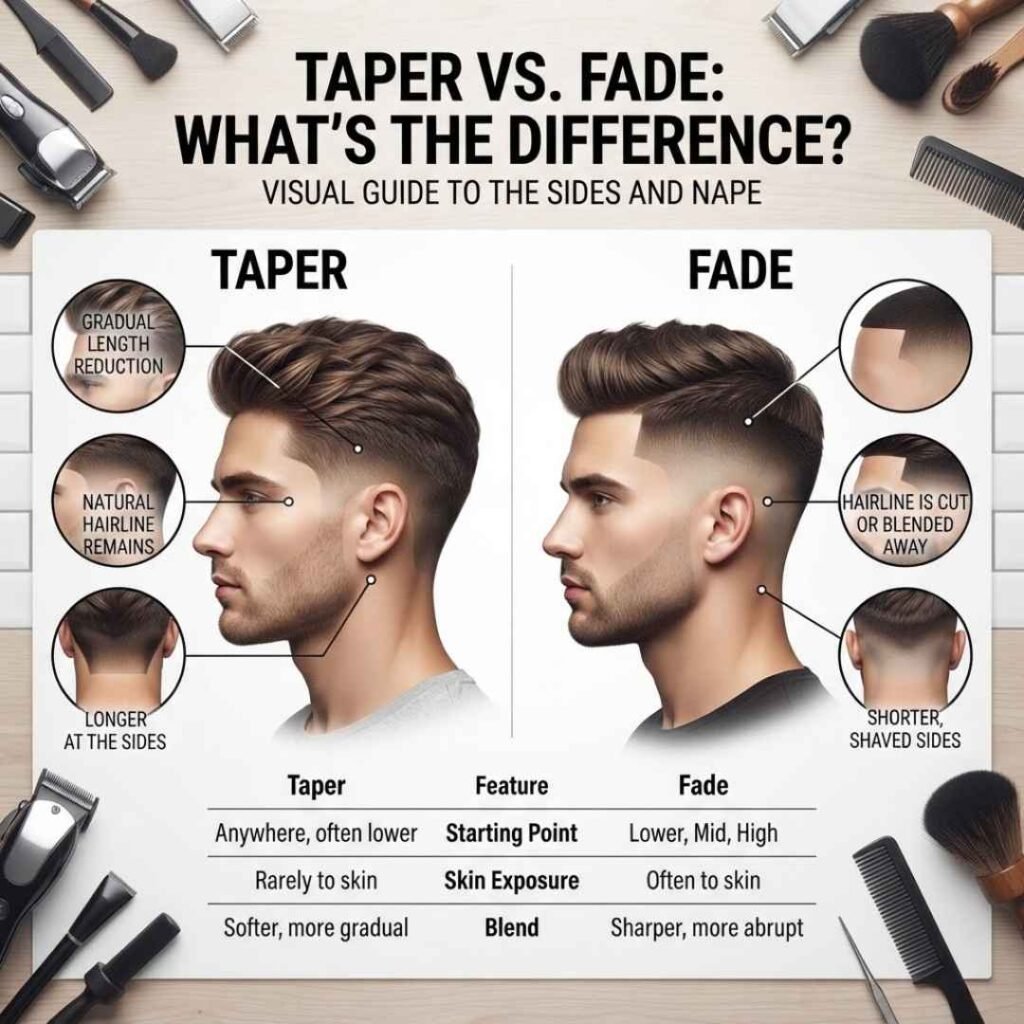
A taper concentrates the reduction mainly around the perimeter, especially the sideburns and neckline, while a traditional fade generally carries the shortened transition farther up the sides and back. A taper therefore lets you retain more of your natural side weight, while a full fade can expose considerably more of the scalp.
The two terms are sometimes used interchangeably in everyday barber conversations, so the safest approach is to describe the exact result you want. If you want your sides mostly full with only the edges cleaned up, say that clearly. If you want the sides much shorter, specify the fade height and guard.
The 3 Foundation Types of Taper Fade
The three basic taper heights are low, mid, and high. They give you the foundation for almost every other taper variation.
Low Taper Fade
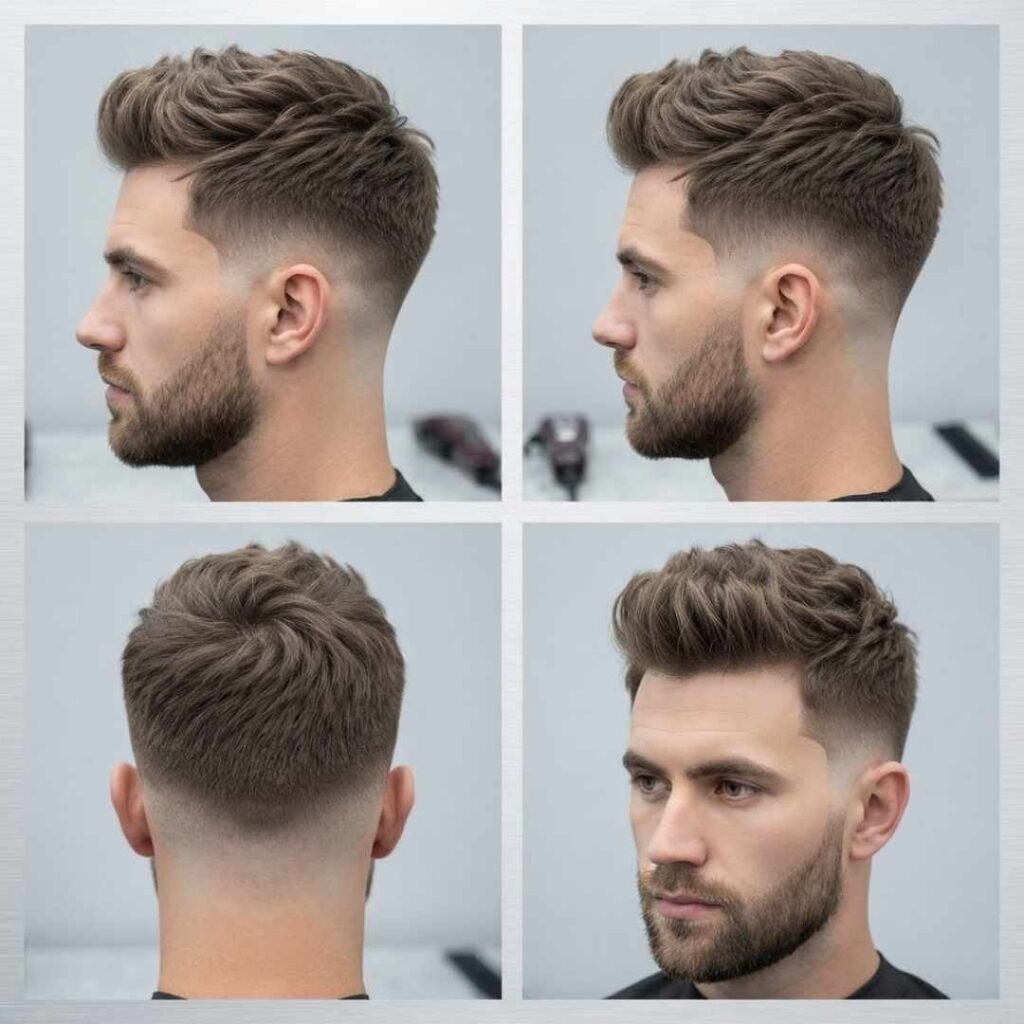
A low taper fade starts around the lower sideburns and lower neckline, keeping most of the hair above that area relatively full. The taper gradually becomes shorter as it approaches the bottom edge, usually reaching somewhere between a #0 and #1 at its shortest point, although you can request a #2 for an even softer finish.
The sides above the taper can remain around a #2–#4 or even longer if your barber uses scissors, while the top can stay anywhere from roughly 2–5 inches depending on whether you want a crop, side part, quiff, curls, or messy textured style. The back generally retains plenty of weight, with only the neckline being cleaned and tapered.
A low taper looks particularly good with straight, wavy, curly, and coily hair because it doesn’t dramatically change the natural shape. For styling, use matte clay for a textured finish, styling cream for natural movement, or curl cream for curls. A low taper suits oval, square, diamond, rectangular, and round faces, especially when you add a little height to the top of a rounder face.
For a barber-ready request, say: “I want a low taper starting around the lower sideburns and neckline, take the shortest point to about a #0.5 or #1, keep the sides fuller above the taper, and leave about 3–4 inches on top.”
Mid Taper Fade
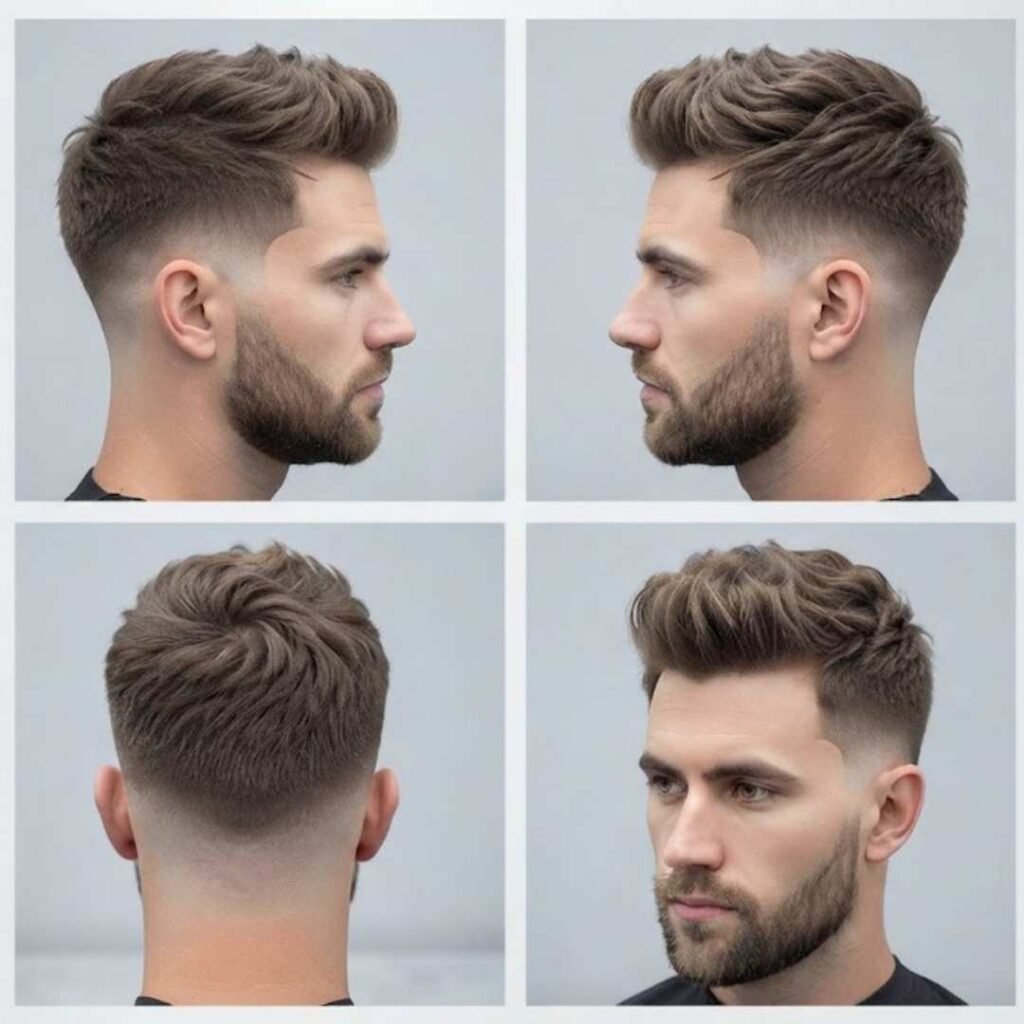
A mid taper fade places the transition higher on the sides, generally around the middle of the side area and toward the temple, giving you more contrast than a low taper without removing as much side weight as a very high transition. The shortest section can be around #0–#1, while the surrounding sides commonly graduate into #2–#3 or longer depending on your desired finish.
Around 2–4 inches on top gives you enough length for a textured crop, quiff, fringe, side part, messy top, or curly style. The back maintains moderate weight but receives a cleaner transition toward the neckline. Because the mid taper sits between subtle and aggressive, it works with straight, wavy, curly, and thick hair and suits oval, square, diamond, and rectangular face shapes particularly well.
Matte clay or medium-hold styling paste works well when you want definition without excessive shine, while styling powder can add root volume to straight hair. Blow-dry the top into your preferred direction before applying a small amount of product.
Tell your barber: “Give me a mid taper around the middle of the sides and temple area, take the shortest point to about a #0.5 or #1, blend it smoothly, and leave around 3 inches on top.”
High Taper Fade
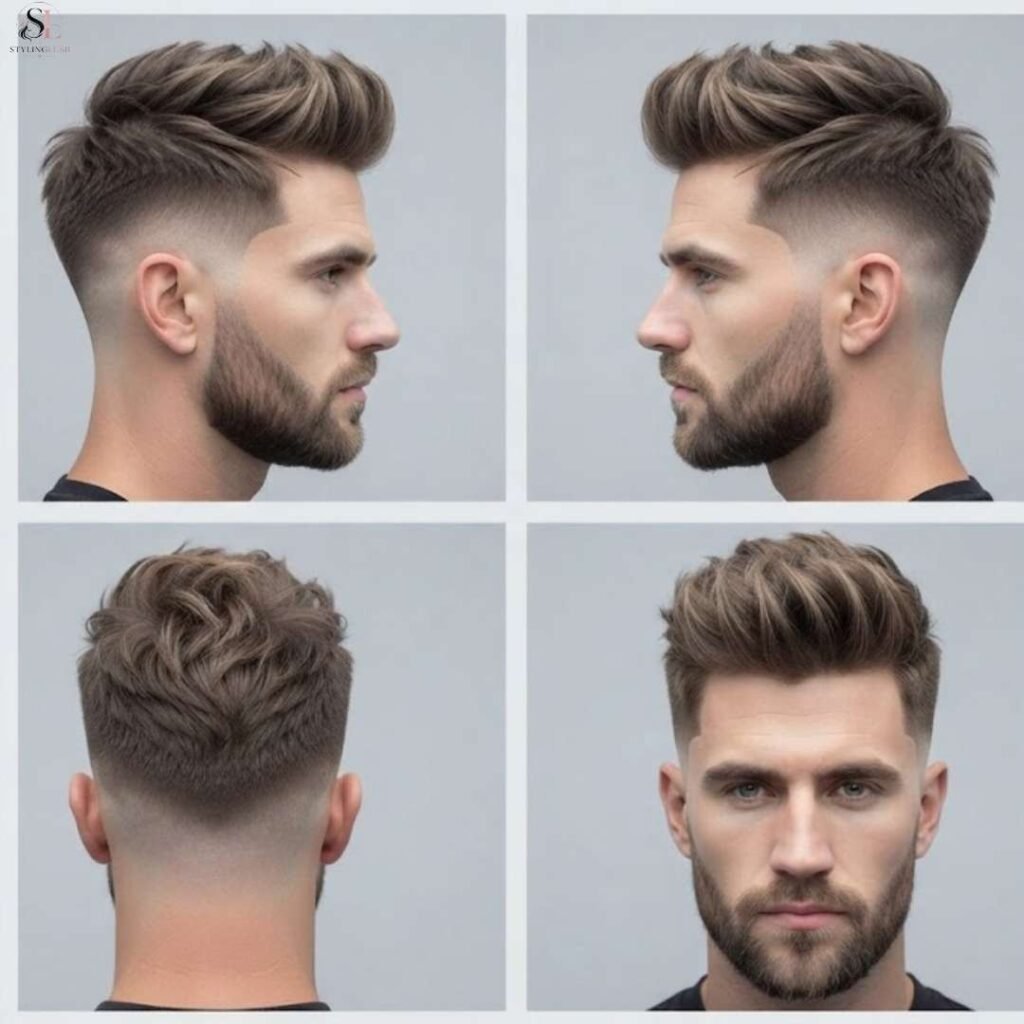
A high taper fade places the transition farther upward toward the upper temple area, creating stronger contrast and making the longer top appear more prominent. The shortest point can be #0, #0.5, or #1, while the surrounding area gradually increases in length as it moves into the top.
Leaving approximately 2.5–5 inches on top gives you enough length for a textured quiff, pompadour, spiky style, curls, faux hawk, or high-volume crop. The upper sides are noticeably tighter than with a low taper, while the neckline also receives a clean taper.
A high taper works especially well when you want a sharper, more modern appearance and can suit oval, square, diamond, rectangular, and heart-shaped faces. For straight hair, matte clay or styling powder can create lift; for curly or coily hair, use a curl-defining product that preserves the natural pattern. Because the contrast is stronger, you’ll notice regrowth sooner than with a low taper.
Your barber script should be: “I want a high taper around the upper temple area, take the shortest point to about a #0.5, blend it cleanly into the sides, and leave 3–4 inches on top for height and texture.”
Advanced Technique Variants: Beyond Basic Height
Once you understand the three basic heights, you can customize the haircut further with different finishes and shapes.
Skin Fade / Bald Fade Taper
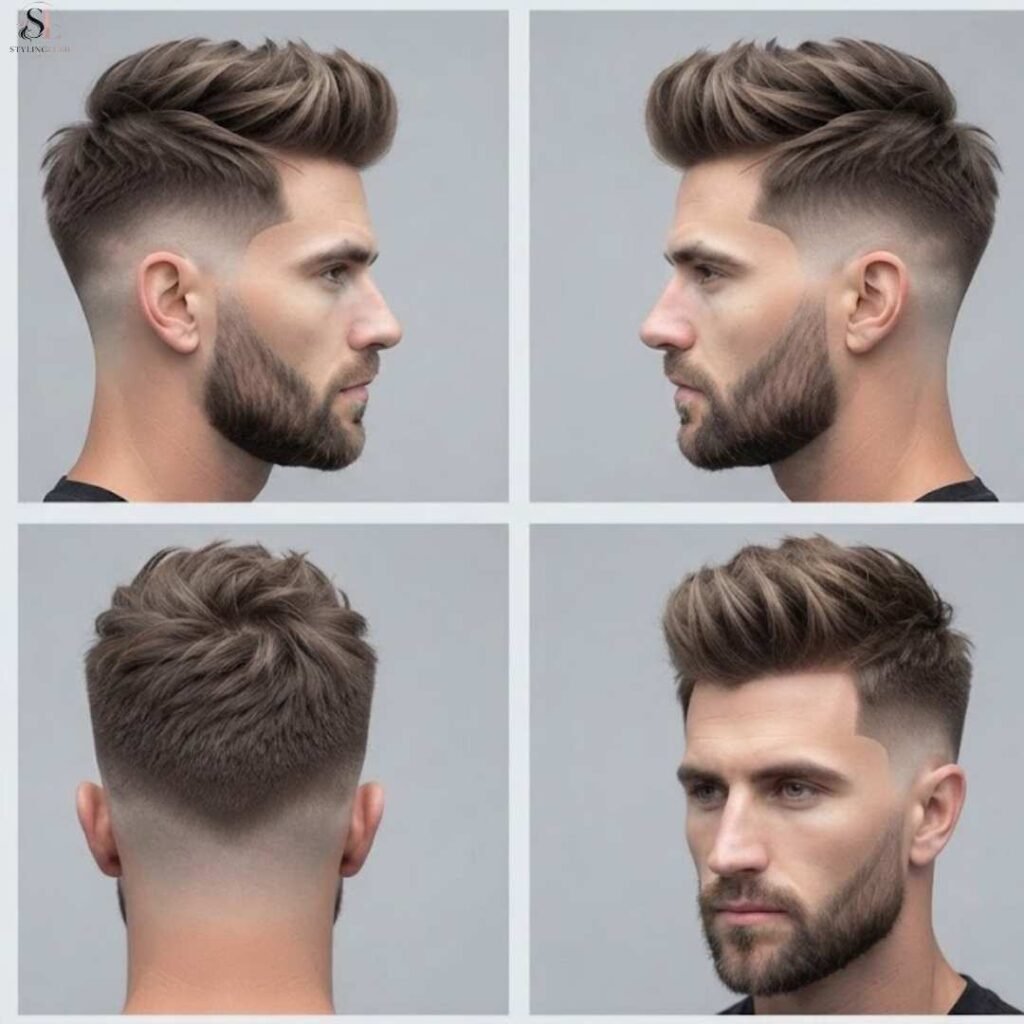
A skin or bald taper takes the shortest part completely down to the skin, producing the strongest possible contrast between the bare area and the longer hair. The placement can be low, mid, or high, so “skin” describes the endpoint rather than the height. Your barber may use a trimmer or foil shaver at the shortest section and then gradually blend upward through very short clipper lengths.
You can keep approximately 2–5 inches on top, depending on your chosen hairstyle, while the sides above the transition can remain around #1–#3. This style works particularly well with sharp textured crops, curls, quiffs, and defined hairlines. Matte clay is useful for textured tops, while pomade works for slick styles. Skin fades demand more frequent touch-ups because even small amounts of regrowth create visible contrast.
Tell your barber: “Give me a skin taper in the placement we discussed, take the shortest point completely to skin, and blend it gradually into the longer sides.”
Burst Taper Fade
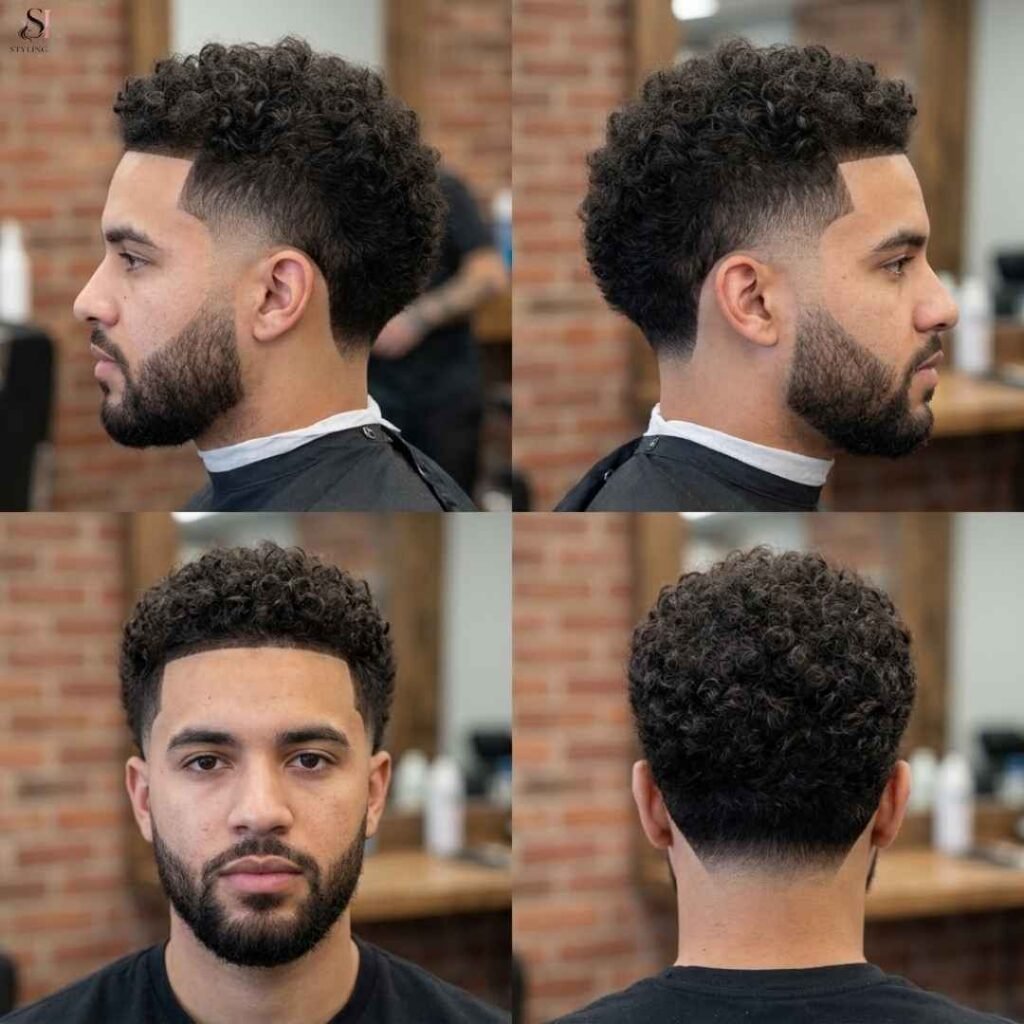
A burst taper fade curves around the ear rather than running evenly across the entire side, creating a rounded transition while leaving more hair toward the back. The taper usually starts around the ear, expands around its shape, and then blends into the area behind the ear. The shortest section can reach #0–#1, while the hair above it remains longer.
The top can stay around 2–5 inches or considerably longer for a mohawk or similar style, and the back can remain several inches long. This makes the burst taper particularly useful for curly hair, faux hawks, mohawks, textured tops, and styles where you want the back to remain prominent. Use curl cream for curls, styling cream for softer textures, or matte clay for straight textured hair.
Tell your barber: “Give me a burst taper that curves tightly around my ear, keeps the back fuller, and blends smoothly into the top.”
Drop Fade Taper
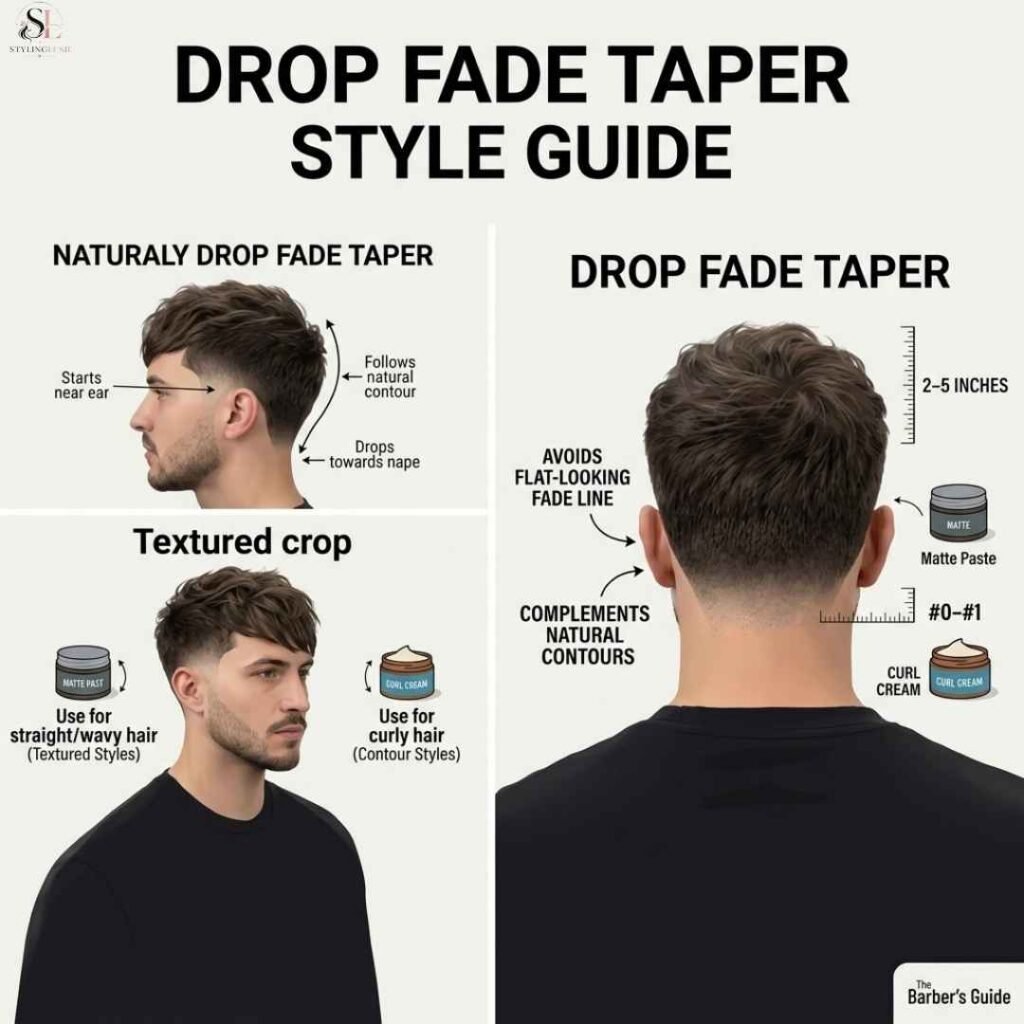
A drop fade taper follows the natural curve of your head by dropping lower toward the back, rather than maintaining a straight transition around the entire head. It normally begins around the side and ear area before curving downward behind the ear toward the nape. The shortest point can be #0–#1, while the upper sides and back retain more length.
Around 2–5 inches on top gives you flexibility for textured crops, curls, quiffs, and messy styles. The curved transition can complement the natural contours of your head and is especially useful when you don’t want a flat-looking fade line. Matte clay or paste works well for straight and wavy hair, while curl cream is better for naturally curly hair.
Your barber should hear: “Give me a drop taper that follows the curve of my head, drops behind the ear toward the neckline, and keeps the top and upper back fuller.”
Shadow Taper Fade
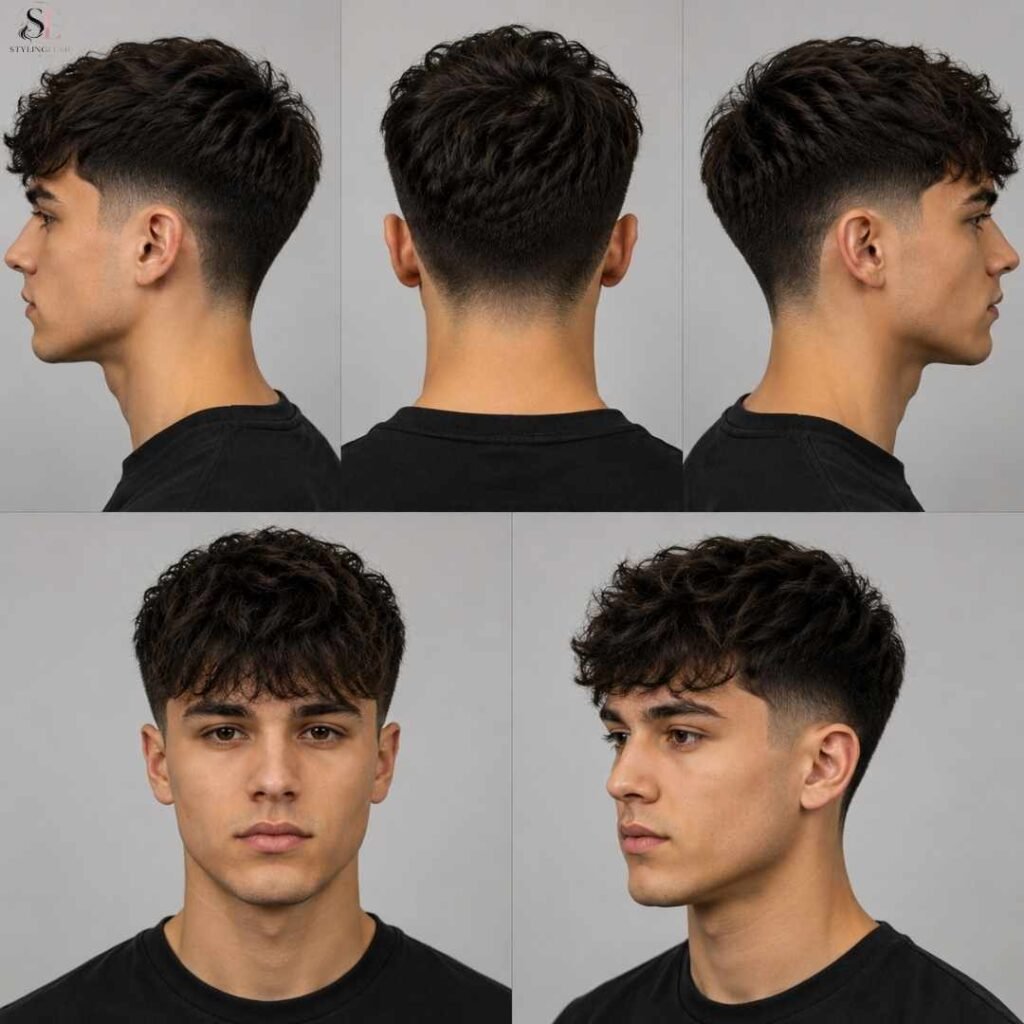
A shadow taper keeps visible hair at its shortest point instead of exposing the scalp, creating a softer and more natural transition. You can position the shadow taper low, mid, or high, but the defining feature is that the shortest area remains dark rather than completely bare. A #1–#2 is a practical range for maintaining that shadowed appearance, while the surrounding sides can gradually increase to #2–#4 or longer.
The top can remain around 2–5 inches depending on your hairstyle. This finish works especially well if you want a professional appearance, dislike visible scalp, or prefer a taper that grows out more subtly. Styling cream, lightweight paste, or matte clay can be used depending on the top style.
Tell your barber: “Give me a soft shadow taper with no bare skin showing. Keep the shortest area dark and blend it gradually into the longer sides.”
Also read: Low Taper Fade Long Hair: 35 Best Styles for Every Face Shape & Hair Type
Temple Fade (Brooklyn Fade)
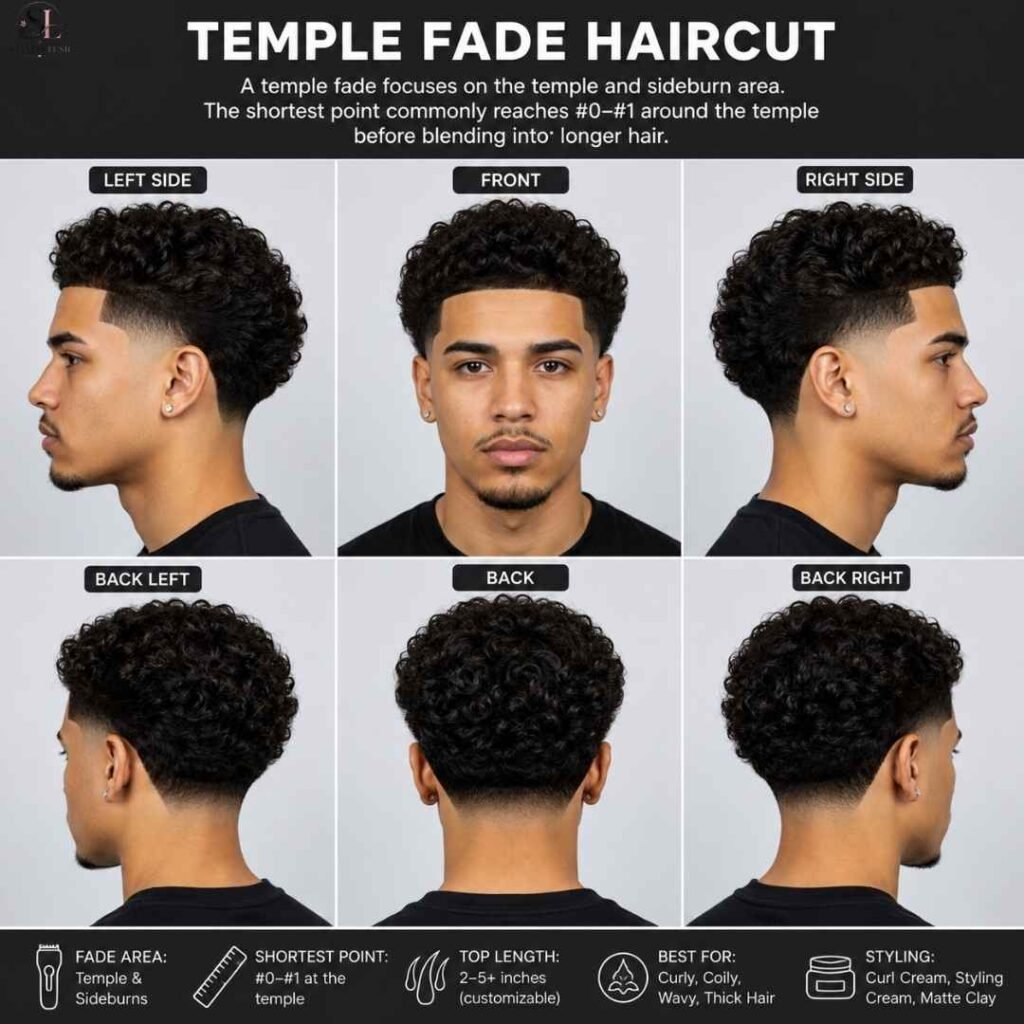
A temple fade focuses primarily on the temple and sideburn area, allowing most of your sides and back to remain full. The shortest point commonly reaches #0–#1 around the temple before blending into longer hair. You can keep 2–5 inches or more on top, depending on whether you’re wearing curls, waves, a crop, or longer textured hair.
Because very little of the side is removed, the temple fade is a strong choice when you want your hairline to look cleaner without committing to a larger fade. It works especially well with curly, coily, wavy, and thick hair. Curl cream can define curls, while styling cream or matte clay can control straight or wavy hair.
Tell your barber: “Clean up only around my temples and sideburns with a sharp taper, keep most of my sides and back full, and blend the edges naturally.”
Taper Fade Styles by Hair Type & Texture
Taper Fade for Curly Hair
A taper fade for curly hair cleans the edges while preserving the natural curl volume on top. Around 3–6 inches on top gives your curls enough length to form properly, while the taper can use approximately #0–#1 at its shortest point and gradually move into #1–#3 around the sides.
A low taper is ideal when you want maximum curl volume, while a burst taper emphasizes the rounded shape around your ears and a drop taper creates a more contoured silhouette. Keep the back fuller if you’re building a larger curly shape. Curl cream is the most useful styling product for definition, while a lightweight leave-in conditioner can help with moisture.
Apply product to damp hair, distribute it gently, and allow the curls to form naturally. Oval, square, diamond, and round faces can all work well with curly tapers, although adding height rather than excessive side width can help create balance on rounder faces.
Ask your barber: “Keep my curls around 3–5 inches on top, preserve the natural volume, and give me a clean low or burst taper around the edges without taking too much curl away.”
Taper Fade for Straight Hair
A taper fade for straight hair relies heavily on clean blending because straight strands make changes in length more visible. Keeping around 2–4 inches on top gives you enough length for a textured crop, quiff, side part, fringe, or messy style, while #0.5–#1 can create a clean shortest point and #2–#3 can be used higher in the transition.
Low and mid tapers are especially versatile because they preserve some side weight, while a high taper creates a sharper contrast. Straight hair often benefits from matte clay, styling paste, or powder depending on how much texture and volume you want.
Blow-dry the roots in the direction you want the hair to sit, then use a small amount of product rather than coating the entire head. A taper with moderate height on top can complement oval, square, diamond, and rectangular faces.
Ask your barber: “Leave about 3 inches on top, remove excess bulk from the sides, and give me a clean mid taper with a smooth transition and no harsh lines.”
Taper Fade for Afro Hair
A taper fade for Afro-textured hair creates a clean perimeter while preserving the natural volume, density, and shape of the hair on top. Depending on the desired silhouette, you can keep 2–5 inches or more on top and use a #0–#1 around the taper before gradually blending upward. A temple taper works well when you want to preserve maximum volume, while a high taper creates stronger contrast and a burst taper can complement rounded textured styles.
Keep the top shaped according to your natural growth pattern instead of forcing it into an unsuitable length. Leave-in conditioner, curl cream, and lightweight moisturizing products are useful for maintaining definition and manageability. Avoid excessive manipulation, particularly when the hair is dry.
Ask your barber: “Preserve my natural texture and volume on top, clean my temples and neckline, and create a smooth taper without shrinking the overall shape.”
Taper Fade for Asian Hair
A taper fade for Asian hair can reduce excess side bulk while preserving the natural density and straight texture on top. Around 2–4 inches on top works well for textured crops, curtains, side parts, quiffs, and messy styles, while the sides can begin around #2–#4 before gradually tapering toward a #0.5–#1 finish.
A low or mid taper is usually the easiest way to maintain a fuller appearance, while a high taper produces more contrast. Matte clay is useful for separation and texture, while styling powder can add root lift without making the hair feel heavy. Blow-dry the roots upward or backward before applying product to create additional height. Oval, square, diamond, and rectangular faces work particularly well with this versatile combination.
Ask your barber: “Keep my natural thickness on top, remove excess bulk from the sides, give me a clean mid taper, and leave around 3 inches on top.”
Frequently Asked Questions
What are the main types of taper fade?
The three foundation types are low, mid, and high taper fades. You can then customize them with skin, shadow, burst, drop, or temple techniques.
What is the difference between a low taper and a high taper?
A low taper keeps the transition closer to the lower sideburn and neckline, while a high taper moves the transition higher toward the temple area. The high version therefore creates stronger contrast and removes more side weight.
What guard should you use for a taper fade?
There isn’t one mandatory guard because the guard controls the shortness, not the taper height. #0–#1 works for a very short taper, #1–#2 creates a softer transition, and longer guards preserve more visible hair.
How long should your hair be on top for a taper fade?
Around 2–5 inches gives you the most versatility. Two inches can work for a textured crop, 3–4 inches works well for quiffs and textured styles, and 5 inches or more gives you room for longer curls, pompadours, and other high-volume hairstyles.
Which taper fade is best for curly hair?
A low, burst, or drop taper is especially useful for curly hair because you can clean the edges without sacrificing the natural volume on top. Curl cream can help define the curls after washing.
Which taper fade is best for a round face?
A low or mid taper paired with some height on top can create a more balanced appearance. Avoid adding excessive width to the sides if you want to visually elongate a round face.
How often should you get a taper fade?
Your ideal schedule depends on how quickly your hair grows and how sharp you want the edges to remain. A skin taper generally shows regrowth more quickly than a shadow or #2 taper because the contrast is greater.
Can you get a taper fade with long hair?
Yes. A taper can clean the temples, sideburns, and neckline while leaving several inches on top. This makes it suitable for long curls, textured hair, slick-backs, quiffs, and other longer hairstyles.
Is a taper fade the same as a skin fade?
No. Taper describes the placement and transition, while skin describes the shortest endpoint. A taper can finish at skin, #0, #1, #2, or another length.
What should you tell your barber?
Give your barber the taper height, shortest guard, top length, and desired shape. For example: “I want a low taper, #1 at the shortest point, 3–4 inches on top, and a natural textured finish.”