
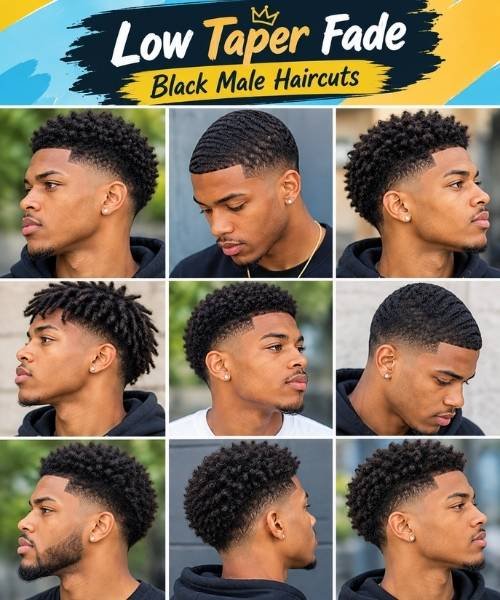
A low taper fade is a haircut where the hair gets gradually shorter around the sideburns and the back of the neck, while the top stays longer. The fade starts low, near the ears, so the cut looks clean without being dramatic. It works on nearly every Black hair texture, from tight coils to loose curls, and it pairs with almost any style on top.
This guide covers what the cut is, how it differs from other fades, 32 styles to show your barber, which ones suit your face shape and hair type, how to ask for it, and how to keep it fresh between visits.
What Is a Low Taper Fade for Black Men?
A low taper fade is a short, subtle fade that begins just above the ear and curves down toward the nape. The hair is cut very short at the bottom edge, then blends upward into longer hair on top. Unlike a high or skin fade, it leaves most of the sides and back intact.
Think of it as a “tidy-up with edges.” You get a sharp, finished outline around your ears and neckline, but you keep plenty of length on the sides.
Here’s what makes up the cut:
- Sideburns: tapered shorter, often to a faint shadow or skin at the very edge.
- Behind the ears: a smooth gradient that follows the natural curve of the head.
- Neckline: tapered short, then finished with a clean outline.
- Top: any length or texture you want.
Why Does This Cut Work So Well on Black Hair?
Black hair holds shape well. Tight curl patterns stay put when cut, so a taper creates crisp, defined contrast between the short edge and the fuller top. Other textures can look fuzzy or uneven at the same transition.
A few other practical reasons it works:
- It’s flexible. You can wear it with waves, an afro, twists, locs, or a plain short cut.
- It’s professional. The soft gradient looks neat in an office, at school, or at a wedding.
- It grows out gracefully. Because the fade is low, a three-week-old cut still looks intentional.
- It frames the face. The clean edges highlight your forehead, jawline, and beard.
- It’s easy on the scalp. You’re removing less hair than with a mid or high fade, which helps if you get razor bumps or have sensitive skin around the neckline.
Also read: Low Taper Fade on Short Hair: 20+ Best Styles for Men (2026)
Low Taper Fade vs. Other Fades: What Every Black Man Needs to Know
Barbers use a lot of similar-sounding terms, and mixing them up is how people leave with the wrong cut. Here’s a quick comparison.
| Cut | Where It Starts | How Short It Gets | Best For |
|---|---|---|---|
| Low taper fade | Just above the ear and nape | Short but not bald | Subtle, professional looks |
| Low fade | Just above the ear and nape | Often down to skin | Sharper contrast, more visible fade |
| Mid taper fade | Around the temple | Short, with more hair removed | Balanced, modern look |
| High taper fade | High on the sides, near the temple or above | Very short, a lot of hair removed | Bold, high-contrast style |
30+ Best Low Taper Fade Black Male Styles
Show your barber any of these. Each one includes who it suits and what to ask for.
Short & Classic Styles
1. Low Taper Fade Black Male Short Hair
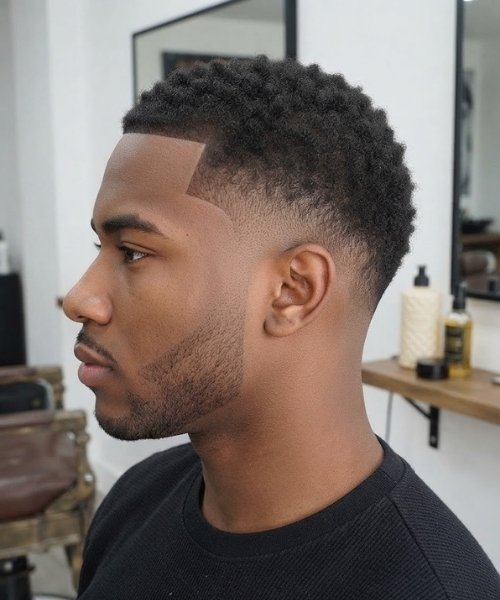
This is the simplest version. The top is cut short, usually under an inch, and tapers smoothly into the sides. It’s easy to style and quick to maintain.
Best for: Anyone who wants a clean, no-fuss look. Ask for: a short top with a low taper and a natural neckline.
2. Low Taper Fade Buzz Cut
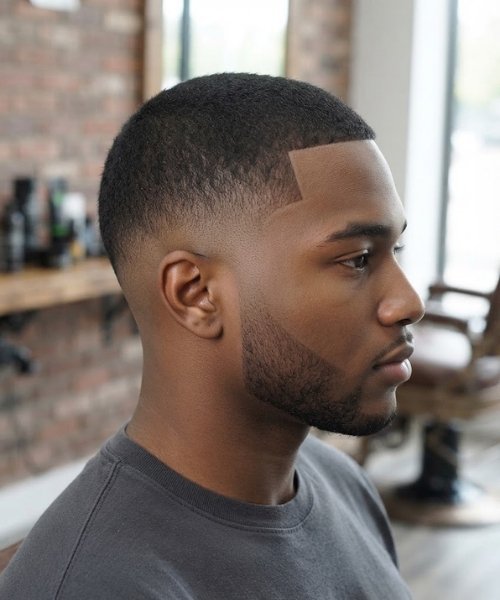
A buzz cut uses a single clipper guard length all over the top, then tapers at the edges. The taper keeps the buzz from looking flat or blocky.
Best for: Men with thinning hair or those who want zero styling time. Ask for: a number 2 or 3 guard on top with a low taper.
3. Low Taper Fade Caesar Cut
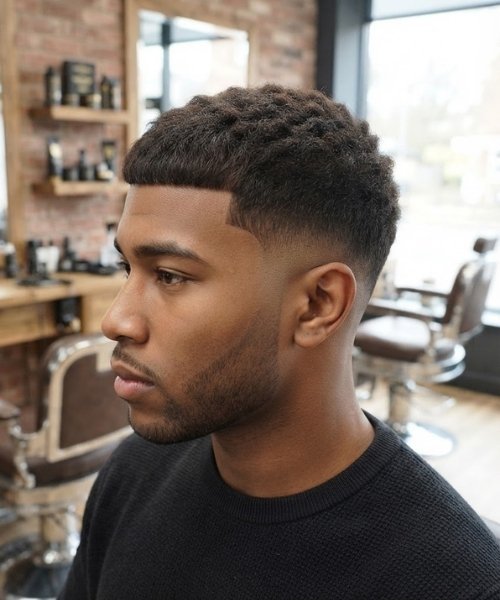
The Caesar is a short, even length on top with a straight fringe at the front. On textured hair, it looks like a soft, cropped line across the forehead.
Best for: Men with a receding hairline, since the short fringe helps hide it. Ask for: a Caesar with a straight or slightly rounded front and a low taper.
4. Low Taper Fade Crew Cut
A crew cut is slightly longer on top and shorter at the front, creating a subtle slope. It’s a classic, athletic look that’s easy to brush forward or to the side.
Best for: Active men and anyone who likes a classic shape. Ask for: a longer top, shorter front, and a low taper.
5. Low Taper Fade Textured Crop
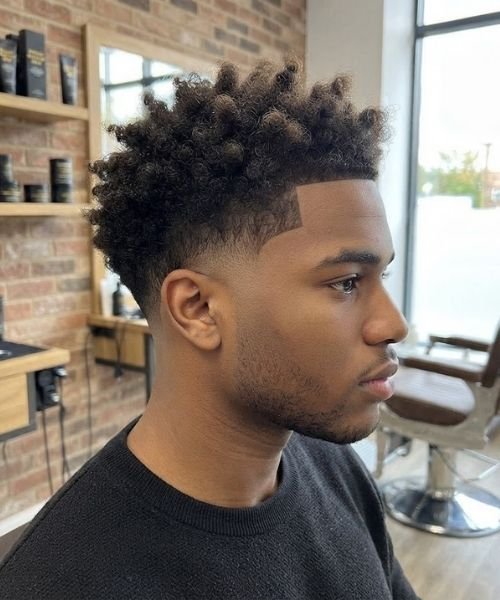
The top is cut a bit longer, then chopped into uneven layers for a messy, textured finish. Coils and tight curls give it natural volume.
Best for: Men who want a modern, effortless look. Ask for: a textured crop with point cutting and a low taper.
Waves & Curl Styles
6. Low Taper Fade with 360 Waves
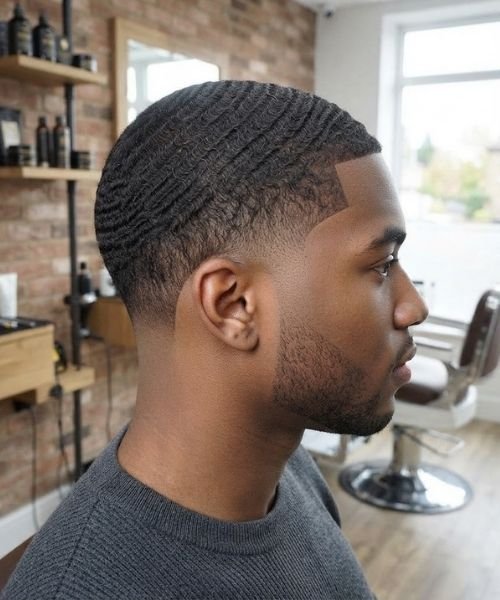
Waves are created by brushing short hair in a circular pattern until the curls form ripples. A low taper frames the waves and keeps the edges crisp.
Best for: Men with Type 4 hair who commit to a brushing routine. Ask for: a low taper that leaves enough length on top for waves to form, usually a guard #1 to #2 on the sides and #2 to #3 on top.
7. Low Taper Fade Curly Hair
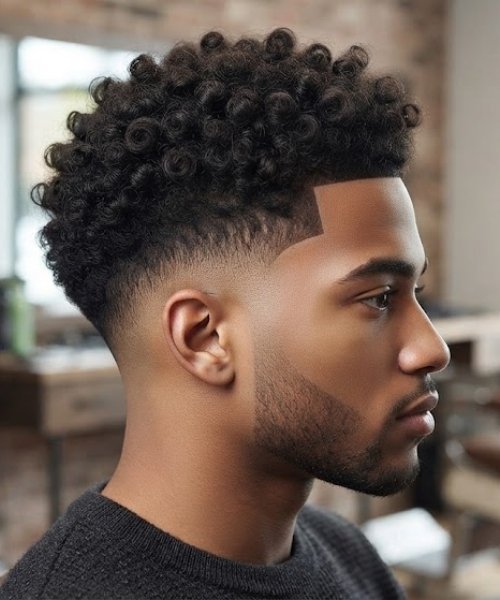
Looser curls (Type 3C and some 4A) look good with a taper because the contrast shows off curl definition. Leave the top an inch or two longer so the curls have room to form.
Best for: Men with defined curl patterns. Ask for: curl-friendly length on top and a low taper on the sides.
8. Low Taper Fade with Natural Coils
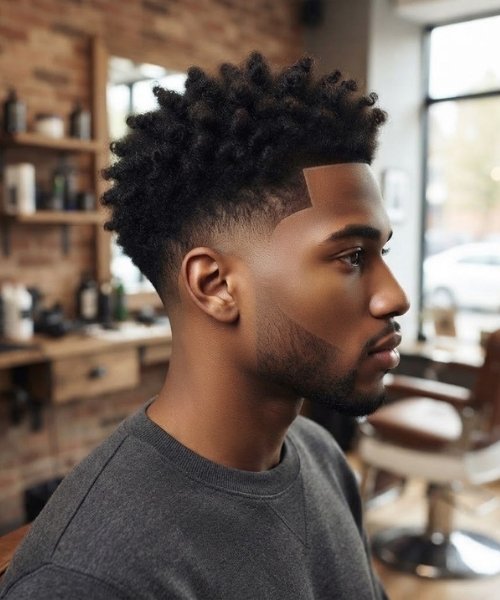
Here the top is left in its natural coil pattern, with no brushing, twisting, or heavy product. The taper provides the structure that keeps natural hair looking intentional.
Best for: Men who want a low-effort, natural finish. Ask for: your top trimmed for shape only and a low taper around it.
9. Low Taper Fade with Sponge Curls
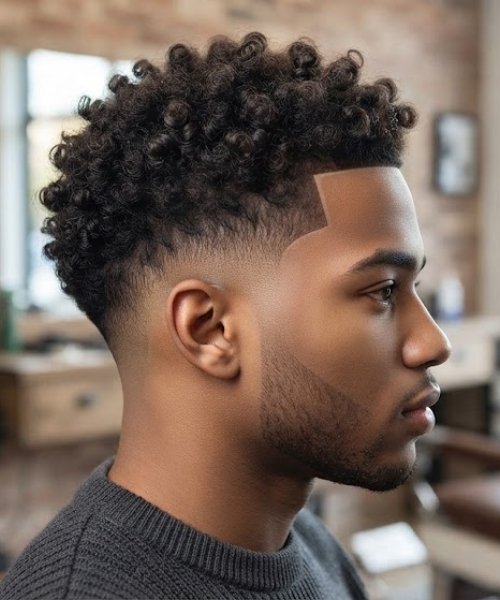
A curl sponge rubbed in small circles makes tight, bouncy curls on top. A low taper keeps the sides tidy while the top does the talking.
Best for: Men with short to medium Type 4 hair. Ask for: about one to two inches on top so the sponge has hair to work with.
Afro Styles
10. Low Taper Fade Afro (Short)
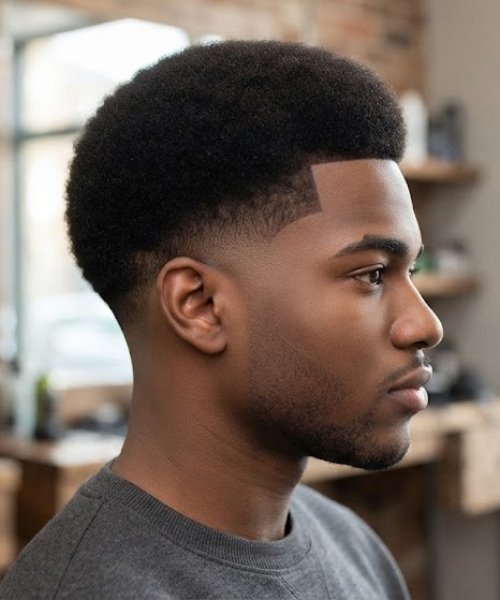
A short afro, often one to two inches, is rounded, neat, and easy to maintain. The taper cleans up the edges and gives the afro a defined outline.
Best for: Men starting to grow out their hair. Ask for: a rounded top and a low taper at the sides and neck.
11. Low Taper Fade Afro (Medium to Full)
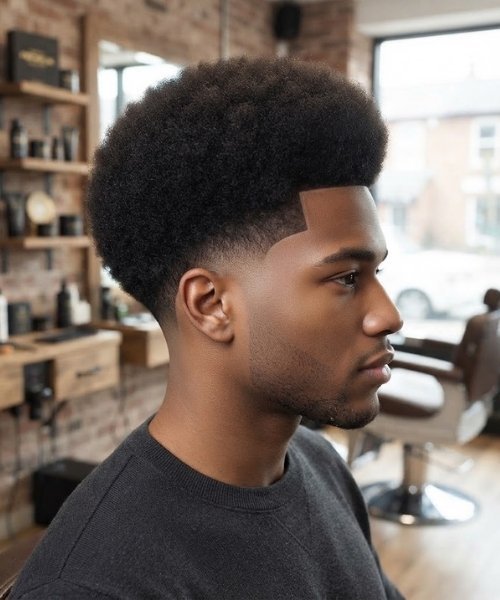
A fuller afro gets its strength from shape. The taper keeps it from looking too wide at the sides. Use an afro pick to lift the hair, and trim the top every few weeks to keep the outline round.
Best for: Men who want volume and personality. Ask for: a fuller, rounded top with a low taper that gives the sides definition.
12. Low Taper Fade High Top
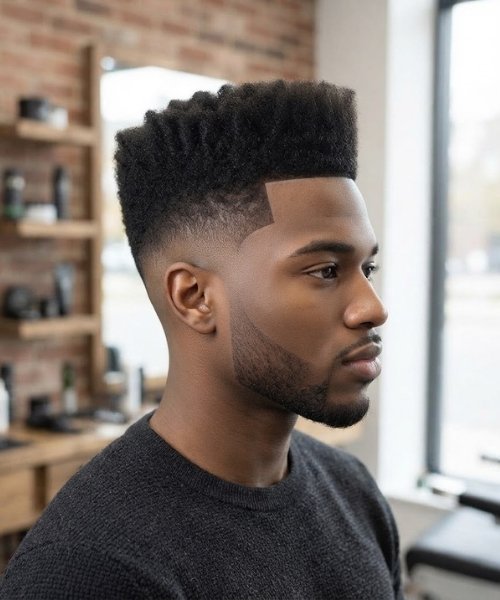
A high top is a tall, flat-topped style that sits straight up from the forehead. The low taper balances the height by keeping the sides subtle.
Best for: Men with oval or longer face shapes who want a retro look. Ask for: a flat or slightly angled top, three to five inches tall, with a low taper.
13. Low Taper Fade Frohawk
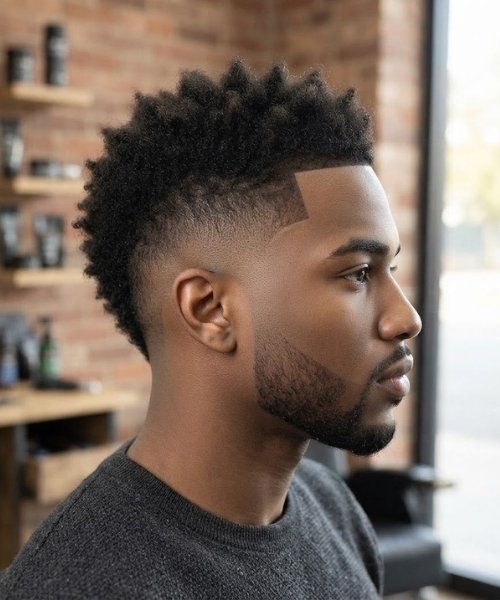
A frohawk keeps the hair longer through the center and shorter at the sides. With a low taper, the sides blend softly into the sides of the mohawk shape.
Best for: Men who want a bold look without a full fade. Ask for: a defined center strip with a low taper on both sides.
Protective & Long Styles
14. Low Taper Fade with Two-Strand Twists
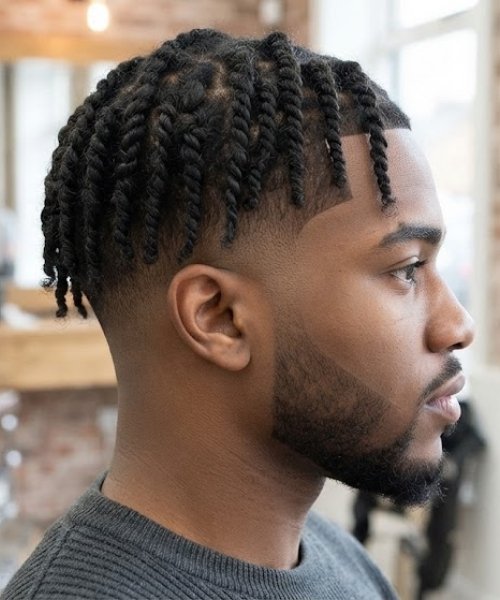
Two-strand twists are made by twisting two sections of hair around each other. They’re neat, low-maintenance, and protect your ends. A low taper keeps the twists looking fresh as your hair grows.
Best for: Men with enough length, usually three inches or more. Ask for: a taper that leaves enough on top for twisting.
15. Low Taper Fade with Sponge Twists
Sponge twists are smaller, coil-like twists created with a twisting sponge. They give a textured, curly look without the time needed to do full twists.
Best for: Men with short hair who want twist-like definition. Ask for: one to two inches on top, with a clean low taper around it.
16. Low Taper Fade with Box Braids
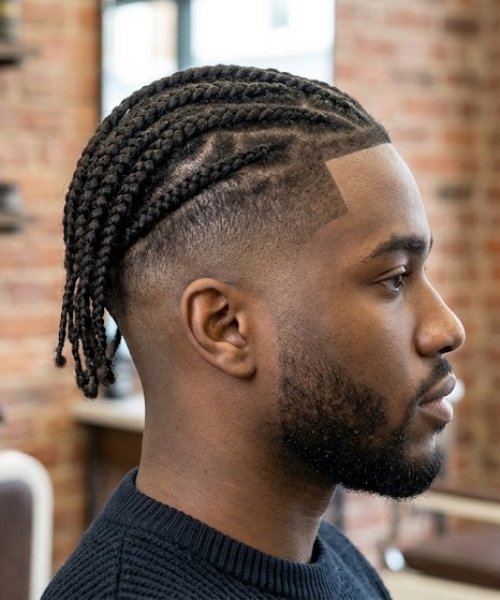
Box braids on top look especially sharp when the sides are tapered. The contrast between the neat taper and the braided top gives a polished, stylish finish.
Best for: Men who want a protective style that lasts weeks. Ask for: a taper at the sides and braids only on top, installed by a braider.
17. Low Taper Fade with Cornrows
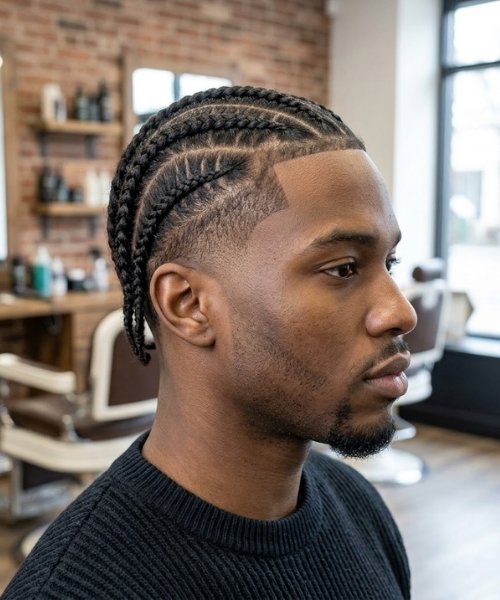
Cornrows are braids that lie flat against the scalp. They can be straight back, in zigzags, or in patterns. The taper keeps them clean at the edges and makes the whole look sharper.
Best for: Men who want a long-lasting, low-effort style. Ask for: a taper at the sides and neckline before the braids go in.
18. Low Taper Fade with Locs (Dreadlocks)
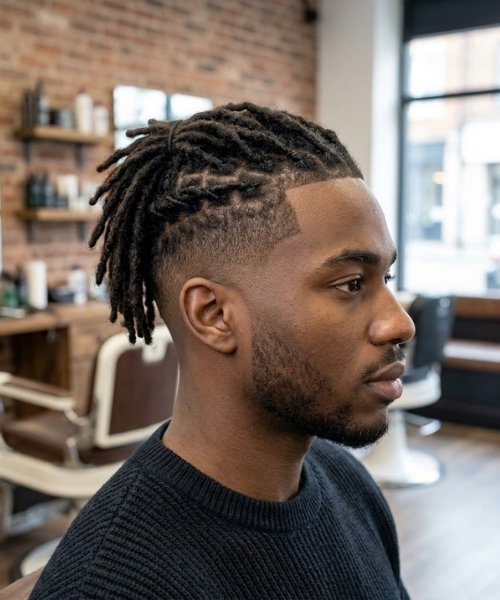
Locs look good with a low taper because the cut gives them structure. The sides stay clean while the locs hang or are styled on top.
Best for: Men with locs who want a neater, more defined look. Ask for: a low taper around the sides and neck, leaving the locs untouched.
19. Low Taper Fade with Finger Coils
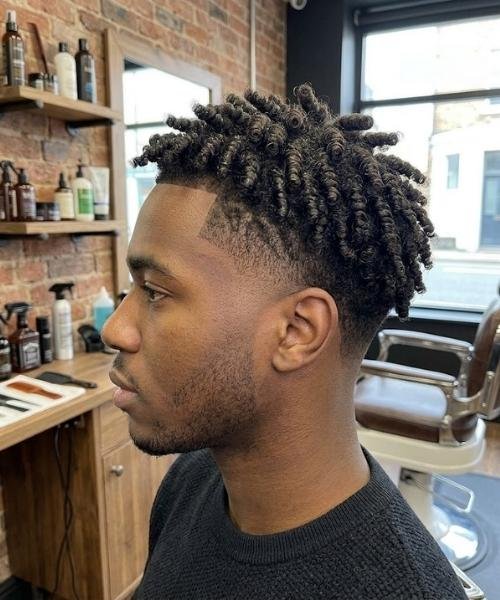
Finger coils are formed by wrapping small sections of hair around a finger and letting them set. The result is a neat spiral pattern. A taper keeps the look sharp.
Best for: Men with short to medium coils who like a defined, curly finish. Ask for: a low taper with enough length on top, about two to three inches.
Beard Combination Styles
20. Low Taper Fade with Full Beard
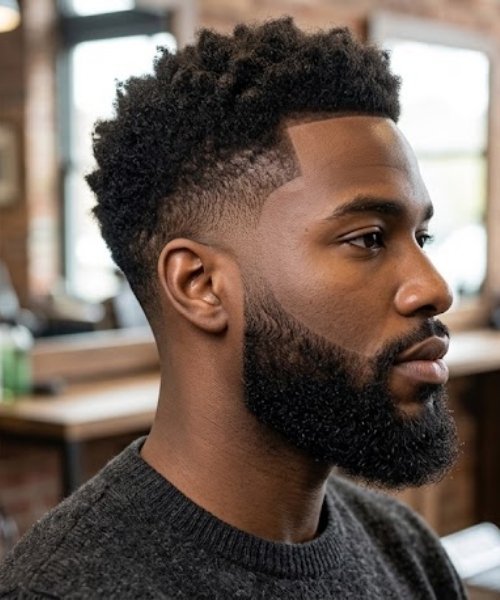
A full beard blends smoothly into a low taper. The fade should connect with the sideburns and gradually meet the beard line, so there’s no abrupt break.
Best for: Men who want a rugged, balanced look. Ask for: the taper to blend into the beard at the sideburns.
21. Low Taper Fade with Short Trimmed Beard
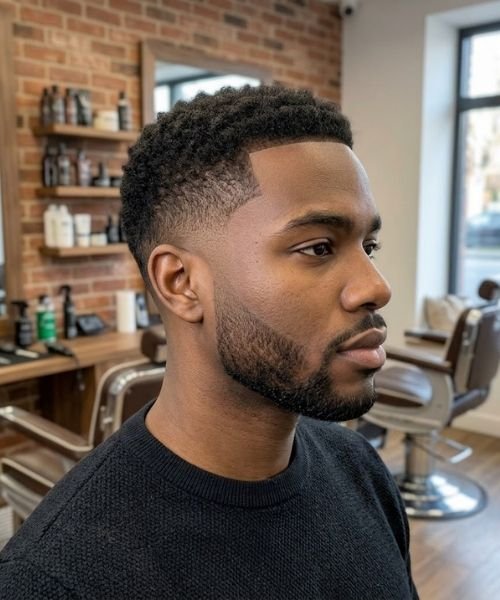
A short, sharp beard adds definition to the jawline without being heavy. This is a clean, professional pairing.
Best for: Men who want a polished, work-friendly appearance. Ask for: a trimmed beard, about a number 2 or 3 guard, with a taper that matches.
22. Low Taper Fade with Goatee
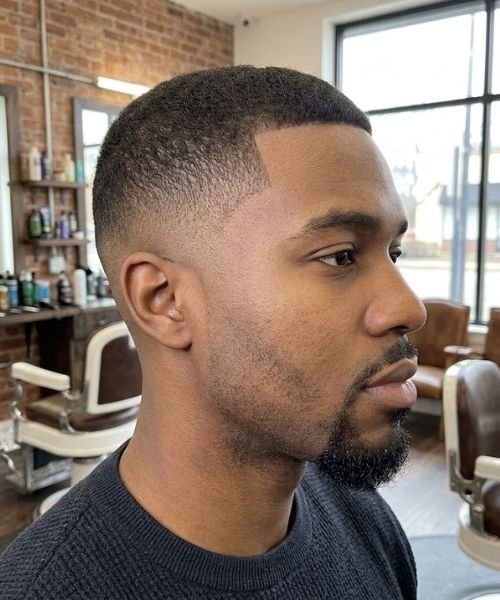
A goatee is a smaller patch of facial hair around the mouth and chin. Combined with a low taper, it makes a neat, controlled look.
Best for: Men who prefer less facial hair. Ask for: a defined goatee outline and a low taper at the sides.
Bold & Creative Styles
23. Low Taper Fade with Hair Design
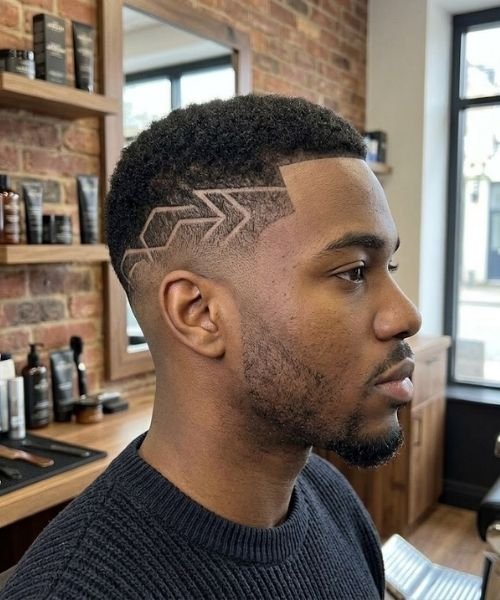
Hair designs are shapes, lines, or patterns shaved into the hair. They can be simple, like a single line, or detailed, like a geometric pattern. A low taper gives the design a neat backdrop.
Best for: Men who want personal style and don’t mind regular visits. Ask for: a design in the short part of the sides, drawn with a trimmer or razor.
24. Low Taper Fade with Line-Up (Shape-Up / Edge-Up)
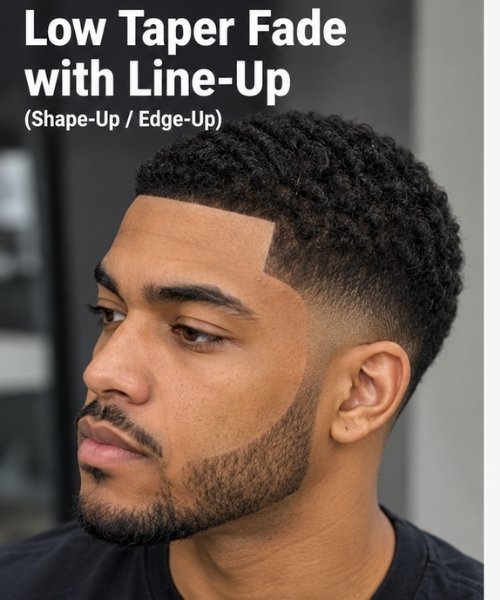
A line-up is a crisp edge around the hairline, temples, and often the beard. It’s the finishing touch that makes a cut look fresh. You may hear it called a shape-up or edge-up depending on where you live.
Best for: Almost everyone, since it improves any version of this cut. Ask for: a natural line-up that follows your hairline, not a pushed-back or too-straight one.
25. Low Taper Fade Blowout
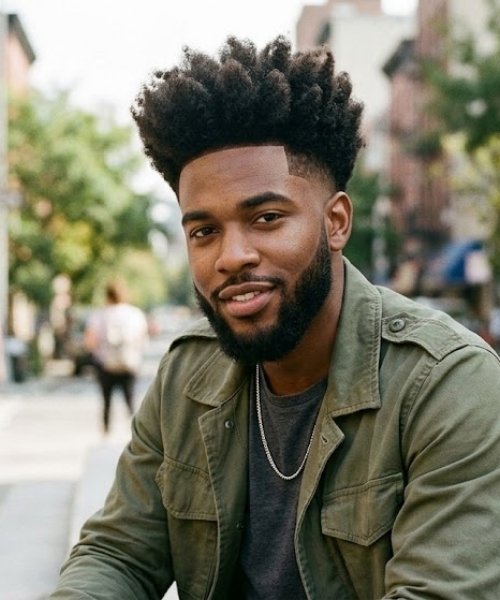
A blowout uses a hair dryer to stretch and fluff curls, creating volume and a soft finish. With a low taper, the shape stays tidy while the top looks full.
Best for: Men with medium-length Type 3 or 4 hair. Ask for: a top with enough length to blow dry, around two to four inches.
Styles for Black Boys and Teens
26. Low Taper Fade for Black Boys (Ages 8–12)
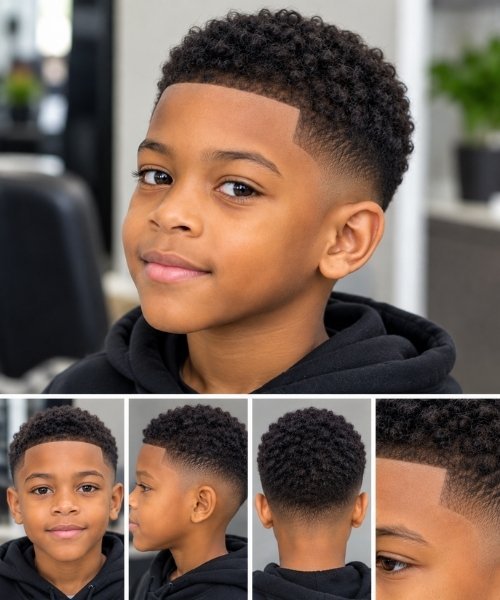
For kids, keep it simple and low-maintenance. A short top, a soft taper, and a neat neckline work well for school and sports.
Best for: Boys who want a neat look without much upkeep. Ask for: a short top, a gentle low taper, and a clean neckline. Skip heavy designs unless the child asks for them.
27. Low Taper Fade for Black Teens (Ages 13–17)
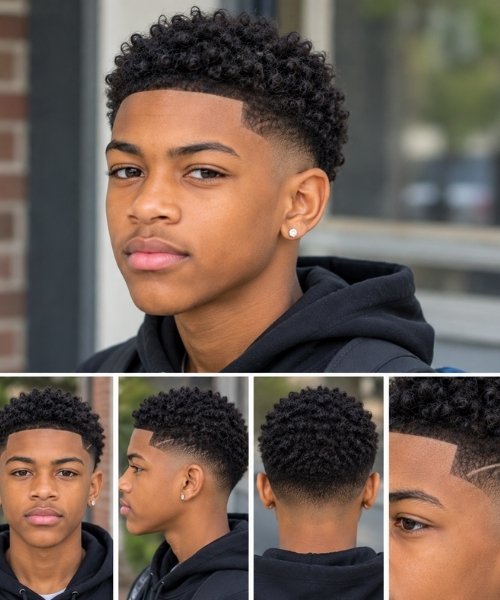
Teens often want more style, such as waves, twists, or a small design. A low taper gives them a clean base while still leaving room for personality.
Best for: Teens who want to try different tops without committing to a fade. Ask for: a taper with enough top length for their chosen style. Check school dress codes before choosing designs.
More Styles to Try
28. Low Taper Fade with Flat Twist
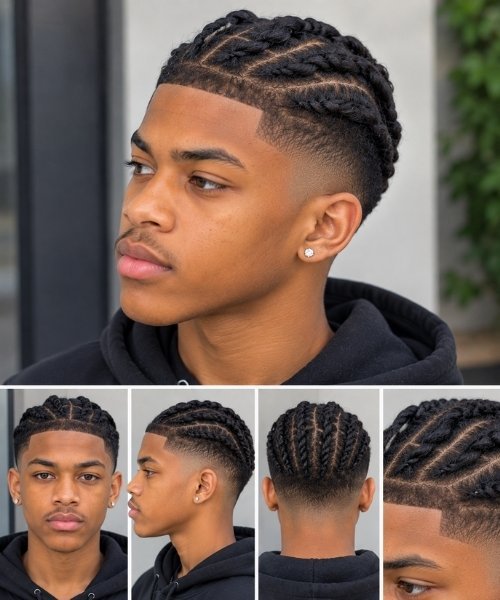
Flat twists are twisted sections that lie flat against the scalp, similar to cornrows but without the braiding. They’re gentle on hair and look neat with a taper.
Best for: Men who want a protective, textured style. Ask for: a taper at the sides and flat twists done only on top.
29. Low Taper Fade with Curly Fringe
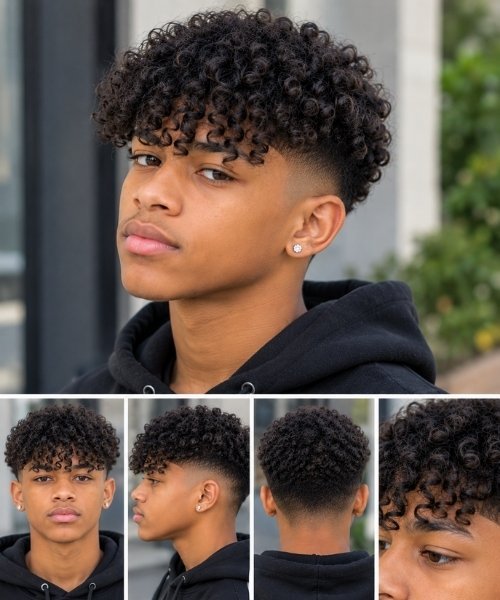
A curly fringe is a longer front section of curls that falls forward over the forehead. The taper keeps the sides short so the fringe stands out.
Best for: Men with defined curls who want a youthful, modern look. Ask for: a longer, curly front section with short sides and a low taper.
30. Low Taper Fade with Colored Tips
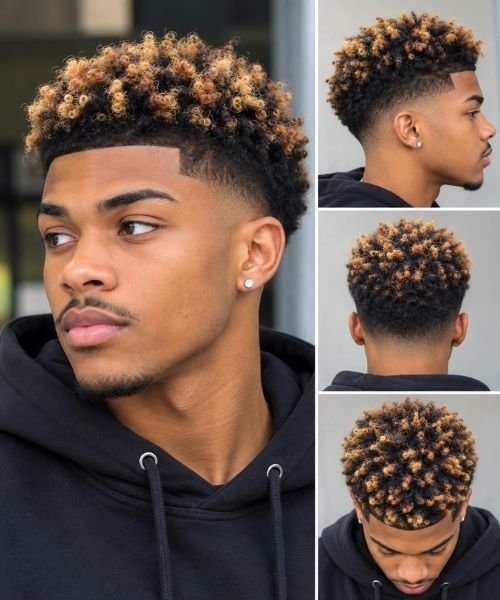
Colored tips are bleached or dyed ends, often blonde, copper, or red. Because bleach can dry out Black hair, have a professional do it and use deep conditioner afterward.
Best for: Men who want a bold statement. Ask for: the color to be applied only to the top, with the tapered sides left natural.
31. Classic Low Taper Fade (Natural Length, No Top Style)
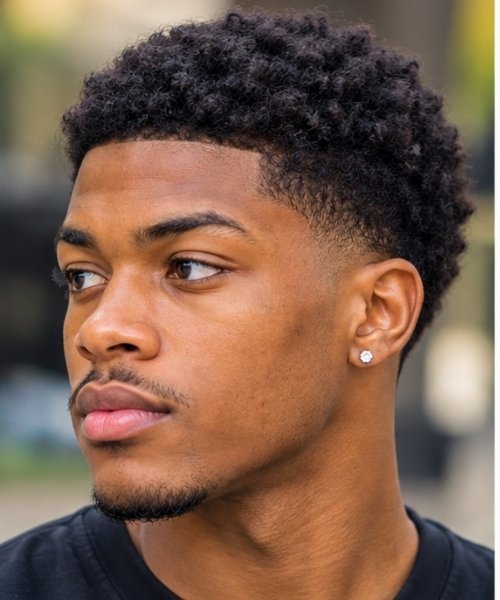
This is the barebones option: a taper around the sides and neck, with the top left at its natural length and trimmed for shape. Nothing to style.
Best for: Men who want the cleanest, most low-effort option. Ask for: a simple low taper and a light trim on top.
32. Low Taper Fade with Hard Part Line
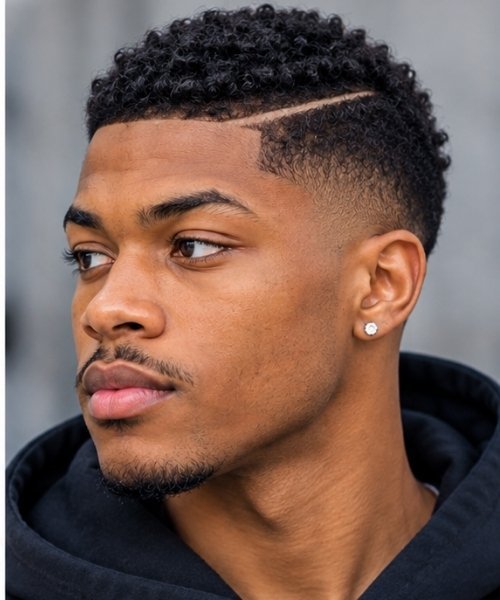
A hard part is a razor-cut line shaved into the hair on the side of the head. It adds sharp definition and works well with short, combed-over tops and waves.
Best for: Men who want a sharp, classic look. Ask for: a hard part on your preferred side, usually the side where your hair naturally parts.
Best Low Taper Fade Style for Your Face Shape
The right top style can balance your face shape. Here’s a quick guide.
| Face Shape | Best Low Taper Styles | What to Avoid |
|---|---|---|
| Oval | Almost anything: waves, afro, twists, textured crop | Very little to avoid |
| Round | Taller tops like high top, frohawk, twists | Flat, wide tops that add width |
| Square | Short crops, waves, rounded afros that soften angles | Very boxy, flat-top cuts |
| Diamond | Fringe, curly top, medium afro | Very short tops with wide sides |
| Heart/Triangle | Medium-length tops, curly fringe, sponge curls | Tall, narrow styles |
| Oblong/Long | Fuller afro, wider twists, short crops | Very tall high tops |
Oval Face
Oval faces are balanced, so most styles work. Try waves, a short afro, or twists, depending on how much upkeep you want.
Round Face
You want to add height and avoid width. A high top, frohawk, or twist set with height on top gives the face a longer look. A low taper keeps the sides slim.
Square Face
A strong jaw already gives you structure. Softer, rounded tops like a short afro or curls balance the sharpness. Waves also work well.
Diamond Face
Diamond faces are widest at the cheekbones. A curly fringe or medium-length top adds width to the forehead and balances the shape.
Heart/Triangle Face
With a wider forehead and a narrower chin, a medium-length top with some fringe softens the upper face. A short beard can add weight to the jawline.
Oblong/Long Face
You want to add width, not height. Choose a fuller afro or wider twists, and avoid very tall high tops. A beard can also shorten the look of a long face.
How Black Hair Textures Work with the Low Taper Fade
Not all Black hair behaves the same way. Here’s how each type responds.
| Hair Type | Texture | Best Low Taper Styles | Main Tip |
|---|---|---|---|
| 3C | Tight, springy curls | Curly top, sponge curls, curly fringe | Use a light curl cream |
| 4A | Defined small coils | Coils, finger coils, twists, waves | Moisturize daily |
| 4B | Zigzag, less defined coils | Afro, sponge twists, blowout | Keep hair stretched and moisturized |
| 4C | Very tight, dense coils | Afro, waves, twists, locs | Handle gently, protect ends |
Type 3C Hair with Low Taper Fade
Type 3C hair has tight, springy curls that stay defined. A low taper makes the curls look more intentional. Keep the top an inch or two longer so the curls have room to form, and use a light curl cream to avoid weighing them down.
Type 4A Hair with Low Taper Fade
Type 4A hair has small, defined coils. It handles waves, twists, and finger coils well. Because the coils are visible, a clean taper makes them stand out. Moisturize every day to keep them soft.
Type 4B Hair with Low Taper Fade
Type 4B hair has a zigzag pattern with less obvious curl definition. It’s often dry and can tangle. Afros, blowouts, and sponge twists work well. Stretching the hair with a blow dryer or twists helps it look fuller.
Type 4C Hair with Low Taper Fade
Type 4C is the tightest and densest pattern. It shrinks a lot when dry, so a style that looks two inches long may actually be twice that. Afros, waves, twists, and locs all work. Be gentle with combs and avoid pulling.
How to Ask Your Barber for a Low Taper Fade
Most bad haircuts come from miscommunication. A little preparation goes a long way.
Step 1: Bring a Reference Photo
A picture is worth more than any description. Find two or three photos of the cut you want, preferably from the front, side, and back. Look for people with similar hair texture to yours.
Step 2: Use the Right Barber Language
Use clear terms:
- “Low taper fade on the sides and back.”
- “Leave [number] inches on top.”
- “Keep it natural, not too tight at the sideburns.”
- “Start the fade just above my ear.”
If you’re not sure about clipper guards, say how short you want it in plain terms, like “short but not skin.”
Step 3: Specify Your Neckline Shape
The back of your neck can be finished three ways:
- Rounded: soft curve, natural-looking, grows out well.
- Squared: straight horizontal edge with sharp corners, very neat but shows growth quickly.
- Tapered (natural): fades into the neck with no hard line, the most forgiving option.
Tell your barber which you prefer. If you’re unsure, a tapered or rounded neckline is the safest choice.
Step 4: Describe Your Add-Ons
Tell your barber about everything else you want:
- Line-up or edge-up
- Beard trim and blending
- Design or part line
- How you plan to style the top
Common Mistakes to Avoid at the Barbershop
- Showing only one photo angle. The back and sides matter as much as the front.
- Not mentioning your hair texture. Your barber should know how your hair behaves.
- Asking for “a fade” without specifying height. You might end up with a high skin fade.
- Staying quiet when something looks off. Speak up during the cut, not after.
- Going to a barber unfamiliar with Black hair. Texture matters. Check their work on social media or ask friends for recommendations.
- Pushing the hairline too far back. A line-up should follow your natural hairline.
How to Maintain Your Low Taper Fade
A low taper is easier to maintain than most fades, but it still needs regular care.
Maintenance Schedule
| Task | How Often |
|---|---|
| Wash hair | Once or twice a week |
| Moisturize | Daily |
| Brush (for waves) | Daily, ideally twice |
| Deep condition | Every one to two weeks |
| Trim neckline at home | Only if you’re experienced; otherwise leave it |
| Replace durag or bonnet | Every few months |
Barbershop Visit Schedule
| Style | Suggested Visit Frequency |
|---|---|
| Short, classic low taper | Every 2–3 weeks |
| Waves | Every 1–2 weeks |
| Beard blend | Every 1–2 weeks |
| Afro or twists | Every 3–4 weeks |
| Locs with taper | Every 3–4 weeks |
If you’re on a budget, a quick edge-up between full cuts keeps things looking fresh for less.
Daily Hair Care Routine for Black Hair with a Taper
- Morning: Lightly mist or moisturize. Brush if you wear waves.
- Style: Use a small amount of product. Too much causes buildup.
- Evening: Cover your hair with a durag or satin bonnet. This reduces friction and keeps hair moisturized.
- Weekly: Wash with a gentle shampoo, then condition.
Products Every Black Man Needs for His Low Taper Fade
- Moisturizer or leave-in conditioner: keeps hair soft and prevents dryness.
- Natural oil (jojoba, argan, or coconut): seals in moisture. Use sparingly.
- Wave brush: soft for starting out, medium or hard as your waves develop.
- Durag or satin bonnet: protects hair overnight.
- Gentle shampoo: avoid harsh sulfates that dry hair out.
- Aftershave or razor bump treatment: helps if your neckline gets irritated after cuts.
- Afro pick: for lifting and shaping afros.
The Cultural Significance of the Low Taper Fade for Black Men
The barbershop has long been more than a place to get a haircut in Black communities. It’s a place to talk, laugh, share news, and connect. Haircuts like the fade grew out of that culture, shaped by decades of barbers refining their technique on textured hair.
Fades became popular in Black communities partly because the cut suits the hair so well. The clean edges, sharp lines, and sculpted shapes show off barbering as a craft. Many barbers see the line-up and taper as a form of artistry.
Today the low taper fade is worn by athletes, professionals, students, and artists. It carries a message of care and pride in appearance. And while the style has spread worldwide, its roots remain firmly in Black barbering.
Low Taper Fade Black Male: 2026 Trends
Here’s what barbers and clients are leaning toward this year.
Hybrid Texture Combinations
More men are combining textures, such as waves on one section and twists on another. The low taper acts as the neutral frame that holds mixed textures together.
Micro-Designs in the Fade Zone
Instead of large designs, many men choose small, subtle details like a thin line or a tiny shape near the temple. It adds personality without being loud.
Low Taper Fade with Color
Subtle color, like warm brown, copper, or bleached tips, is increasingly common. A low taper keeps colored tops from looking messy. Use conditioning treatments to protect hair after bleaching.
The “Black Ninja” Low Taper
This term refers to a low taper paired with a sleek, dark, well-defined style, often with waves and a sharp line-up. It’s polished, clean, and understated.
Virtual Try-On Tools
Some apps and barbershop tools now let you preview a haircut on your own photo. They’re useful for visualizing a cut before committing, though results vary. Always confirm details with your barber.
Frequently Asked Questions
What is a low taper fade for Black men?
It’s a haircut where the sides and back get gradually shorter, starting low near the ears and ending at the neckline. The top can be left at any length or style. It’s popular because it looks clean, works on all Black hair textures, and is easy to maintain.
How often should I get a low taper fade touched up?
Most men need a touch-up every two to three weeks. If you wear waves or a beard blend, every one to two weeks keeps it sharp. Afros and twists can go three to four weeks.
What’s the difference between a low taper and a low fade?
A low taper usually leaves a bit of hair at the edge, giving a softer finish. A low fade typically goes down to bare skin, which makes it more noticeable. If you want something subtle, choose the taper.
Can I get a low taper fade with short hair?
Yes. Even short hair can be tapered. Ask your barber for a short top with a gentle blend at the sides and neckline. It’s one of the easiest versions of this cut.
Does a low taper fade work with a receding hairline?
It can. A short Caesar cut or a short crop helps disguise a receding line. A well-shaped line-up also makes the hairline look intentional. Avoid pushing the line back too far, as it can make recession look worse.
How do I keep my low taper fade looking fresh between haircuts?
Moisturize daily, wear a durag or bonnet at night, and avoid over-washing. You can also get a quick line-up between full cuts. Don’t trim your neckline at home unless you have experience.
Is a low taper fade good for professional settings?
Yes. It’s one of the most office-friendly cuts because the gradient is subtle and the finish is neat. Keep the top tidy and the neckline clean, and it works in almost any workplace.
What should I say to my barber to get a low taper fade?
Say: “I’d like a low taper fade, starting just above my ears, with [your top length] on top.” Add details like beard blend, line-up, and neckline shape. Bring a photo to avoid confusion.