

A low taper blowout combines a low taper around the temples and neckline with a fuller, lifted top that looks airy, textured, and slightly pushed outward. It keeps the sides and back neat without removing too much hair, making it a good choice for straight, wavy, curly, and coily hair.
The key to getting this haircut right is balancing the shape of the top with the taper around your ears and neck. If the top is too wide, it can look bulky. If the barber takes the taper too high, you may lose the soft, low-profile finish that makes this style stand out.
This guide explains what a low taper blowout looks like, how it differs from a low taper fade, which hair types and face shapes suit it, what to tell your barber, and how to maintain the style at home.
What Is a Low Taper Blowout?
A low taper blowout is a hairstyle that keeps the hair fuller on top while gradually shortening the hair around the temples, sideburns, and neckline. The top is styled upward, outward, or slightly backward to create lift and movement.
The word low describes where the taper begins. It stays close to the ears and lower hairline rather than climbing high up the sides of the head. The word blowout describes the shape and styling of the longer hair, which looks lifted instead of flat against the scalp.
Unlike a short, uniform haircut, this style depends on contrast. The sides stay controlled, while the top has enough length to create height and texture.
What Does a Low Taper Blowout Look Like?
A well-cut low taper blowout has three main features:
- A lifted top: The hair has visible height and movement rather than lying flat.
- A low, gradual taper: Hair around the temples and neckline becomes shorter without creating a high fade.
- A balanced outline: The top has enough fullness to stand out, but the sides do not become excessively wide.
The overall appearance changes with your hair type. Straight hair often needs a blow-dryer and a styling product to hold its shape. Wavy hair can create movement with less effort, while curly and coily hair can produce a naturally full silhouette.
The back matters, too. A low taper should blend neatly into the neckline rather than ending in an abrupt, disconnected patch. Ask your barber to check the shape from the front, sides, and back before finishing the cut.
Low Taper Blowout vs. Low Taper Fade: What Is the Real Difference?
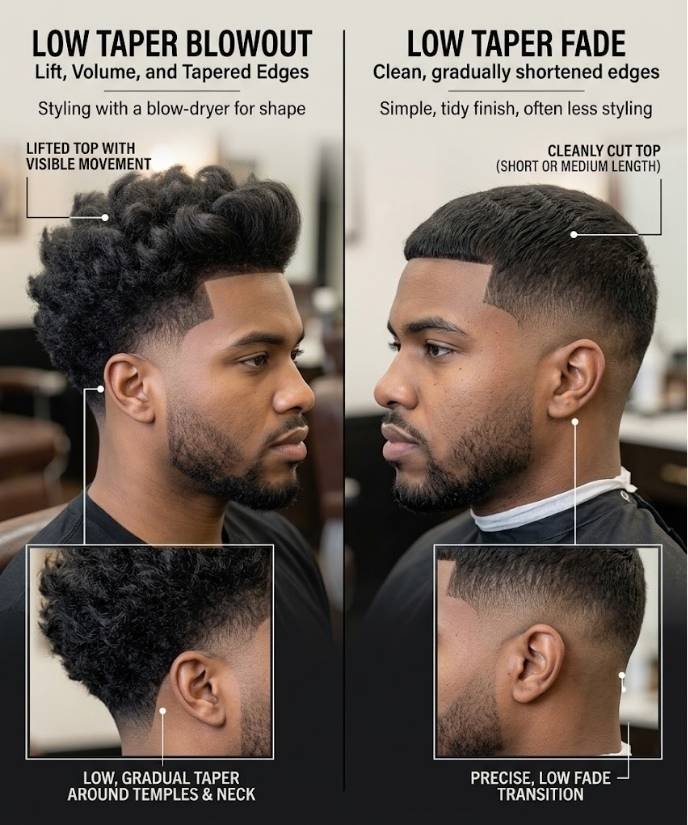
The main difference is that a blowout describes the styling and shape of the top, while a taper describes how the hair gradually gets shorter around specific areas. A low taper blowout combines both features.
A low taper fade, by comparison, mainly describes the gradual shortening around the temples and neckline. The top might be short, flat, brushed forward, or left long. It does not automatically have the lifted volume associated with a blowout.
| Feature | Low taper blowout | Low taper fade |
|---|---|---|
| Main focus | Lift, volume, and tapered edges | Clean, gradually shortened edges |
| Top length | Usually medium or longer | Can be short, medium, or long |
| Styling | Often needs deliberate shaping | May need little or no styling |
| Overall appearance | Fuller and more textured | Neat and versatile |
| Best for | People who want volume with clean edges | People who prefer a simple, tidy finish |
Neither style is automatically better. Choose the blowout if you want your top to be a noticeable part of your look. Choose a basic low taper fade if you prefer a cleaner cut with less daily styling.
Is a Low Taper Blowout the Same as a Low Taper Fade?
No. They can share the same taper around the ears and neckline, but they do not necessarily have the same top. A low taper blowout requires the top to be styled with lift, separation, or outward movement. A low taper fade only requires the appropriate fade or taper on the sides and back.
There is also a difference between a taper and a fade in everyday barber language. A taper usually focuses on smaller areas around the temples and neckline. A fade often describes a more extensive transition across the sides and back, although barbers may use these terms differently.
If you want the blowout effect, do not ask for only a low taper fade. Tell your barber that you want to keep enough length on top to create volume and that you plan to style it with a blow-dryer.
Does a Low Taper Blowout Work With Your Hair Type?
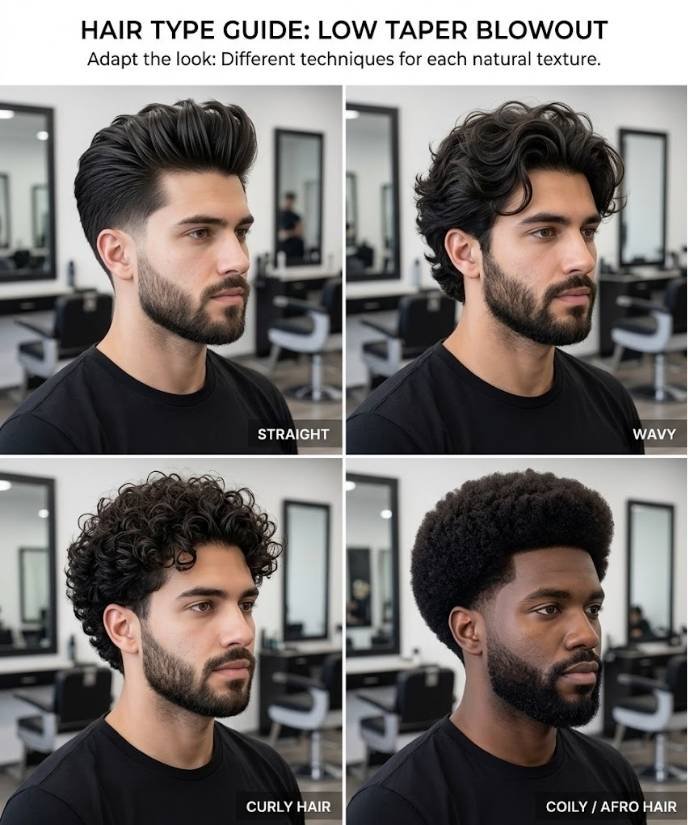
Yes. A low taper blowout can work with straight, wavy, curly, and coily hair, but the cutting and styling methods need to match your natural texture.
The most important factors are your hair’s density, length, natural direction, and ability to hold a shape. Two people with the same haircut can get very different results because their hair behaves differently.
| Hair type | What the top usually looks like | Main challenge | Best approach |
|---|---|---|---|
| Straight | Smooth, lifted, or piecey | Hair falling flat | Blow-drying and lightweight texture products |
| Wavy | Loose, airy, and naturally textured | Frizz or uneven volume | Diffused airflow or a controlled brush technique |
| Curly | Defined curls with a rounded silhouette | Losing curl definition | Curl cream and gentle drying |
| Coily / Afro | Dense, full, and sculpted | Maintaining an even outline | Moisture, careful shaping, and a suitable taper |
Your barber should assess your natural hair before deciding how much to remove. If you have a strong cowlick, for example, leaving a little extra length in that area may help the finished style sit better.
Straight Hair: How to Get Real Volume Without the Mushroom Effect
Straight hair can look sharp with a low taper blowout, but it may fall flat if the top is too heavy or the styling is too soft. The goal is to create height and separation without making the sides appear wider than the head.
Ask your barber to leave enough length on top for styling while removing unnecessary bulk where the hair naturally pushes outward. Depending on your hair density, a top length of roughly 2–4 inches can provide a useful starting point, although shorter or longer versions may work.
For styling, use this method:
- Start with clean, towel-dried hair.
- Apply a small amount of volumizing mousse or lightweight pre-styling product.
- Blow-dry the roots upward, directing the hair with your fingers or a vent brush.
- Shape the front and crown in the direction you want them to sit.
- Finish with a small amount of matte paste or texture cream.
Avoid applying too much heavy wax or oil-based product. These can weigh straight hair down and make the top look greasy or rounded.
If the finished style resembles a mushroom, the problem may be excess width rather than insufficient height. Ask your barber to refine the shape and remove appropriate bulk without thinning the top so much that it becomes difficult to style.
Wavy Hair: The Path of Least Resistance
Wavy hair naturally creates movement, which makes it a strong match for a low taper blowout. The bends in the hair can add texture and fullness without requiring every section to be lifted manually.
The main challenge is controlling frizz while preserving the natural wave pattern. Aggressive brushing when the hair is dry can disrupt the texture, while excessive product can make the top look heavy.
A good routine is to apply a lightweight styling cream to damp hair, then use a blow-dryer with a diffuser or a controlled airflow setting. If you want a smoother finish, a brush can help direct the hair. If you prefer a relaxed appearance, use your fingers instead.
Ask your barber to follow your natural wave pattern when shaping the top. A cut that looks good when wet should also be checked dry, because wavy hair can spring up or spread outward as it dries.
Curly Hair: The Most Visual Payoff of Any Texture
Curly hair can create a particularly noticeable low taper blowout because the curls naturally provide volume and dimension. The taper cleans up the edges while the curls remain the main feature of the haircut.
The key is to preserve the curl pattern. If the top is cut too short, the curls may lose their definition. If the sides are left too bulky, the haircut can become wider than intended.
For a defined finish, use a curl cream or lightweight leave-in product on damp hair. Scrunch gently and allow the curls to air-dry or use a diffuser on low heat. Avoid repeatedly touching the hair while it dries, as this can increase frizz.
Your barber should also account for shrinkage. Curly hair often appears shorter when dry than it does when stretched, so explain how much length you want to retain after styling.
Coily / Afro Hair: Volume Built In, Shape Is the Job
Coily and Afro-textured hair can create a bold, rounded blowout silhouette with a low taper. The top may be picked out for extra height, shaped into a compact rounded form, or kept closer to the natural coil pattern.
The most important part is maintaining a balanced outline. The taper should clean up the temples and neckline without cutting so high that it removes the contrast between the full top and the shorter edges.
Use a moisturizing product suited to your hair and avoid excessive heat or repeated high-tension brushing. If you prefer a stretched blowout, ask a barber or stylist familiar with coily hair to explain the safest approach for your hair’s condition.
A low taper blowout does not have to be extremely tall. A compact, rounded top can look just as intentional as a high, sculpted shape.
What Face Shapes and Lifestyles Does It Suit?
A low taper blowout is flexible because the height and width of the top can be adjusted. The best version is the one that complements your features and fits the amount of time you want to spend styling.
| Face shape | Recommended approach | What to watch for |
|---|---|---|
| Oval | Most top shapes can work | Keep the overall proportions balanced |
| Round | Add moderate height and reduce excess side width | Too much width can make the face appear rounder |
| Square | Try textured volume with a clean, soft taper | Avoid a shape that looks overly boxy if you prefer softer lines |
| Long | Keep the height moderate and allow some width | Excessive height may make the face appear longer |
| Heart-shaped | Use balanced volume without making the top too heavy | Consider how the fringe frames the forehead |
These are starting points rather than strict rules. Your hairline, forehead, jaw, and personal style also affect how the cut looks.
For lifestyle, the haircut suits people who enjoy styling their hair before work, school, or going out. A low-maintenance version is possible, but a tall, highly textured blowout generally takes more effort than a short crop.
If you exercise frequently, wear a helmet, or need your hair to stay neat throughout a long workday, ask for a version that can be restyled quickly with your fingers.
How Do You Ask Your Barber for a Low Taper Blowout?
The easiest way to get the right cut is to describe the taper, top length, and finish separately. Do not rely on the haircut name alone, because barbers may interpret “blowout” differently.
You can say:
“I want a low taper blowout. Keep the taper low around my temples and neckline, leave enough length on top for volume, and shape it so I can blow-dry it upward and outward. Keep the transition natural, and don’t take the fade too high.”
Then explain your preferences:
- Top length: Tell your barber whether you want a short textured top or a longer, fuller blowout.
- Side profile: Ask for a compact shape or a fuller silhouette, depending on your preference.
- Hairline: Explain whether you want a natural edge or a sharper lineup.
- Neckline: Choose a natural taper or a more defined finish.
- Styling: Tell the barber whether you usually wear your hair forward, upward, or back.
Bring two or three reference photos if possible. Choose one showing the top, one showing the temple area, and one showing the back. This is more useful than showing several pictures of similar styles without explaining what you like about each one.
Before the barber finishes, check the haircut from the front and both sides. If the top looks too wide, the taper is too high, or the fringe is too short, speak up before the final detailing.
Guard Numbers for a Low Taper Blowout: What Do They Mean?
Clipper guard numbers indicate how much hair a clipper leaves behind. In many common clipper systems, a higher guard leaves more hair, but exact lengths can vary by brand and blade setup.
Here are common reference lengths:
| Guard | Approximate length left |
|---|---|
| #0.5 | 1.5 mm |
| #1 | 3 mm |
| #1.5 | 4.5 mm |
| #2 | 6 mm |
| #3 | 10 mm |
| #4 | 13 mm |
These are approximate measurements, not a guaranteed recipe for a low taper blowout. Barbers often blend between guards and use clipper-over-comb or scissor techniques to create a smoother transition.
For a low taper, your barber might use very short guards near the lowest edges and longer settings above them. The exact combination depends on your hair density, head shape, and how much contrast you want.
The top is usually cut with scissors rather than a short clipper guard when you want a fuller blowout. If you have straight hair and want visible lift, tell your barber to preserve enough length to style it rather than specifying only a guard number.
Important: A guard number does not tell the barber how high to place the taper. Always explain that you want the taper to stay low.
How Do You Style a Low Taper Blowout at Home?
You can style a low taper blowout at home with a blow-dryer, a brush or your fingers, and a product that suits your hair type. The aim is to build shape at the roots first, then control the finish without weighing the hair down.
Step 1: Start with damp hair
Wash your hair when needed and gently towel-dry it. Hair should be damp rather than soaking wet before you begin styling.
Step 2: Apply a suitable pre-styler
Use a lightweight mousse or volumizing spray for straight hair. Wavy and curly hair may respond better to a curl cream or lightweight leave-in product. Start with a small amount. You can always add more, but too much product can make the hair heavy.
Step 3: Build volume with airflow
Use the blow-dryer to direct the roots upward and toward your desired shape. A vent brush helps control straight hair, while fingers or a diffuser can preserve more natural texture.
Keep the dryer moving instead of concentrating high heat on one spot. Use a heat protectant when appropriate, especially if you style frequently.
Step 4: Shape the top
Once the roots are mostly dry, work on the front and crown. You might push the front upward, direct it slightly backward, or create a textured finish with separated sections. Avoid forcing every hair into the same direction if you want a natural look. Some movement makes the style appear less stiff.
Step 5: Finish with a small amount of product
Use matte paste or a lightweight texture cream for definition. For curly hair, a suitable curl product may be enough without a separate finishing product.
Step 6: Check the silhouette
Look at the front and sides in a mirror. If the top looks too wide, use your fingers to bring it into shape rather than adding more product immediately.
A useful rule is to build volume with the dryer and use styling product mainly to control the finish. Product alone usually cannot create the same root lift.
How Often Does a Low Taper Blowout Need a Trim?
Most people benefit from a cleanup every 2–4 weeks, depending on how sharp they want the taper to look and how quickly their hair grows.
| Time between visits | What to expect |
|---|---|
| 1–2 weeks | A very clean outline, useful for a sharp finish |
| 2–4 weeks | A practical balance for many people |
| 4–6 weeks | More natural growth around the temples and neckline |
| 6+ weeks | The taper may become less defined, while the top grows noticeably |
You do not always need a complete haircut at every appointment. A temple and neckline cleanup can maintain the shape while allowing the top to grow.
If your goal is a longer blowout, tell your barber to preserve the top and trim only what is needed to maintain the silhouette. If you prefer a compact style, you may want more frequent shaping.
Low Taper Blowout Variations: Which Style Fits You?
The low taper works with many top shapes. Choose the variation based on how you want the hair to sit, how much volume you like, and how much daily styling you are willing to do.
| Variation | Best suited to | Overall effect |
|---|---|---|
| Textured fringe | Straight or wavy hair | Casual, piecey finish |
| Edgar or blunt fringe | People who like a strong front line | Bold and structured |
| Grown-out longer top | Medium or thick hair | Fuller, more flexible styling |
| Curly Afro | Coily or tightly curled hair | Rounded volume and defined edges |
| Perm blowout | Straight hair seeking more texture | More movement and body |
Textured Fringe Low Taper Blowout
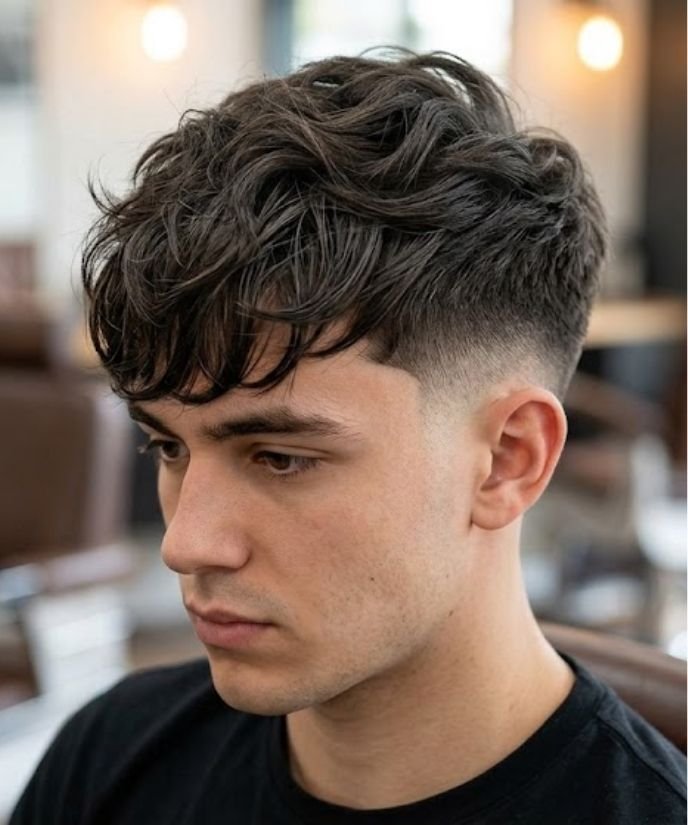
A textured fringe low taper blowout combines a lifted top with a front section that falls slightly toward the forehead. The result looks relaxed rather than perfectly swept back.
This version works well for straight and wavy hair because texture helps break up a flat surface. Ask your barber to leave the fringe long enough to move naturally while adding light texture through the top.
For daily styling, blow-dry the roots to create lift, then direct the front slightly forward. Finish with a small amount of matte paste, separating a few sections with your fingers.
Avoid cutting the fringe too short if you want it to sit forward. A very short fringe may stand up instead of falling into the intended shape.
Edgar / Blunt Fringe Low Taper Blowout
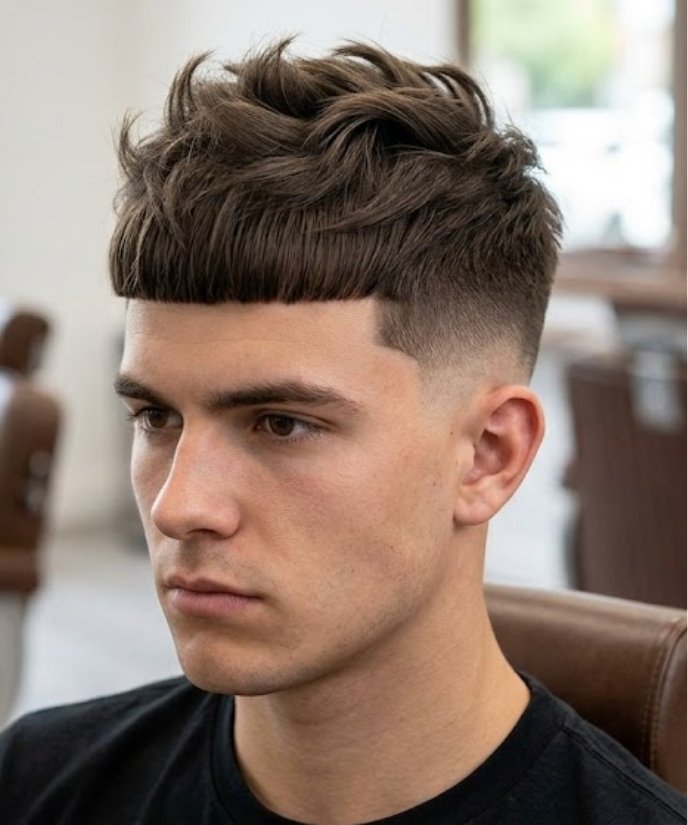
The Edgar-inspired version features a more defined front edge and a compact, structured top. It creates a stronger outline than a soft, textured fringe.
The taper should stay low around the temples and neckline, while the barber shapes the fringe to suit your forehead and natural hairline. The top may be textured, but the front edge is usually more controlled.
This haircut suits people who want a noticeable, fashion-forward look. However, a very blunt fringe can draw attention to the forehead, so ask for a slightly softer edge if you prefer a less severe finish.
Straight hair can make the front line look particularly clear. Use a light styling product to control stray hairs without making the fringe stiff or shiny.
Grown-Out / Longer Top Low Taper Blowout
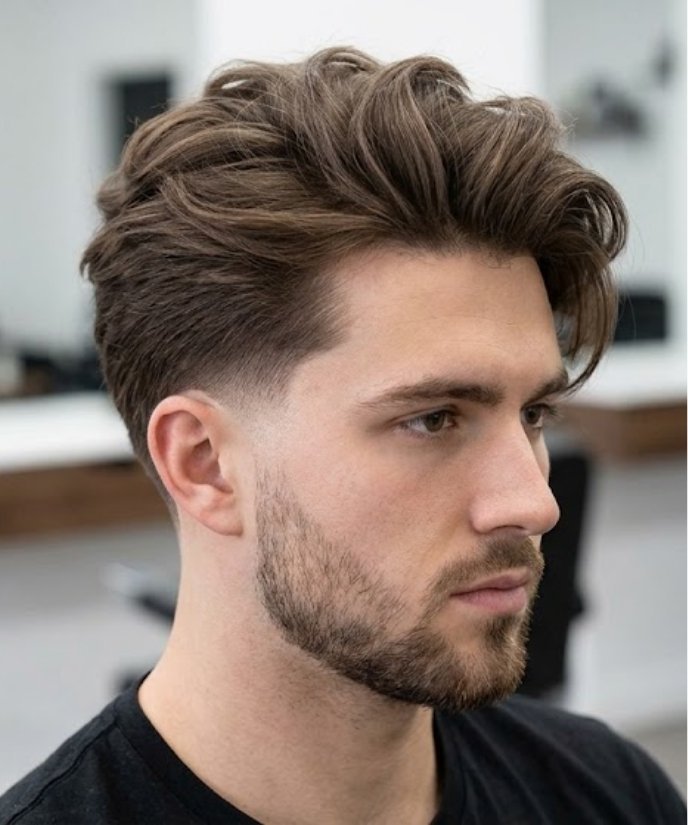
A longer top gives you more styling choices. You can brush it upward, sweep it backward, create a loose side direction, or leave it with natural movement.
This version is especially useful if you want a haircut that can change with the occasion. A relaxed finish works for everyday wear, while a more controlled blowout can look polished for events or work.
The main challenge is managing bulk. Ask your barber to shape the top so it follows your head rather than forming a wide, heavy shelf over the tapered sides.
Longer hair also takes more time to dry. If you do not want a lengthy styling routine, choose a moderate top length rather than growing it out excessively.
Curly Afro Low Taper Blowout
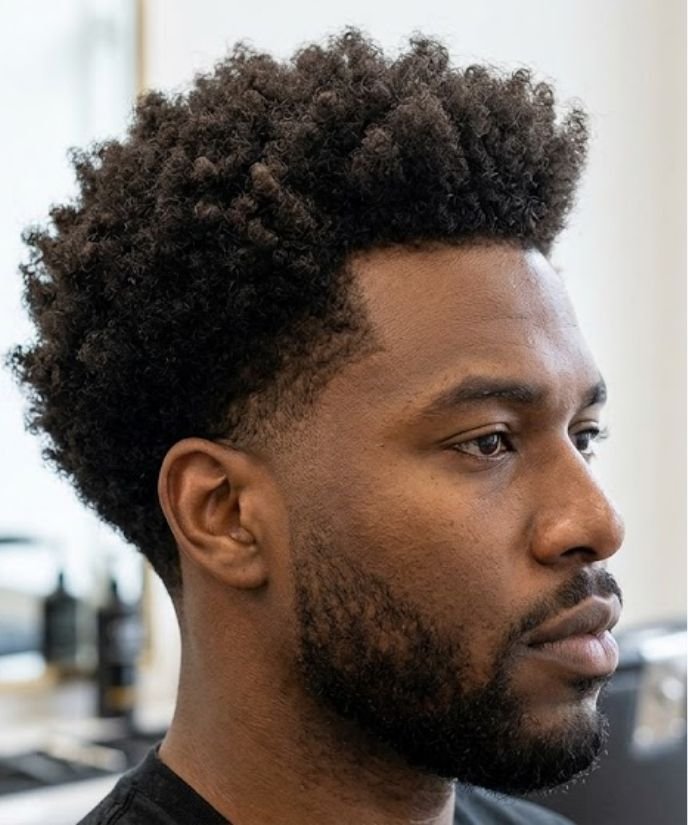
A curly Afro low taper blowout keeps the top full and rounded while cleaning up the edges around the temples and neck. The natural curl pattern provides the volume, so the haircut focuses on shape and balance.
Ask your barber to preserve the height and width you want rather than automatically removing bulk. The taper should complement the top, not make it look disconnected.
For home care, use a moisturizing product suitable for your hair and gently shape the curls. If you pick the hair out for additional volume, do so carefully to avoid unnecessary breakage.
The right outline depends on your preferred silhouette. A compact rounded top looks subtle, while a taller shape creates a more dramatic profile.
Perm Low Taper Blowout
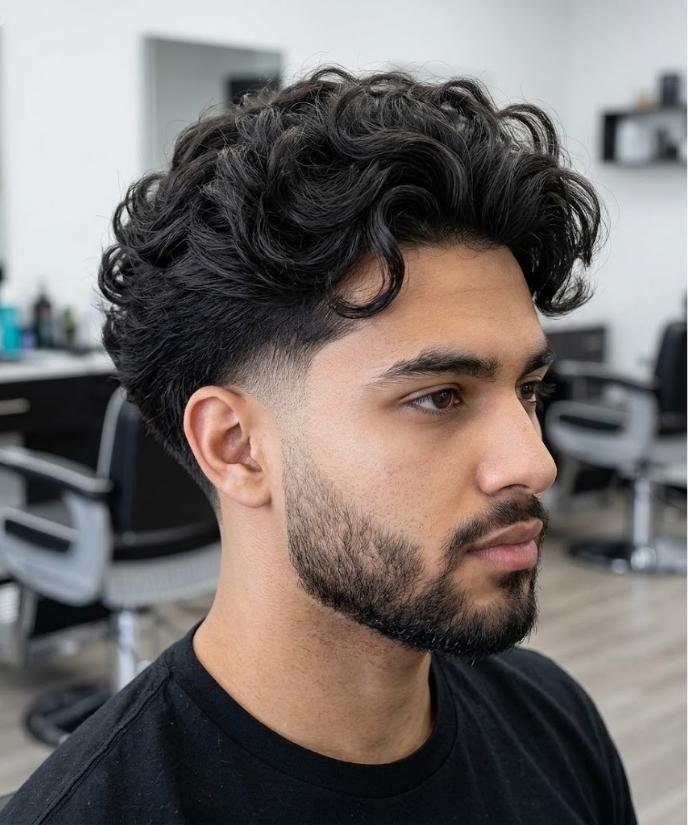
A perm low taper blowout uses added wave or curl to create movement in hair that is naturally straight or lacks volume. The taper keeps the edges neat while the top has a fuller, more textured finish.
A perm is not required for a blowout. Consider it only if you want a longer-lasting change in texture and understand the maintenance involved.
Consult a qualified stylist before getting a chemical service. Hair condition, previous coloring, and existing damage can affect whether a perm is suitable.
Afterward, follow the stylist’s instructions for washing, conditioning, and styling. Do not assume that a perm eliminates daily maintenance; the top still needs to be shaped, and the taper still grows out.
What You Need Before Getting a Low Taper Blowout
A little preparation makes it easier to get the haircut you want. Before booking, consider the following:
- Reference photos: Choose pictures that show the top, temple area, and neckline.
- A realistic top length: Think about whether you want a short, textured shape or a fuller blowout.
- Your normal routine: Tell the barber whether you use a blow-dryer and how much time you spend styling.
- Your natural hair pattern: Explain any cowlicks, waves, curls, or areas that tend to flatten.
- Your preferred outline: Decide whether you want a natural hairline or a sharper finish.
- Maintenance expectations: Be clear about how often you are willing to return for a cleanup.
You do not need to buy a large collection of styling products. A blow-dryer, one suitable pre-styler, and a finishing product are often enough to get started.
Common mistakes to avoid
Taking the taper too high: This changes the overall appearance and removes the low-profile edge. Ask the barber to keep the taper near the temples and neckline.
Removing too much length from the top: A blowout needs enough hair to create lift. Explain how you intend to style it before the barber starts cutting.
Using heavy products on straight hair: Heavy waxes and oily products can flatten the roots. Start with lightweight products and add only what you need.
Ignoring the back of the haircut: A good front view is not enough. Check the neckline and rear blend before the haircut is finished.
Expecting the haircut to style itself: The taper may look clean immediately after the appointment, but the blowout shape often requires a little daily effort.
Frequently Asked Questions
Is a low taper blowout good for straight hair?
Yes. Straight hair can look clean and full with a low taper blowout, provided the top has enough length and is styled correctly. A blow-dryer and lightweight volumizing product can help prevent the hair from falling flat.
How long should the top be for a low taper blowout?
Around 2–4 inches is a useful starting range for many styles, but the ideal length depends on your hair thickness and desired shape. A shorter textured version needs less length, while a fuller blowout may require more.
Is a low taper blowout professional enough for work?
It can be. A moderate top with controlled volume and a natural taper can look neat in professional settings. Avoid an excessively tall or messy finish if your workplace calls for a conservative appearance.
How long does a low taper blowout last?
The style can hold throughout the day depending on your hair type, weather, products, and styling technique. The taper itself usually stays sharp for a shorter period than the top remains wearable, so many people schedule a cleanup every 2–4 weeks.
Can I get a low taper blowout without a blow-dryer?
Yes, but the result may have less lift, especially with straight hair. You can use your fingers and a lightweight styling product to create some texture, while naturally wavy, curly, and coily hair may provide more volume without a dryer.
What is the difference between a blowout taper and a blowout fade?
The difference is mainly the placement and extent of the shorter sides. A taper focuses on areas such as the temples and neckline, while a fade may extend farther across the sides and back. The top can have a blowout shape in either style.
Does a low taper blowout suit a round face?
Yes. A moderate amount of height with controlled side width can complement a round face. Ask your barber to avoid making the top and sides excessively wide if you want a more elongated appearance.
Can I get a low taper blowout with curly or coily hair?
Absolutely. Curly and coily hair can provide natural volume and a distinctive silhouette. The barber should preserve your preferred curl pattern and shape the taper around your natural hairline.
Key Takeaways
- A low taper blowout combines a low, gradual taper with a fuller, lifted top.
- It can work with straight, wavy, curly, and coily hair when the cut and styling routine match the texture.
- Straight hair often benefits from root lift, a blow-dryer, and lightweight products.
- Curly and coily hair need careful shaping to preserve their natural texture and desired volume.
- Tell your barber how high you want the taper, how much length you want to keep, and how you plan to style the top.
- A cleanup every 2–4 weeks works for many people, but your preferred level of sharpness determines the schedule.