

A mid taper fade for straight hair gives you clean temples, a neatly tapered neckline, and enough length on top to create styles such as a textured fringe, slick back, quiff, pompadour, or classic side part. It works with short, medium, and long straight hair, and you can adjust the taper to suit your hair thickness, face shape, and daily styling routine.
The key is choosing the right top length and finish. Straight hair can look sharp with a smooth, polished style, but fine or naturally flat hair may need extra texture and root lift to avoid looking too flat. Below, you’ll find 25 haircut ideas, practical barber instructions, styling techniques, product advice, maintenance tips, and answers to common questions.
What Is a Mid Taper Fade for Straight Hair and Why Does It Look So Sharp?
A mid taper fade for straight hair combines a gradual reduction in hair length around the temples and neckline with straight hair left longer on top. The taper usually begins around the middle of the sideburn or temple area and becomes shorter as it approaches the edges. The exact height depends on your head shape and the finish you want.
The sharp appearance comes from the contrast between the tidy edges and the longer top. Straight hair naturally shows its cutting lines and overall shape, so a clean taper can make the entire haircut look more structured. You can keep the top smooth for a professional finish or add texture for a relaxed, modern appearance.
This haircut is also flexible. You do not need thick hair or a particular face shape to wear it, although the best top length and styling direction can differ from person to person. If your hair is fine, a textured crop or short quiff may be easier to manage than a heavy slick back. If your hair is thick, a layered top can help control bulk without sacrificing length.
What Is a Mid-Taper Fade for Straight Hair?
A mid-taper fade is a haircut in which the hair gradually gets shorter around the temples and neckline, with the taper positioned higher than a low taper but lower than a high taper. The top remains longer and can be styled in many ways. On straight hair, the result can look neat, defined, and easy to customize.
It helps to understand two parts of the haircut. The mid taper describes where and how the hair is shortened around the edges, while the top style describes how the longer hair is cut and arranged. For example, a mid taper can be paired with a French crop, a curtain hairstyle, a crew cut, or a pompadour.
A taper does not always mean that the sides are shaved down to bare skin. Your barber can use clipper guards to leave visible hair near the temples and neckline or create a closer finish if you prefer it. Tell your barber whether you want a soft, natural taper or a sharper, skin-close result because these finishes grow out differently.
Why Straight Hair Is Actually Perfect for a Mid Taper Fade
Straight hair provides a clear outline, which makes it easier to see the shape of a haircut. A mid taper creates a neat transition around the sides, while the top can be left sleek, layered, choppy, or lifted. Since straight strands do not naturally form curls, the cut itself plays an important role in creating movement and volume.
Another advantage is styling flexibility. You can comb straight hair into a side part for work, push it back for a formal event, or use a matte product to create a textured finish on casual days. You can also change the look without changing the taper itself, which is useful if you prefer to keep the sides consistent.
However, straight hair can expose cutting mistakes more easily than hair with a strong curl pattern. Uneven layers, harsh weight lines, or a poorly placed part may be noticeable. Choose a barber who understands your hair density and growth direction, and ask for the top to be shaped according to how you plan to wear it.
Mid Taper vs Low Taper vs High Taper – Which Is Best for Straight Hair?
The main difference is the height at which the taper begins. A low taper keeps most of the sides full, a mid taper creates a more visible change around the middle of the sides, and a high taper places the transition higher on the head. All three can work with straight hair, but each produces a different silhouette.
| Taper type | Where the taper sits | Overall appearance | Works well with |
|---|---|---|---|
| Low taper | Close to the sideburns and neckline | Subtle and understated | Side parts, Ivy League cuts, longer tops |
| Mid taper | Around the middle of the temples and sideburn area | Balanced and clearly defined | Textured fringes, quiffs, comb-overs |
| High taper | Higher on the sides | Strong contrast and a bolder outline | Short crops, faux hawks, spiky styles |
The height is only one part of the decision. Your barber also needs to consider how much length remains on the sides, whether you want a visible skin fade, and how the top connects to the shorter hair.
Low Taper Fade for Straight Hair
A low taper fade is a good option if you want a clean haircut without making the sides look dramatically short. The taper stays near the ears and neckline, leaving more hair around the upper sides of your head. This can be especially useful if you prefer a classic appearance or want to preserve fullness around the temples.
Straight hair often works well with a low taper and a side part, comb-over, or medium-length top. If you wear your hair longer, the extra fullness on the sides can help the transition look natural. Choose this option if you want a conservative finish or are trying a taper for the first time.
Mid Taper Fade for Straight Hair
A mid taper provides a balance between subtlety and contrast. The shorter area is more noticeable than on a low taper, but it does not rise as high as a high taper. This makes it a flexible choice for many straight-hair styles, from a short textured fringe to a longer quiff.
It is particularly useful when you want the edges to look sharp without removing too much fullness from the upper sides. Ask your barber to keep the transition soft if you prefer a classic look or more defined if you want stronger contrast. A mid taper is also easy to combine with a beard because the temple and sideburn areas can be shaped to suit your facial hair.
High Taper Fade for Straight Hair
A high taper begins farther up the sides, creating a more noticeable contrast between the top and the shorter hair below. It can make a short crop or faux hawk look more defined and can reduce the appearance of bulk around the upper sides.
However, a high taper may expose more of your head shape and make the top appear more separate from the sides. If you have a narrow face or want to keep fullness around the temples, discuss the height with your barber before cutting. A mid taper may be the better starting point if you want contrast without such a dramatic change.
25+ Best Mid Taper Fade Styles for Straight Hair in 2026
Straight hair is easy to shape into different silhouettes, but the right haircut depends on its thickness, length, and natural direction. Some styles create volume at the front, while others keep the hair close to the head for a clean, low-maintenance finish. Use these 25 options to find a style that matches your daily routine and the amount of styling you enjoy.
1. Classic Mid-Taper Fade Straight Hair
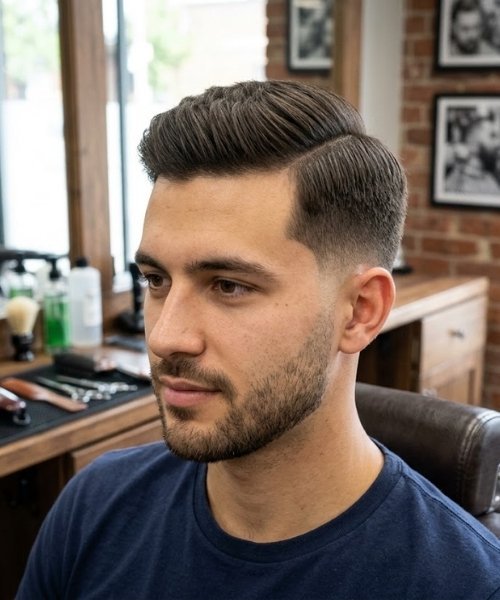
The classic mid-taper fade is a reliable choice if you want a clean haircut that works in almost any setting. The sides are gradually shortened around the temples, and the neckline is tidied while the top remains long enough to comb, brush, or wear naturally. The top can be kept relatively short for easy maintenance or left slightly longer for more styling options.
This cut suits straight hair because the clean outline highlights the haircut’s shape without requiring complicated styling. Ask your barber for a smooth blend rather than a harsh line between the longer and shorter sections. For everyday wear, use a small amount of lightweight styling cream to control flyaways while keeping the hair natural.
Barber tip: Request a mid taper around the temples and neckline, a clean blend on the sides, and a top length that you can style without needing excessive product.
2. Textured Fringe Mid-Taper Fade Straight Hair
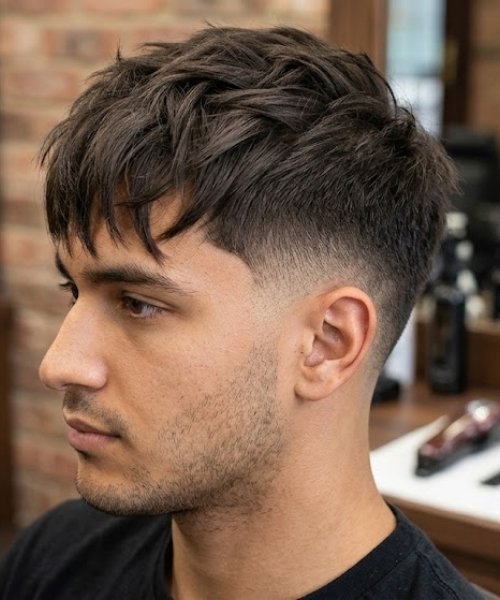
A textured fringe combines a mid taper with a choppy top that falls toward the forehead. Instead of leaving the front as one solid block, the barber adds layers and varied lengths to create movement. This helps straight hair look less flat and gives the haircut a relaxed, modern finish.
The style is particularly useful for fine or medium-density hair because texture can create the appearance of separation between strands. If your hair is very thick, ask your barber to remove some internal weight without thinning the ends too aggressively. A pea-sized amount of matte clay or texture paste can help separate the fringe without making it greasy.
Barber tip: Keep the fringe long enough to fall naturally forward, add light texture through the top, and blend the temples into a mid taper.
3. Messy Fringe Mid-Taper Fade Straight Hair
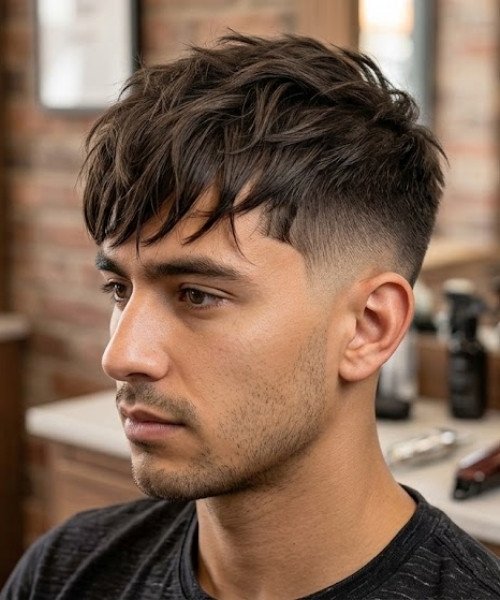
The messy fringe has a looser, less controlled appearance than a traditional textured fringe. The front falls forward in slightly uneven sections, while the top is cut to create natural movement rather than a perfectly arranged shape. The mid taper keeps the sides and neckline neat, balancing the relaxed finish on top.
This haircut works best when the top has enough length to move in different directions. If your straight hair naturally lies flat, ask for carefully placed layers and use a lightweight texture spray before blow-drying. Work a small amount of matte paste through the ends with your fingers rather than combing everything into place. That keeps the result casual instead of stiff.
Barber tip: Ask for a choppy, forward fringe with a natural finish. Avoid an excessively short front if you want the hair to look deliberately messy rather than spiky.
4. Mid-Blowout Taper Fade Straight Hair
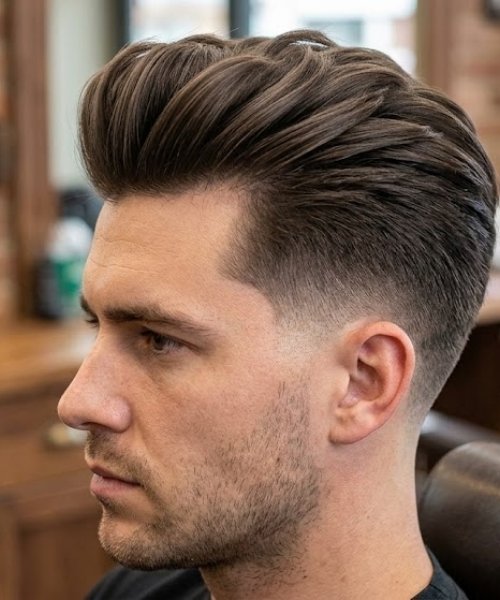
A mid-blowout taper uses blow-drying to lift the top and create a fuller outline. Straight hair can look especially neat in this style because the strands can be directed upward and outward, producing a controlled shape around the crown and front. The taper cleans up the sides, while the longer top gives the haircut its height.
You do not need naturally thick hair to try a blowout, but fine hair usually benefits from a lightweight volumizing mousse or root-lifting spray. Blow-dry in the direction you want the hair to sit, lifting the roots with your fingers or a vent brush. Finish with a small amount of flexible-hold product so the hair retains movement instead of becoming rigid.
Barber tip: Keep enough length on top to create lift, remove excess bulk where needed, and use a mid taper to keep the sides balanced with the volume above.
5. Curtain Bangs Mid Taper Fade Straight Hair
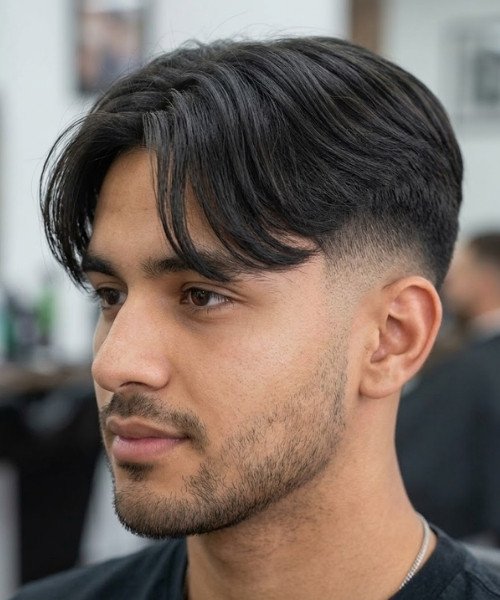
Curtain bangs feature a center or slightly off-center part, with the front sections falling toward either side of the forehead. Paired with a mid taper, they create a contrast between a soft, longer front and a clean outline around the temples. This is a useful option if you want to keep medium-length straight hair while making the edges look tidy.
The front needs enough length to separate and fall naturally. Hair that is too short may not form a curtain shape, while very thick hair may need layers to prevent the front from looking heavy. Blow-dry the front away from the face and then guide each section outward. A light styling cream can control flyaways without flattening the bangs.
Barber tip: Keep the front and upper sides long enough for a center or off-center part, add soft layers, and taper the temples without cutting into the curtain shape.
6. Slick Back Mid Taper Fade Straight Hair
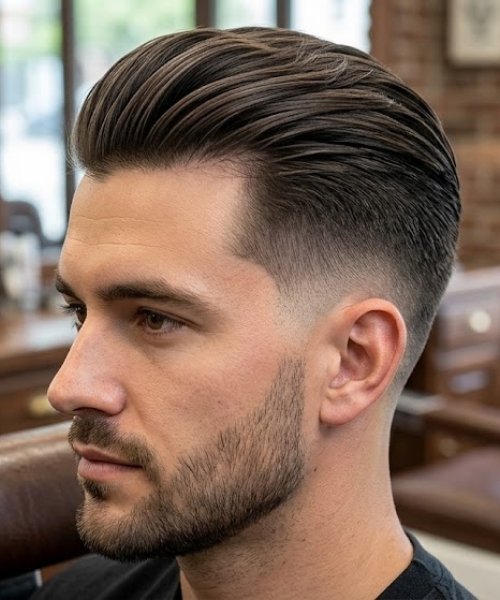
The slick back pushes the hair away from the forehead and toward the crown, creating a smooth, structured appearance. A mid taper makes the sides look clean while the longer top provides enough length to comb backward. Depending on your preference, the finish can be glossy and formal or matte and understated.
Straight hair often follows the direction of a comb easily, but stubborn growth patterns near the front can make the style difficult to maintain. If your hair falls forward naturally, use a blow-dryer to train it backward before applying product. Choose a water-based pomade for a more polished finish or a light styling cream for a softer result. Avoid applying too much product at the roots if your hair is fine, as this can make the top look oily or thin.
Barber tip: Leave enough length to comb the top backward, keep the transition around the temples smooth, and avoid cutting the front so short that it will not stay back.
7. Comb-Over Mid-Taper Fade Straight Hair
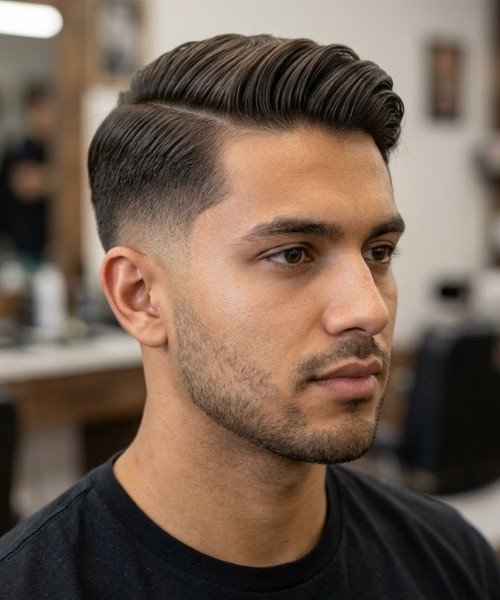
A comb-over directs the longer top toward one side, creating a neat shape that can be casual or professional. Unlike a sharply defined side part, a comb-over does not always require a visible line. The mid taper gives the sides a tidy outline, while the top length lets you choose how much volume and separation you want.
This style works with many straight-hair types, including fine hair, provided the top is not too heavy. If your hair is thin, a loose comb-over with a matte product may look fuller than a tightly slicked version. For thick hair, ask your barber to reduce excess weight so the top does not fall heavily over the side. Style the hair while it is slightly damp, then finish with your fingers or a comb depending on how polished you want it to look.
Barber tip: Request a mid taper and a top that can be directed to either side. If you do not want a hard part, ask for a natural separation rather than a shaved line.
8. Hard Part Mid Taper Fade Straight Hair
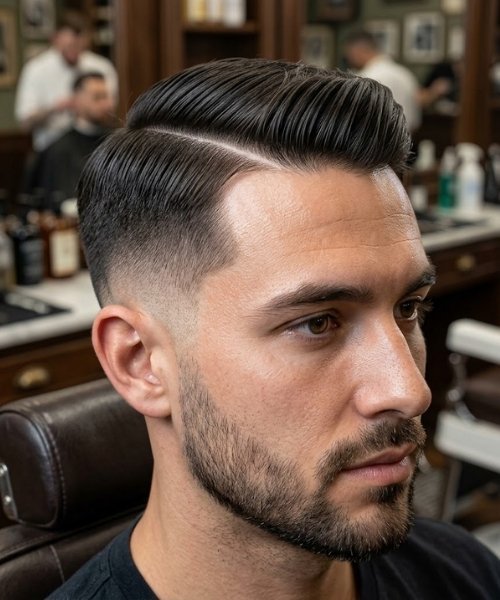
A hard part is a visible line shaved into the hair to define where the top separates. Combined with a mid taper, it creates a sharp, deliberate finish that works well with a comb-over, side part, or short pompadour. Straight hair makes the line easy to see, which is one reason this style can look especially defined.
The placement matters. A part that sits against your natural growth pattern may be harder to style, so ask your barber to check how your hair falls before creating the line. Hard parts also require more upkeep than natural parts because the shaved line becomes less clear as the hair grows. Use a light product on the top and avoid letting heavy styling cream build up around the part.
Barber tip: Choose the part’s position before the cut, ask for a mid taper, and confirm whether you want a fine, subtle line or a more noticeable shaved part.
9. French Crop Mid Taper Fade Straight Hair
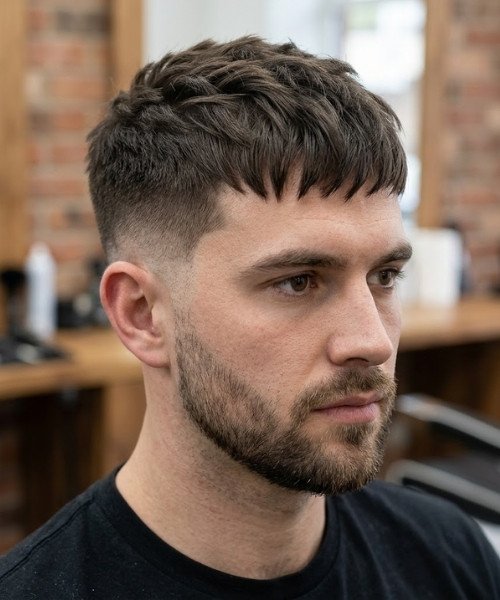
The French crop features a short top with a forward fringe, usually cut with enough texture to prevent the hair from looking like a solid, flat surface. The mid taper adds definition around the temples and neckline, making the overall haircut look clean without requiring much daily styling.
This is a practical choice for straight hair because the short length is easy to manage. Fine hair can benefit from a lightly textured top, while thick hair may need more weight removal to keep the fringe from becoming bulky. After washing, dry the hair in the direction you want the fringe to fall and apply a small amount of matte clay if you want more separation. If you prefer an extremely simple routine, you may be able to wear the crop with little or no product.
Barber tip: Ask for a short textured crop with a forward fringe and a mid taper. Explain whether you want the fringe straight across, softly uneven, or slightly longer at the sides.
10. Pompadour Mid Taper Fade Straight Hair
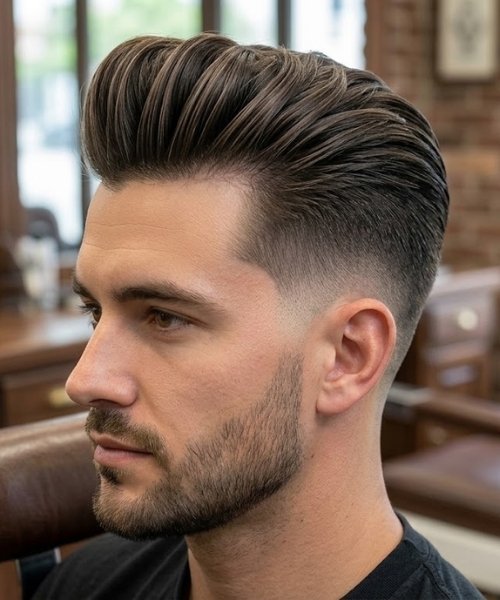
The pompadour keeps the front longer and lifts it upward before directing it back. This creates a noticeable rise at the front, while the mid taper reduces bulk around the temples and neckline. It is a strong option if you enjoy a carefully styled haircut and want the top to be the main feature.
Straight hair can form a clean pompadour, but the style needs the right balance between length and weight. If the front is too heavy, it may fall forward during the day. Blow-dry the roots upward and backward, then use a styling product with enough hold to maintain the shape. Fine hair usually benefits from lighter products, while thick hair may need a stronger hold and more deliberate blow-drying.
Barber tip: Keep extra length at the front, add subtle layers if the top feels too heavy, and make sure the taper does not rise so high that the pompadour looks disconnected unintentionally.
11. Mid Taper Fade for Asian Straight Hair
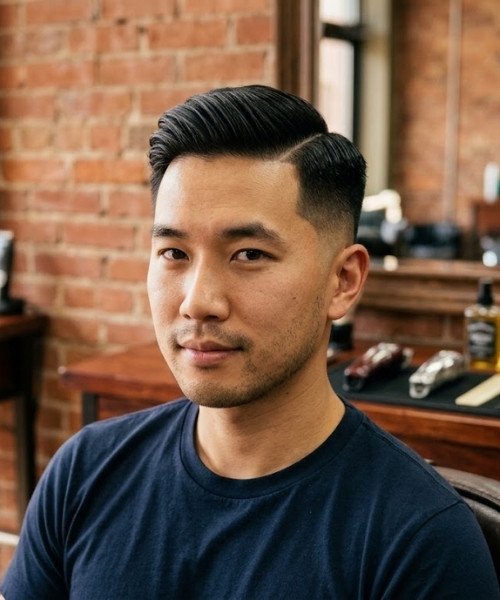
Many men with Asian straight hair have naturally straight strands that can be dense, thick, or resistant to staying in a chosen direction. A mid taper can reduce bulk around the temples while leaving enough length for a textured crop, comma-style fringe, curtain hairstyle, or side part. The best result depends on the individual’s hair density and growth pattern rather than ethnicity alone.
If your hair sticks outward after cutting, ask the barber to consider the way it grows before removing too much length from the sides. A layered top can help thick hair sit more naturally, while a shorter crop may be easier to manage if you prefer a quick morning routine. Use a lightweight styling cream or matte paste to guide the strands without making them look greasy.
Barber tip: Explain whether your hair tends to stick out at the sides or fall flat on top. Ask for a mid taper that controls the sides while preserving enough length for the top to sit naturally.
12. Mid Taper Fade for Thin Straight Hair
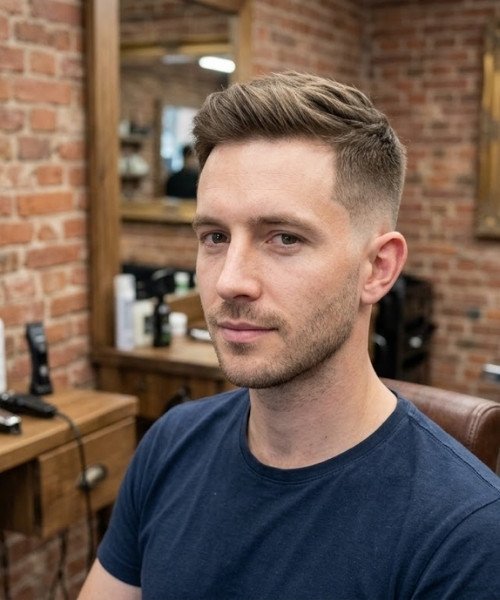
A mid taper can work well with thin straight hair, but the top needs careful shaping. Hair that is naturally fine or sparse may look less full when cut too short, heavily thinned, or slicked tightly against the scalp. A short textured crop, soft side part, or modest quiff often gives more control than a long, heavy style.
Ask your barber to keep the top length appropriate for your density and use light layering to create movement. Avoid aggressive thinning shears if they make the ends appear wispy. At home, blow-dry the roots while lifting the hair gently, then use a small amount of lightweight matte product. Heavy pomades and oily products can separate fine strands and make the scalp more visible.
Barber tip: Tell your barber that you want the top to look fuller. Request a mid taper with controlled texture, and avoid removing too much density from the front and crown.
13. Mid Taper Fade for Thick Straight Hair
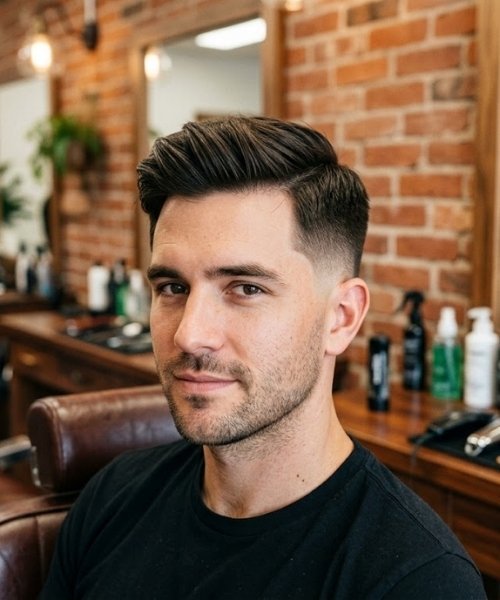
Thick straight hair can create a strong, defined shape, but it may also become bulky around the temples and crown. A mid taper helps tidy the edges, while layering through the top can make the hair easier to style. This combination works with longer looks such as a quiff or slick back, as well as shorter crops.
The main goal is to manage weight without making the top look uneven. Your barber may use scissors or carefully selected thinning techniques, depending on your hair and preferred style. At home, work with your hair’s natural direction rather than forcing it into a shape that immediately springs back. A medium-hold cream or paste can provide control, while blow-drying helps the top settle into place.
Barber tip: Ask for a mid taper with enough blending to reduce bulk around the sides. Explain whether you want the top to sit flat, sweep sideways, or hold more height.
14. Disconnected Mid Taper Fade Straight Hair
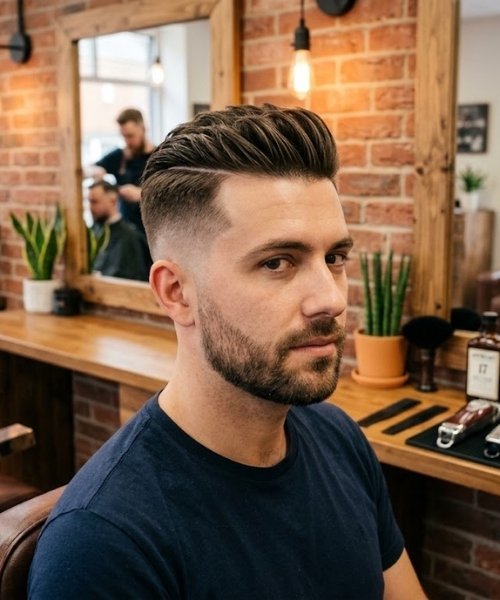
A disconnected style creates a clear contrast between the longer top and shorter sides instead of blending every section smoothly. The mid taper can clean up the temples and neckline while preserving the deliberate separation higher up. This gives the haircut a bold appearance, especially when paired with a slick back, quiff, or textured top.
Straight hair makes the change in length easy to notice, so the barber needs to position the separation carefully. If you want a subtle result, ask for a softer disconnection with some blending near the upper sides. If you want a stronger contrast, bring a reference photo and point out exactly where the longer section should begin. Styling can be simple, but the shape generally looks best when the top is arranged intentionally.
Barber tip: Specify whether you want a visible separation or a smooth blend. Ask for a mid taper around the temples and neckline without removing the contrast you want on the upper sides.
15. Edgar Cut Mid Taper Fade Straight Hair
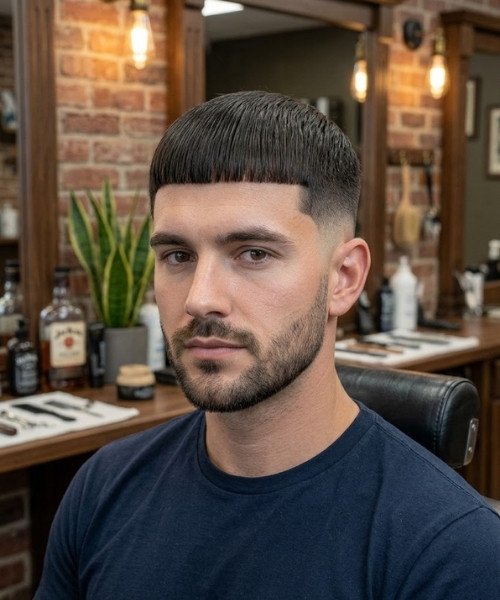
The Edgar cut usually features a short, textured top and a distinct fringe across the forehead. With a mid taper, the sides are cleaned up while the fringe creates the haircut’s recognizable outline. Straight hair can make the front look particularly defined, but the exact fringe shape should suit your forehead and natural hairline.
A very straight, blunt fringe creates a stronger appearance, while a slightly textured edge looks softer and more natural. If your hair is thick, ask for enough texture to prevent the front from looking like a heavy block. If it is fine, avoid excessive thinning that could make the fringe appear sparse. Use a small amount of matte product if you want the top to stay separated rather than lying flat.
Barber tip: Ask for an Edgar-style textured top with a defined forward fringe and a mid taper. Agree on the fringe length before cutting because even a small change can affect the overall look.
16. Crew Cut Mid-Taper Fade Straight Hair
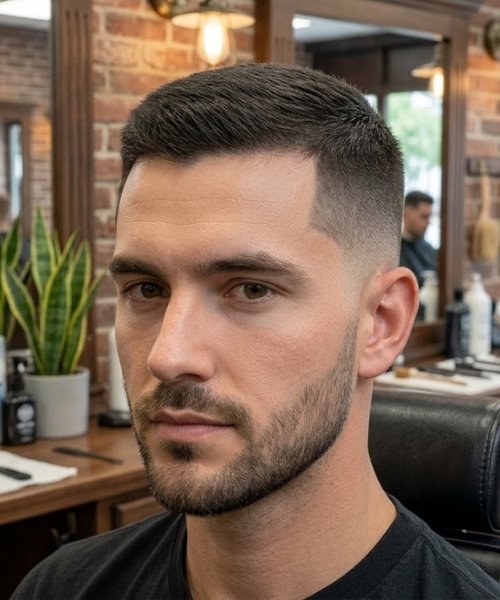
A crew cut is short on top, with the front often left slightly longer than the crown. Paired with a mid taper, it creates a clean, practical haircut that needs little daily styling. This is a useful option if you want the neatness of a short cut without shaving the entire head.
Straight hair makes the crew cut’s outline clear, so evenness and blending are important. You can keep the top close and uniform or leave a little extra length at the front for subtle lift. A small amount of matte paste is optional, but many crew cuts work well with no product at all. Regular taper cleanups keep the edges neat, while the top can be trimmed whenever it starts to feel too long.
Barber tip: Request a short crew cut with a mid taper and a slightly longer front if you want lift. Tell your barber whether you prefer a uniform top or a gradual front-to-crown slope.
17. Quiff Mid Taper Fade Straight Hair
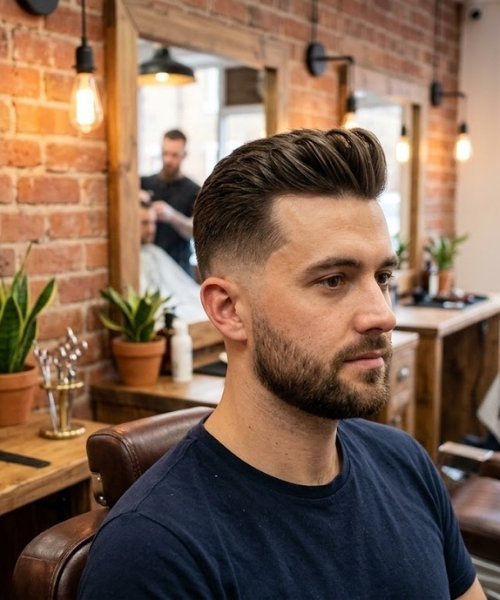
The quiff lifts the front of the hair upward and slightly backward, creating volume without requiring the full height of a pompadour. A mid taper keeps the sides neat and helps balance the raised front. The style can look casual when loosely textured or more polished when carefully combed.
Straight hair often needs help holding the lift, particularly if it is fine or naturally falls forward. Begin with damp hair and use a blow-dryer to lift the roots at the front. A lightweight mousse can help build volume, while a small amount of matte paste adds control after drying. Avoid using too much product before blow-drying, as excess weight can work against the height you are trying to create.
Barber tip: Keep the front longer than the crown, shape the top to support a quiff, and add a mid taper around the temples and neckline.
18. Ivy League Mid Taper Fade Straight Hair
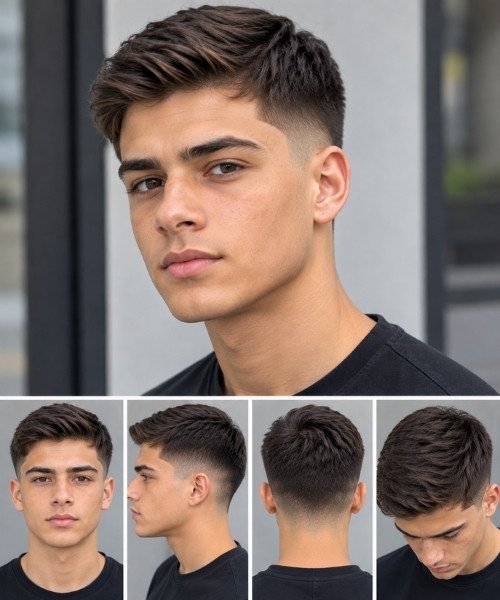
The Ivy League is a refined short haircut that leaves enough length at the front for a small side sweep or part. Adding a mid taper gives it a cleaner, more contemporary finish without losing its classic character. It is a good option if you want a haircut that looks tidy at work but can still be styled casually.
Straight hair is well suited to this shape because it can be combed into place easily. The key is keeping enough length at the front while avoiding excessive bulk on the sides. A small amount of styling cream can create a natural finish, while a light-hold pomade gives the part more definition. You should not need a complicated routine once the barber has shaped the top correctly.
Barber tip: Ask for an Ivy League cut with a mid taper, a slightly longer front, and enough length to part or sweep the hair to one side.
19. Side Part Mid Taper Fade Straight Hair
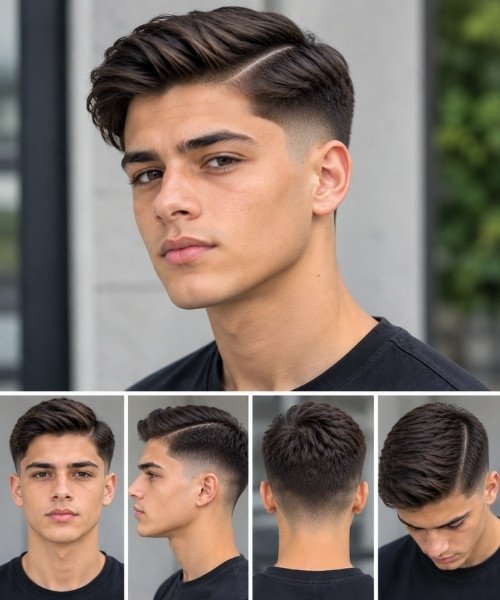
The side part is a classic choice for straight hair because it creates direction and makes the haircut look organized. The part can be natural or defined with a razor, while the mid taper keeps the temples and neckline tidy. The top may be short and conservative or longer with a little volume.
If your hair has a strong natural part, working with it will usually make styling easier. Ask your barber to check the growth pattern before cutting a hard line. For a natural finish, use a light styling cream and a comb. For a sharper result, a small amount of pomade can help hold the separation. Keep the top long enough to lie neatly on both sides of the part.
Barber tip: Tell your barber which side you normally part your hair on, and ask for a mid taper with a top length that follows your natural growth direction.
20. Faux Hawk Mid Taper Fade Straight Hair
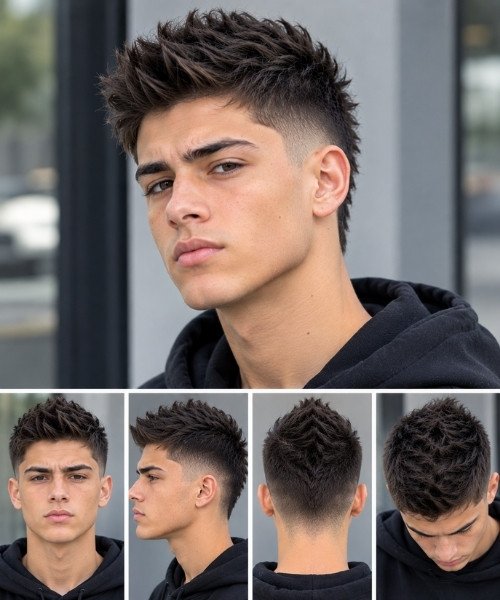
A faux hawk brings the hair toward the center of the head to create a raised ridge, without shaving the sides into a traditional mohawk. The mid taper keeps the edges clean while leaving enough length around the upper sides to maintain a gradual shape. It can be styled subtly for everyday wear or more dramatically for a sharper look.
Straight hair may need some texture and hold to keep the center raised. Ask your barber to create a shape that suits your hair density instead of cutting the sides so short that the top appears too narrow. At home, use a small amount of matte paste and guide the hair upward with your fingers. Blow-drying the center toward the desired direction can help it stay in place.
Barber tip: Keep the top longest through the center, blend the surrounding hair gradually, and finish with a mid taper around the temples and neckline.
21. Spiky Top Mid Taper Fade Straight Hair
A spiky top uses separated sections of hair to create a textured, lifted finish. The mid taper adds contrast around the temples and neckline, while the top can be cut short for a subtle effect or left longer for more noticeable spikes. This is a straightforward style if you want a casual look that does not require a precise part.
The main challenge is avoiding stiff, overly pointed spikes that make the haircut look dated or unnatural. Use a matte paste or clay and work a small amount through dry hair, lifting a few sections with your fingertips. Fine hair usually needs a lightweight product to preserve volume, while thick hair may require a stronger hold. The barber should leave enough length for the spikes you want without making the top difficult to control.
Barber tip: Ask for a textured top that can be styled into soft spikes, with a mid taper that blends neatly into the sides.
22. Caesar Cut Mid Taper Fade Straight Hair
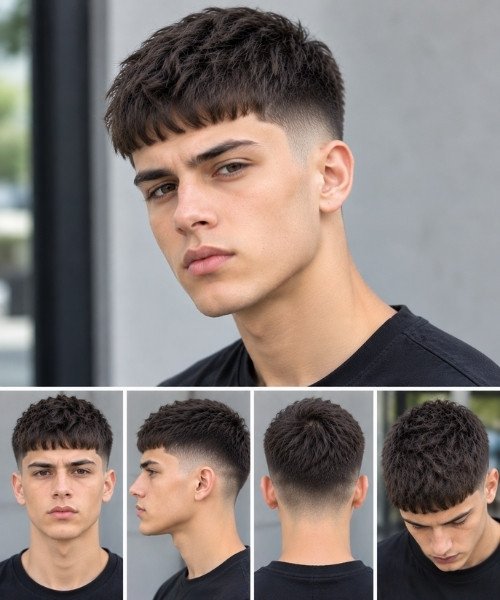
The Caesar cut features a short top and a small fringe directed forward. It is more uniform and compact than a textured fringe, making it useful if you prefer a short haircut that is easy to manage. The mid taper cleans up the temples and neckline while giving the classic shape a modern edge.
Straight hair can make the fringe look neat and defined, but the barber should consider your hairline and forehead before choosing the length. A short fringe creates a subtle finish, while a slightly longer front can offer more coverage. The top generally needs little styling, although a touch of matte product can add texture. This cut is especially practical if you want to spend less time blow-drying or arranging your hair each morning.
Barber tip: Request a short Caesar cut with a forward fringe and a mid taper. Explain whether you want the fringe very short and neat or slightly textured.
23. Mid Taper Fade with Beard: Straight Hair
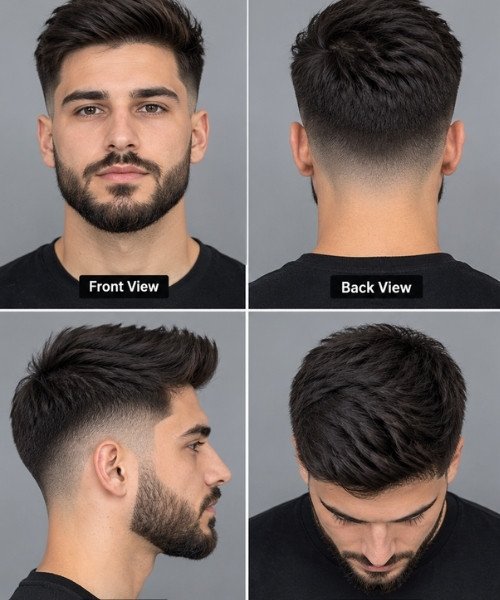
Pairing a mid taper with a beard creates a coordinated look by connecting the clean temple area with the facial hair. The top can be styled as a crop, quiff, side part, or slick back, while the barber shapes the sideburns to suit the beard’s density. The result can be polished without requiring an extremely short haircut.
The beard should be shaped to complement your face rather than follow a rigid rule. A fuller beard may benefit from a smooth transition at the sideburns, while short stubble can look cleaner with a more subtle connection. Ask your barber to preserve the areas where your beard grows unevenly instead of cutting them too sharply. Keep the neckline and cheek lines tidy between appointments if you want the finish to stay defined.
Barber tip: Request a mid taper that blends naturally into your beard, and decide whether you want a soft sideburn transition or a sharper line.
24. Long Top Mid Taper Fade Straight Hair
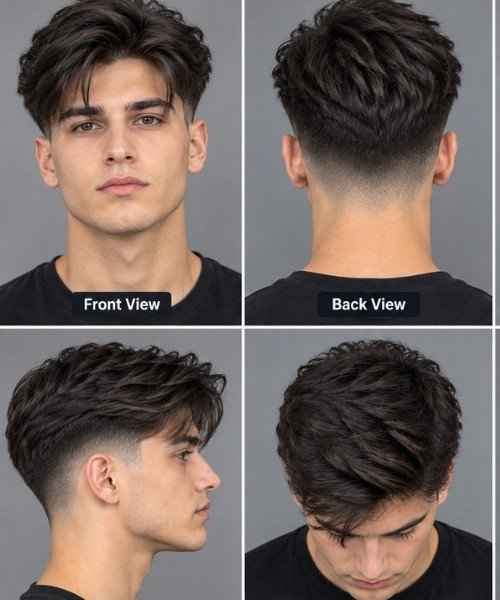
A long top with a mid taper gives you plenty of styling choices while keeping the sides controlled. You can wear the hair forward as a fringe, part it in the middle, sweep it to one side, or push it backward. The taper adds structure around the temples and neckline without requiring you to sacrifice the length you have grown.
Long straight hair can become heavy, especially near the front and crown. Layers may help the hair move naturally, but excessive thinning can leave the ends looking weak. Ask your barber to remove only the weight needed to achieve your chosen shape. At home, use a lightweight cream or heat protectant before blow-drying, and avoid pulling the hair aggressively with a brush.
Barber tip: Keep the top long enough for your preferred style, add layers only where needed, and taper the temples and neckline without cutting into the longer sections.
25. Modern Mullet Mid Taper Fade Straight Hair
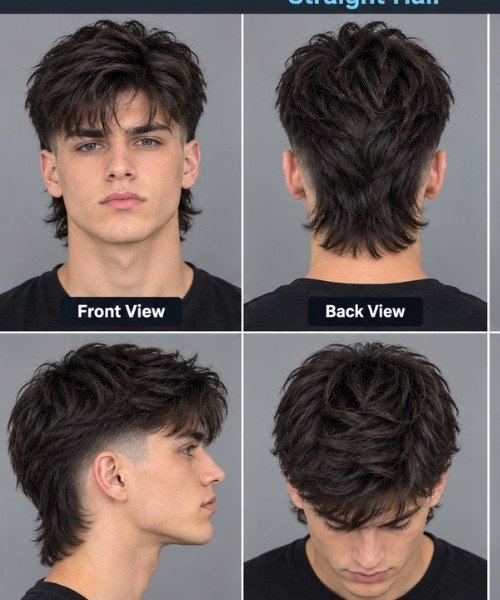
The modern mullet keeps more length at the back while the sides and front are shaped to create contrast. With straight hair, the back can look sleek and defined, while a mid taper gives the temples and neckline a cleaner finish. The overall result can be subtle with a short back or more noticeable with longer hair extending toward the neck.
The transition from the crown to the back is important. If the barber cuts the top and back as separate blocks, the haircut may look unbalanced. Bring a reference photo showing the length you want behind the ears and at the nape. Styling can be minimal, but a light cream or texture paste may help the top sit naturally. When refreshing the taper, remind the barber that you want to preserve the back length.
Barber tip: Ask for a modern mullet with a mid taper at the temples, a clean outline, and a blended transition into the longer back.
How to Style Mid Taper Fade Straight Hair: Step-by-Step
Straight hair usually needs direction, texture, or root lift to achieve a specific style. The best routine depends on whether you want a smooth side part, a textured fringe, or a high-volume quiff. Start with a small amount of product and add more only if your hair needs it.
Daily Styling Routine for Mid-Taper Fade Straight Hair
Start by washing or lightly dampening your hair, depending on how much product remains from the previous day. Gently towel-dry it so it is damp rather than dripping wet. If you use heat, apply a heat protectant before blow-drying.
Next, arrange the hair in the direction you want it to sit. Use your fingers for a messy fringe or textured crop, and a comb for a side part or slick back. Finish with a small amount of suitable styling product, focusing on the top rather than coating the tapered sides.
A simple daily routine looks like this:
- Cleanse or dampen the hair as needed.
- Apply heat protectant if using a blow-dryer.
- Blow-dry or air-dry in your preferred direction.
- Work a small amount of styling product through the top.
- Check the shape in natural light and adjust with your fingers.
Blow-Drying Technique for Volume on Straight Hair
To create volume, lift the roots while directing warm air toward them. For a quiff, guide the front upward and slightly backward. For a curtain style, direct the front away from the center part, and for a comb-over, dry the hair toward the chosen side.
Keep the dryer moving rather than holding it close to one section for too long. Excessive heat can dry out the hair and irritate the scalp. Finish with a cool-air setting if your dryer has one, then apply a small amount of styling product once the hair has cooled.
Fine hair usually responds better to lighter products and gentle root lifting. Thick hair may need more time to dry and can benefit from sectioning the top so the roots receive enough airflow. Do not pull the hair tightly with a brush if you want a natural finish.
Creating Texture on Naturally Flat Straight Hair
If your hair naturally lies flat, texture starts with the haircut. Ask for light, purposeful layering or a textured finish rather than relying entirely on styling products. The goal is to create movement while keeping enough density for the top to look healthy.
After washing, apply a small amount of volumizing mousse or texture spray if it suits your hair. Blow-dry while lifting the roots, then use matte clay or paste to separate a few sections. Start with less product than you think you need because excess product can weigh the hair down and make fine strands stick together.
Avoid repeatedly running a comb through a textured style once it is finished. A few adjustments with your fingers are usually enough. If the hair becomes oily or flat by midday, try reducing the amount of product rather than layering on more.
Styling for Different Occasions
For work or formal occasions, a side part, Ivy League, or controlled slick back can create a tidy appearance. Use a comb and a small amount of cream or pomade, keeping the finish smooth without making the hair look wet unless that is the intended style.
For casual days, a messy fringe, French crop, or soft quiff gives you a more relaxed result. Matte products help preserve texture, while your fingers create a less uniform shape. For special events, a blowout or pompadour can add more height, provided your hair has enough length and hold.
The easiest approach is to keep the same taper and change how you style the top. That way, you can adjust your appearance without needing a completely different haircut.
Best Products for Mid Taper Fade on Straight Hair
The best styling product depends on your hair thickness and the finish you want. Matte clay and paste provide texture, styling cream offers softer control, and volumizing products can help flat hair appear fuller. You do not need to use every product type at once.
Best Matte Clays for Straight Hair
Matte clay is useful when you want texture and a natural-looking finish without obvious shine. It often suits messy fringes, textured crops, short quiffs, and soft spikes. Because some clays are quite heavy, fine hair usually needs only a small amount.
Warm a little product between your palms before applying it. Work it through the top, starting near the back and moving toward the front so you do not overload the fringe. If the hair becomes stiff or greasy, reduce the amount or choose a lighter paste.
Best Styling Creams for Straight Hair
Styling cream provides softer control than many strong-hold clays. It works well for side parts, curtain bangs, longer tops, and natural comb-overs where you want the hair to move rather than stay locked in one position.
Creams are often useful for medium or thick straight hair that needs light control. If your hair is fine, choose a lightweight formula and use very little. Apply it evenly so you do not end up with one section looking oily while the rest remains dry.
Best Texture and Volume Products for Straight Hair
Volumizing mousse and root-lifting sprays can help hair that tends to fall flat. Texture sprays can add grip, making it easier to create a messy fringe or separated top. These products are generally applied before or during blow-drying, while clay or paste is often used afterward to shape the finished style.
| Product type | Best for | Finish | How to use it |
|---|---|---|---|
| Matte clay | Textured crops, quiffs, spikes | Low shine | Use a small amount on dry or nearly dry hair |
| Styling cream | Side parts, longer tops, curtains | Natural to soft | Apply evenly to damp or dry hair according to the label |
| Volumizing mousse | Flat or fine hair | Fuller appearance | Apply to damp hair before blow-drying |
| Texture spray | Messy fringe and layered styles | Separated, textured finish | Use sparingly before or during styling |
| Pomade | Slick backs and defined parts | Varies from matte to shiny | Apply a small amount and comb into place |
| Heat protectant | Any style using heat | Usually minimal visible finish | Apply before blow-drying as directed |
Avoid choosing a product based on hold alone. A strong product can still be a poor match if it weighs down your hair or leaves a finish you dislike. Start with a small amount, assess the result, and adjust your routine gradually.
Which Face Shape Suits a Mid-Taper Fade Straight Hair Best?
A mid taper can suit many face shapes because the taper controls the sides while the top can be adjusted to add height, width, or softness. The best version depends on your proportions and the style you choose. Face-shape guidance is a starting point, not a strict rule.
Oval Face Shape
An oval face usually works with a wide range of top styles, including a quiff, side part, textured fringe, and slick back. The main goal is to keep the proportions balanced rather than adding unnecessary height or width. Choose the hairstyle you enjoy and adjust the top length to suit your hair density.
Round Face Shape
If you want a more elongated appearance, try a quiff, pompadour, or textured top with some height. Keeping the sides neat can reduce the visual width around the temples. A very heavy, straight fringe may make the face appear shorter, so consider a shorter or more textured front if that is a concern.
Heart Face Shape
A heart-shaped face often has a broader forehead and a narrower chin. A side part, curtain style, or textured fringe can help soften the upper face, depending on the length and direction of the hair. Avoid assuming that one specific taper height will work for everyone; the overall top shape matters just as much.
Square Face Shape
A square face has a more angular jaw and forehead. A classic mid taper, crew cut, textured crop, or side part can complement that structure. If you prefer a softer look, choose a top with natural movement rather than an extremely rigid shape.
Diamond Face Shape
A diamond-shaped face often has more width around the cheekbones and a narrower forehead and chin. A textured fringe or medium-length top with some movement can help balance the proportions. Ask your barber to avoid removing too much fullness around the upper sides if you want a less narrow appearance.
Mid Taper Fade for Thin vs Thick Straight Hair: Key Differences
Hair thickness changes how a taper and top style should be cut. Thin or fine hair may need a shape that preserves density, while thick hair often benefits from weight control and careful layering. In both cases, the taper should be adjusted to your natural growth pattern.
| Feature | Thin or fine straight hair | Thick straight hair |
|---|---|---|
| Top length | Short to medium, depending on density | Short to long, depending on desired style |
| Useful styles | Textured crop, short quiff, side part | Pompadour, slick back, long top, textured fringe |
| Main cutting goal | Preserve fullness | Reduce unwanted bulk without making the ends uneven |
| Product choice | Lightweight mousse, cream, or paste | Medium-hold paste, cream, or pomade |
| Common problem | Hair looks flat or scalp shows more | Hair sticks out or becomes difficult to shape |
Thin Straight Hair: What to Do Differently
If your hair is thin or fine, do not assume that cutting it extremely short will always make it look fuller. A carefully chosen short or medium length can create a stronger outline, but the best length depends on how much density you have. Ask your barber to avoid removing too much hair from the top, especially around the front and crown.
Use lightweight products and focus on lifting the roots rather than coating the strands. A textured crop or modest quiff may be easier to maintain than a long slick back. If your hairline or crown has visible thinning, discuss the shape you prefer with your barber so the haircut works with your natural coverage.
Thick Straight Hair: What to Do Differently
Thick hair can look full and structured, but it may stick outward when the sides are cut too short or the top is left too heavy. A mid taper helps tidy the edges, while layers can remove excess weight from the top. The barber should choose the cutting technique based on how the hair responds, not simply use thinning shears everywhere.
At home, use a product with enough control to guide the hair without making it rigid. Blow-drying in the intended direction can help the shape settle. If your hair keeps springing outward around the temples, ask your barber to assess the growth pattern and adjust the transition rather than repeatedly cutting the sides shorter.
How to Ask Your Barber for a Mid Taper Fade on Straight Hair
The clearest way to request this haircut is to explain the taper height, how short you want the edges, the length of the top, and how you plan to style it. The phrase “mid taper fade” can mean slightly different finishes to different barbers, so a reference photo helps reduce confusion.
You can say:
“I want a mid taper around the temples and neckline, with a smooth blend rather than a high fade. Keep the top long enough for my chosen style, and shape it to work with my straight hair. Please show me the taper height before you start.”
Then clarify these details:
- Taper finish: Do you want visible hair at the edges, a close clipper finish, or a skin-close result?
- Top length: Tell the barber whether you want a short crop, medium-length fringe, or longer top.
- Texture: Ask for light layering if you want movement, or a smoother finish if you prefer a classic style.
- Parting: Explain whether you want a natural part, a hard part, or no part at all.
- Neckline: Tell the barber whether you prefer a natural neckline or a more defined finish.
- Maintenance: If you do not want frequent visits, ask for a softer taper that will grow out more gradually.
If you have a cowlick, hair that sticks out around the temples, or a crown that grows in different directions, mention it before the cut. These details can change how the top should be shaped. Do not rely on a haircut name alone; explain the result you want to see in the mirror.
Mid Taper Fade Maintenance Schedule and Growth Timeline
A mid taper looks sharpest when the shorter edges are clearly defined, but you do not necessarily need a full haircut every time they grow out. The right schedule depends on how close the taper is cut, how quickly your hair grows, and how precise you want the outline to remain.
Professional Touch-Up Schedule
Many people find that a taper cleanup every two to three weeks keeps the edges looking neat. If you prefer a softer finish or are growing the top longer, you may be comfortable waiting three to four weeks or more. A skin-close taper or shaved design usually needs more frequent attention because small amounts of growth change the contrast.
You can also separate edge maintenance from a full top trim. Ask your barber to refresh the temples and neckline while leaving the top length alone. This is particularly helpful for curtain bangs, long tops, pompadours, and mullets.
Week-by-Week Growth Timeline
Hair does not grow at exactly the same rate for everyone, so the following is a practical guide rather than a fixed schedule.
| Time after haircut | What you may notice | What to do |
|---|---|---|
| First week | The taper looks crisp and the top is easy to shape | Follow your normal styling routine |
| Second week | The edges may begin to look softer | Refresh the shape at home without cutting into the taper |
| Third week | The contrast may be less sharp, especially around the temples | Consider a cleanup if you want a precise outline |
| Fourth week | The sides may look fuller and the neckline less defined | Book a trim if the shape no longer suits your preference |
| Beyond four weeks | The taper gradually blends into the surrounding growth | Decide whether to refresh the edges or reshape the entire cut |
Between-Visit Home Maintenance
Wash your hair as often as needed for your scalp and styling routine, and avoid using more product than necessary. Product buildup can make straight hair look flat, especially when fine strands stick together. Use conditioner when appropriate for your hair type, and follow product instructions if you use heat protectant or styling treatments.
You can tidy loose hairs around the ears with care, but avoid trying to recreate the taper with clippers unless you are experienced. It is easy to cut the transition too high or create uneven patches. Keep reference photos of your preferred haircut so your barber can repeat the same shape at future appointments.
Common Mistakes to Avoid with Mid Taper Fade on Straight Hair
One common mistake is choosing a taper that is too high for the look you want. Straight hair makes changes in length easy to see, so an overly high taper may create more contrast than expected. Show your barber the desired height before the clippers begin.
Another mistake is leaving the top too heavy or cutting it too short without considering your styling routine. Heavy hair can fall flat, while a very short top may not allow enough length for a quiff, curtain style, or slick back. Explain how you plan to wear your hair so the barber can choose the right length and layers.
Using too much product is another problem, especially for fine hair. Heavy waxes or pomades can separate strands and make the top appear oily. Start with a small amount, add more only if needed, and choose a lighter formula if the hair loses volume quickly.
Finally, do not confuse a taper with a full fade that removes much more hair from the sides. If you want to preserve fullness above the ears, say so clearly. A reference image and a short explanation of what you like about it are usually more useful than relying on a haircut name alone.
How Much Does a Mid Taper Fade for Straight Hair Cost?
The price depends on the barbershop, the barber’s experience, your location, and whether you are getting a basic taper or a more detailed style. A simple mid taper with a short top may cost less than a longer haircut that needs layered shaping, blow-drying, or a hard part. Prices also vary widely across the United States, so there is no single reliable national price for every shop.
Before booking, check the shop’s current haircut menu and ask whether the quoted price includes styling. If you want a beard blend, shaved design, or detailed work on a long top, confirm whether those services cost extra. It is also worth asking whether a taper cleanup is priced differently from a complete haircut.
The cheapest option is not always the best value if the barber does not understand how your straight hair falls. Look for examples of similar haircuts in the barber’s portfolio, especially if you want a specific fringe, quiff, or disconnected shape. A clear consultation can help you avoid paying for a cut that does not match your expectations.
Frequently Asked Questions
Is a mid-taper fade good for straight hair?
Yes. A mid taper works well with straight hair because it creates a clean outline while leaving the top available for many styles. It can be paired with a textured fringe, side part, quiff, slick back, crop, or longer hairstyle.
How often should I get a mid-taper fade touched up?
A cleanup every two to three weeks works for many people who want sharp edges. If you prefer a softer finish or are growing your hair longer, you may be comfortable waiting three to four weeks or more. The best schedule depends on your growth rate and preferred appearance.
What products work best for a mid taper fade on straight hair?
Matte clay or paste works well for textured styles, while styling cream suits softer, natural finishes. Fine hair may benefit from lightweight mousse or root-lifting products, and a pomade can help create a more polished slick back or side part.
What’s the difference between a mid taper and a low taper for straight hair?
A low taper stays close to the sideburns and neckline, leaving more fullness on the sides. A mid taper sits higher and creates a more visible transition around the temples. Choose a low taper for a subtle finish and a mid taper for more noticeable definition.
What face shapes suit a mid taper fade best?
A mid taper can work with oval, round, heart, square, and diamond face shapes. The top style makes a major difference: extra height can create a longer appearance, while a fringe can visually shorten the face. Choose the proportions you prefer rather than following face-shape rules too strictly.
Can I get a mid taper fade on thin straight hair?
Yes. Ask your barber to preserve enough density on top and avoid excessive thinning. Textured crops, short quiffs, and natural side parts can be practical choices, especially when styled with lightweight products that do not weigh the hair down.
How do I style a mid taper fade for volume on straight hair?
Apply a lightweight volumizing product to damp hair and blow-dry while lifting the roots. Direct the front upward for a quiff or backward for a pompadour, then finish with a small amount of matte paste or another suitable product. Avoid heavy products that make the hair fall flat.
What exactly do I say to my barber?
Say: “I want a mid taper around the temples and neckline, with a smooth blend and enough length on top for my preferred style.” Then explain whether you want a fringe, side part, quiff, or slick back, and show a reference photo if possible.
Will a mid-taper fade look good as it grows out on straight hair?
Yes, although the edges gradually become less defined as the hair grows. A softer taper may blend into the surrounding hair more naturally, while a close or skin-level finish can show regrowth sooner. Regular cleanup appointments help maintain the original shape.
What’s the difference between a taper and a fade for straight hair?
A taper usually shortens the hair around specific areas, particularly the temples and neckline, while leaving more fullness on the sides. A fade generally creates a more extensive transition across the sides and back and may reach very short or bare skin. Barbers sometimes use these terms differently, so clarify the exact finish you want.