

A mid taper haircut is a versatile men’s hairstyle that gradually shortens the hair around the temples and neckline while keeping the sides and back neat. It creates a clean, balanced appearance without removing too much hair from the sides. You can pair it with a comb over, textured fringe, curls, an afro, twists, braids, a mullet, or longer hair on top.
The mid taper fade works well for many hair types, face shapes, and personal styles. Whether you want a professional haircut for work, a low-maintenance everyday look, or a modern style with sharp lines, the key is choosing the right taper height, top length, and finish. Below are 42 hairstyle ideas, comparisons with other fades, face-shape recommendations, and practical barber instructions to help you get the look you want.
What Is a Mid Taper Fade and Who Should Get One?
A mid taper fade is a haircut in which the hair gradually gets shorter around the temples and the area near the neckline, with the taper positioned around the middle of those areas. Unlike a full mid fade, which typically reduces the hair across a larger section of the sides, a mid taper usually keeps more hair around the side panels.
This haircut suits men who want a fresh, defined appearance without committing to very short sides. It works with straight, wavy, curly, coily, and thick hair, provided the barber adjusts the taper and top shape to suit the hair’s natural texture.
You might choose a mid taper if you want:
- A neat haircut that works in casual and professional settings.
- A clean temple area without an extremely high fade.
- A balanced shape that complements short, medium, or long hair.
- A hairstyle that pairs well with facial hair, curls, braids, or a textured top.
- A modern cut that can be customized with a part, fringe, or line design.
What Is a Mid-Taper?
A mid taper gradually reduces hair length around the temples and neckline, with the transition placed at a medium height. The word taper describes the gradual change in length, while mid describes where that change is positioned.
Mid Taper vs Medium Taper
In everyday barber conversations, mid taper and medium taper generally refer to the same idea. Both describe a taper placed at a moderate height rather than close to the bottom of the hairline or high toward the upper sides.
However, barbers do not always use these terms in exactly the same way. Bring a reference photo if you want a particular shape, especially if you want the taper concentrated around the temples and nape rather than a fade across the entire side.
Where the Mid Taper Sits on the Fade Spectrum
A mid taper sits between a low taper and a high taper in terms of placement. The change in length begins higher than a low taper but generally does not extend as far up the sides as a high taper.
- Low taper: Keeps the transition close to the ears and bottom of the neckline.
- Mid taper: Places the transition around the middle of the temple and neckline areas.
- High taper: Moves the transition higher, creating a more noticeable change near the upper temples.
The exact placement depends on your hairline, head shape, and the look you want. A skilled barber can adjust the height slightly to create a more subtle or more defined finish.
Key Characteristics of a Mid Taper Fade
A mid taper fade typically has four defining features:
- Gradual shortening: The hair moves from longer to shorter lengths without an abrupt step.
- Clean temples: The hair around the temples is shaped to create a fresh outline.
- Tapered neckline: The hair at the nape becomes shorter toward the natural hairline.
- Flexible top length: The top can remain short, medium, curly, braided, or long.
The result depends on the blend. A soft taper looks natural and understated, while a tighter blend with crisp edges creates a sharper finish.
Mid Taper vs. Mid Fade: Are They Different?
Yes, although the terms are sometimes used interchangeably. A mid taper usually focuses on the temples and neckline, leaving more of the side hair intact. A mid fade generally removes more hair across the sides and back, creating a broader fading area.
If you want a clean temple area but prefer to keep the fullness of your side hair, ask for a mid taper. If you want the sides to become noticeably shorter across a wider area, a mid fade may be closer to your goal.
What Does a Mid Taper Look Like?
A mid taper looks clean around the temples and neckline while preserving the natural shape of the hair above those areas. Its appearance changes depending on the top style, hair texture, and how tightly the barber blends the shorter sections.
The Visual Signature of a Mid Taper Fade
The main feature is the controlled transition between longer hair and shorter hair. The taper creates definition around the edges without necessarily making the whole side of the head look faded.
For example, a man with thick, wavy hair can keep volume on top while getting a neat finish around the ears. Someone with short curls can use the same taper to make the curls look more defined against the cleaner outline.
Front View: What You See First
From the front, the taper is most noticeable around the temples and sideburns. These areas can be blended softly or outlined sharply, depending on your preference.
The front view also reveals how the top works with your face shape. A quiff adds height, a fringe creates a forward-focused appearance, and a middle part draws attention to the natural movement of longer hair.
Side Profile: The Fade Gradient
From the side, you can see how the barber blends the hair near the temple and above the ear. A well-executed taper should look smooth rather than like a disconnected patch of short hair.
The top can remain connected to the sides or feature a stronger contrast. If you want a conservative look, ask your barber to keep the transition soft and avoid taking the taper too high.
Back View: Neckline Treatment
At the back, the taper gradually shortens the hair around the nape. Depending on the desired finish, the neckline may be natural, softly tapered, or shaped into a more defined outline.
A natural neckline usually grows out more softly, while a sharply outlined neckline can look crisp immediately after a haircut. Neither option is automatically better; the right choice depends on your style and how often you want to maintain the edges.
360° Summary: All-Around Coverage
A mid taper should look balanced from the front, sides, and back. Before leaving the barber’s chair, check that the temple blends match, the neckline looks even, and the top has the intended shape.
If you have curls, coils, twists, or braids, also check that the taper complements the natural hairline without unnecessarily removing hair from the main style.
Mid Taper Fade vs. Other Fades: What’s the Difference?
Different fades change how much hair remains on the sides, where the shortest section sits, and how dramatic the haircut looks. The following comparison helps you decide which version fits your preferences.
| Haircut | Where the transition sits | Overall appearance |
|---|---|---|
| Low taper fade | Low around the temples and nape | Subtle and understated |
| Mid taper fade | Around the middle of the temple and neckline areas | Balanced and defined |
| High taper fade | Higher around the temples | Sharper and more noticeable |
| Mid fade | Across a wider section of the sides | More extensive fading |
| Skin or bald fade | Blends down to bare skin | High contrast where applied |
| Drop fade | Curves downward behind the ear | Rounded, contoured shape |
| Burst fade | Fans around the ear | Focused, rounded fade |
Mid Taper Fade vs Low Taper Fade
A low taper keeps the shortest transition closer to the ears and neckline. A mid taper moves that transition higher, making the temples more defined.
Choose a low taper if you prefer a subtle change that preserves more of the natural side shape. Choose a mid taper if you want a little more definition without committing to a broad fade across the sides.
Mid Taper Fade vs High Taper Fade
A high taper starts higher around the temples, giving the haircut a more pronounced outline. A mid taper leaves more hair above and around the transition.
A mid taper can be a useful middle ground for someone who wants a noticeable cleanup but does not want the upper sides to look too short. A high taper can work well when you want a stronger contrast with a curly top, afro, or textured hairstyle.
Mid Taper vs Mid Fade: Same Thing?
Not necessarily. The mid taper usually concentrates on the temples and neckline, whereas the mid fade commonly extends across a larger portion of the sides and back.
Because barber terminology varies, describe the area you want shortened instead of relying on the name alone. A photograph showing the side and back is especially helpful.
Mid Taper Fade vs Skin Fade / Bald Fade
A skin fade gradually blends the hair down to bare skin in the faded area. A mid taper does not have to reach bare skin; it can finish with a short guard length for a softer appearance.
If you want a sharp, high-contrast edge, ask whether your barber recommends a skin finish around the temples. If you prefer a natural look or want to reduce the visibility of scalp, a guarded taper may suit you better.
Mid Taper Fade vs Drop Fade
A drop fade curves downward behind the ear, following the shape of the head toward the back. A conventional mid taper focuses on the temples and neckline without necessarily creating that pronounced curve.
A drop fade is useful when you want a contoured shape behind the ear. A mid taper is a practical choice when you want a cleaner outline with less extensive fading.
Mid Taper Fade vs Burst Fade
A burst fade creates a rounded, fan-like transition around the ear while leaving more length toward the back. It is often paired with a mohawk-inspired top, curly hair, or a modern mullet.
A mid taper is more restrained and generally emphasizes the temple and nape. Choose a burst fade if the curved shape around the ear is a major part of your desired look.
40+ Best Mid Taper Fade Styles for Men in 2026
The best mid taper style depends on your hair length, natural texture, daily routine, and personal taste. These 42 options cover classic, modern, curly, Afro-textured, long-hair, and more experimental looks.
Classic & Professional Mid Taper Fade
These options are suitable if you want a tidy haircut for work, school, formal events, or everyday wear.
1. Mid Taper Fade Comb Over
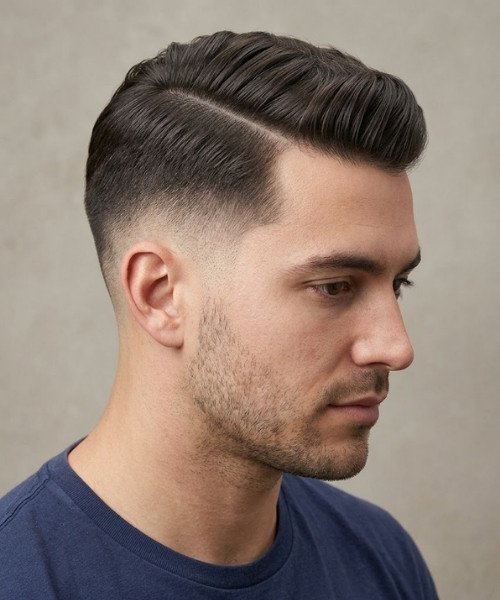
The comb over keeps the top longer and directs the hair toward one side. The mid taper cleans up the temples and neckline, creating a contrast between the polished top and shorter edges.
Ask your barber to leave enough length for the hair to move naturally in your preferred direction. Use a small amount of lightweight styling cream for a relaxed finish or a water-based pomade for more control.
Best for: Straight, wavy, and moderately thick hair.
2. Mid Taper Fade Side Part
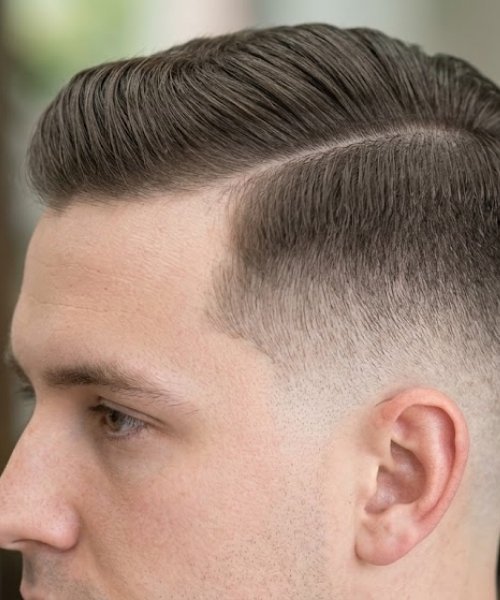
A side part gives the haircut a defined structure. The part can be natural and subtle or shaved into a thin line for a more noticeable finish.
Keep the top around 2–4 inches if you want enough length to style a traditional side part, although shorter versions are possible. Tell your barber whether you prefer a soft blend or a stronger contrast around the temples.
Best for: Men who want a neat, versatile hairstyle.
3. Mid Taper Fade French Crop
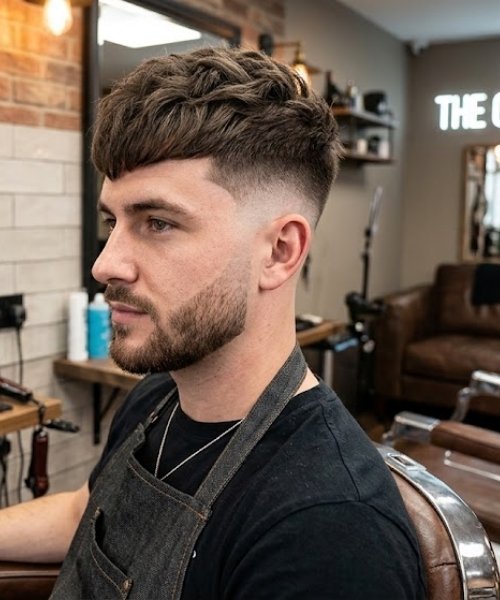
The French crop features a short top with a fringe that falls toward the forehead. The mid taper adds a clean outline without taking attention away from the forward-styled hair.
This haircut can be especially practical if you dislike spending much time styling your hair. A little matte paste helps separate the top and prevents it from looking too flat.
Best for: Straight, wavy, and slightly curly hair.
4. Mid Taper Fade Textured Crop
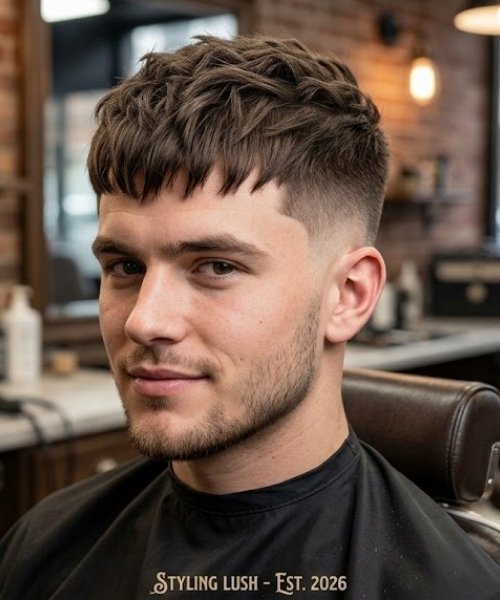
The textured crop uses uneven layers to create movement and dimension. It looks less formal than a traditional comb over but still keeps the sides neat.
Ask for point-cut texture on top rather than having the barber remove too much length. This helps the hair separate naturally and gives you more styling options.
Best for: Thick hair and hair that naturally holds texture.
5. Mid Taper Fade Short Hair
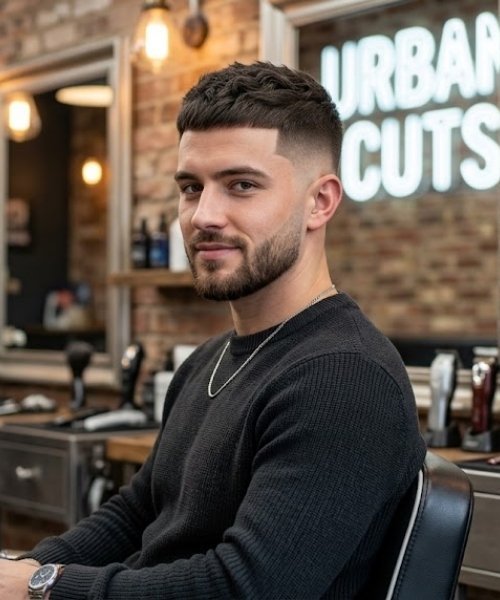
A short mid taper keeps the top compact and the edges clean. It is a good option if you want a haircut that looks tidy without requiring a complicated styling routine.
You can pair it with a short textured top, a subtle side part, or a simple brushed-forward finish. Ask the barber to preserve enough length to avoid exposing more scalp than you are comfortable with.
Best for: Men who prefer easy daily grooming.
Voluminous & Lifted Mid Taper Fades
These hairstyles add height and shape to the top while keeping the temples and neckline neat.
6. Mid Taper Fade Buzz Cut
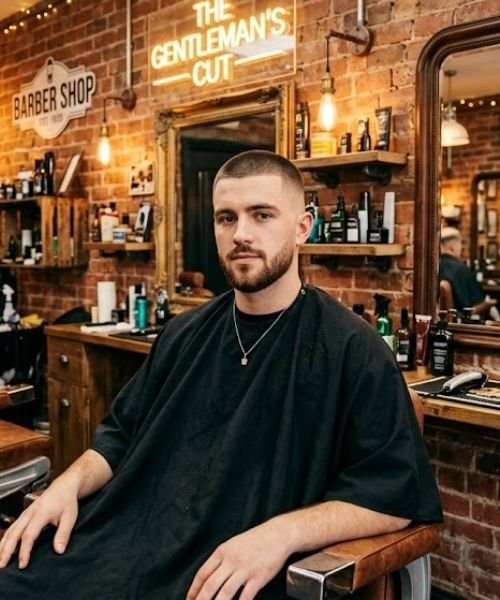
The buzz cut keeps the hair short and nearly uniform across the top, while the taper creates a cleaner finish around the edges. It offers a simple alternative to longer hairstyles that need daily styling.
A longer buzz on top creates a softer appearance, while a very short guard creates a more uniform finish. Discuss your scalp visibility and desired top length before the barber starts cutting.
Best for: Low-maintenance grooming and short-hair fans.
7. Mid Taper Fade Quiff
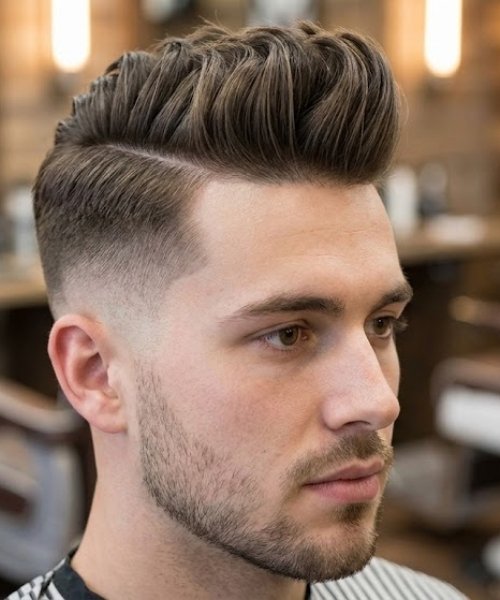
A quiff pushes the front of the hair upward and slightly backward, adding height above the forehead. The mid taper balances that volume with cleaner edges.
For styling, apply a small amount of volumizing product to damp hair and use a blow dryer to lift the front. Finish with a matte paste if you want texture rather than a glossy appearance.
Best for: Straight and wavy hair with enough length at the front.
8. Mid Taper Fade Pompadour
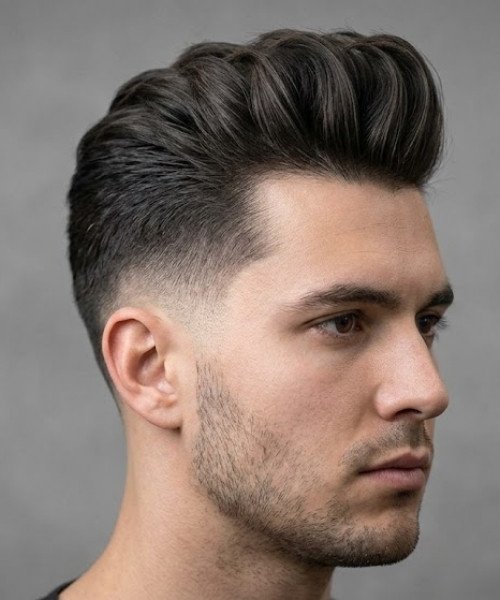
The pompadour features a fuller front that sweeps upward and backward. Compared with a quiff, it often has a more deliberate, sculpted shape.
You will generally need several inches of top length and a little more styling time. A blow dryer and medium-hold product can help the hair keep its shape without making it look stiff.
Best for: Men who enjoy a polished, high-volume style.
9. Mid Taper Fade Blowout
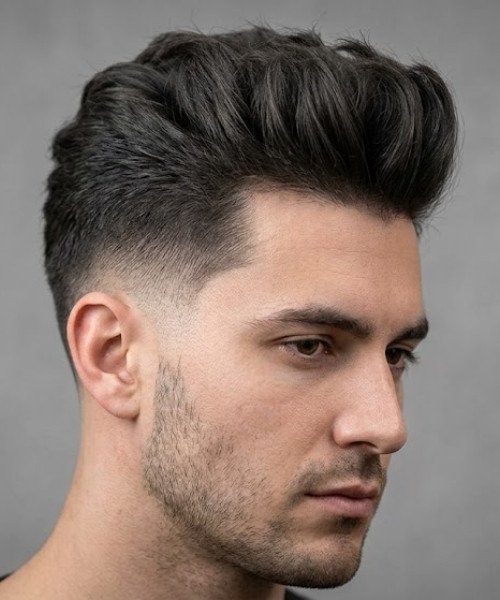
A blowout creates outward volume and movement, particularly around the front and upper sides. The mid taper keeps the temple area controlled so the top does not look excessively wide.
This style works best when your hair has enough length to lift. Use a blow dryer and a heat protectant, and avoid applying too much heavy product at the roots.
Best for: Thick, wavy, and curly hair that can hold volume.
10. Mid Taper Fade Fluffy Hair
Fluffy hair emphasizes softness, airy volume, and natural movement. The top is usually left longer, with layers that prevent it from appearing like a solid block.
A lightweight mousse or styling cream can help define the shape without weighing it down. If your hair is naturally straight, a blow dryer can create extra lift at the roots.
Best for: Straight or wavy hair with medium length.
Textured & Forward-Styled Mid Taper Fades
These looks focus on fringe, separation, and movement rather than a fully slicked-back finish.
11. Mid Taper Fade Fringe
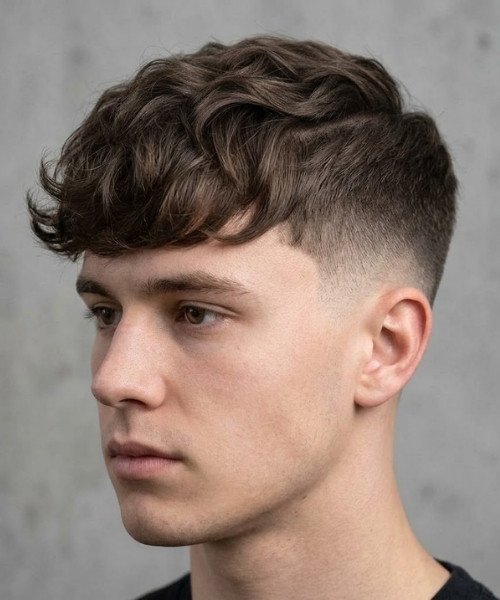
A fringe brings some of the top hair forward over the forehead. It can be short and tidy or longer and slightly uneven.
This style gives you a way to change the appearance of your forehead without adding much height. Ask for a fringe length that suits your natural growth pattern instead of copying a photo without adjustment.
Best for: Straight, wavy, and loose-curly hair.
12. Mid Taper Fade with Textured Fringe
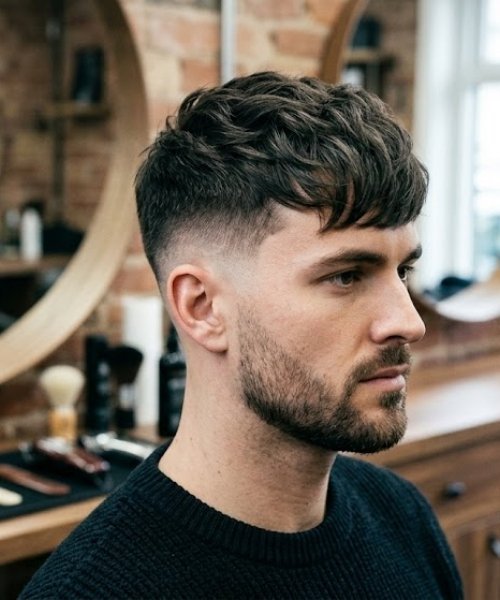
A textured fringe uses layers and separated strands to create a relaxed, modern appearance. The taper provides contrast while keeping the sideburns and neckline controlled.
Work a small amount of matte clay through dry hair, using your fingertips to separate the fringe. Avoid brushing it into a perfectly flat shape if you want the texture to remain visible.
Best for: Thick hair and hair that naturally develops movement.
13. Mid Taper Fade Middle Part
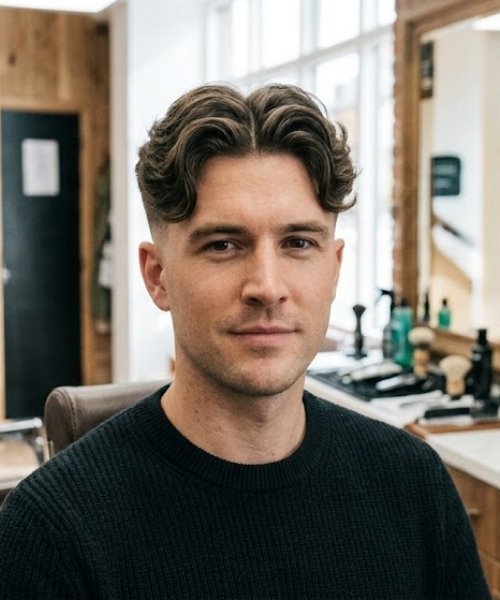
A middle part divides the top into two sections that frame the face. The mid taper prevents the area around the temples from looking bulky, particularly when the front hair is long enough to fall beside the cheeks.
This style generally needs more length than a short crop. Ask your barber to preserve the front sections and blend the sides without removing the shape needed for the part.
Best for: Straight and wavy hair with medium length.
14. Mid Taper Fade Spiky Hair
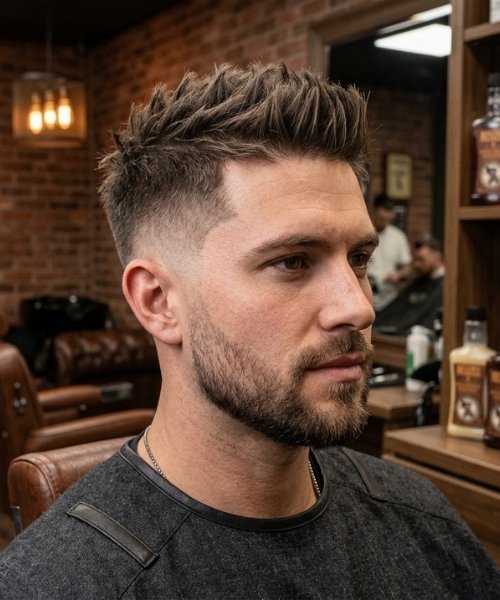
Spiky hair creates a sharper finish by lifting small sections of the top. You can keep the spikes short and subtle or use longer pieces for a more expressive style.
A matte styling paste gives the hair separation without excessive shine. Ask your barber for a textured top so the spikes form naturally rather than looking like one stiff section.
Best for: Short to medium-length straight or wavy hair.
Curly & Wavy Mid Taper Fades
A taper can complement natural curls and waves without requiring you to straighten or reshape your hair.
15. Mid Taper Fade Curly Hair
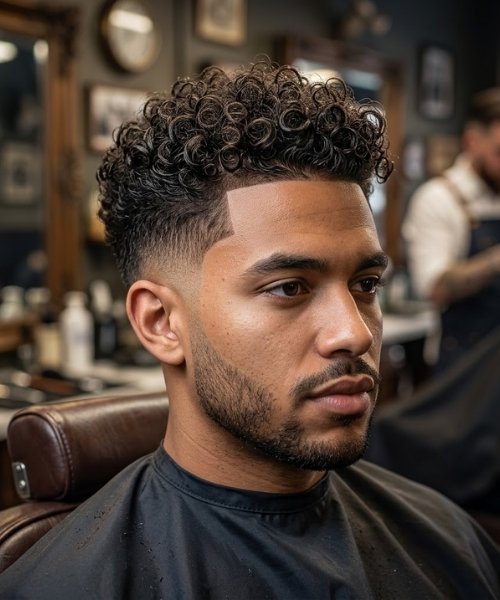
This style leaves the curls prominent on top while cleaning up the temples and neckline. The contrast can make the natural curl pattern easier to see without taking away the overall fullness.
Remember that curls shrink as they dry. Ask your barber to assess your hair in its natural state and leave enough length for the curl pattern you want.
Best for: Type 3A, 3B, and 3C curls, with suitable adjustments for tighter textures.
16. Mid Taper Fade Wavy Hair
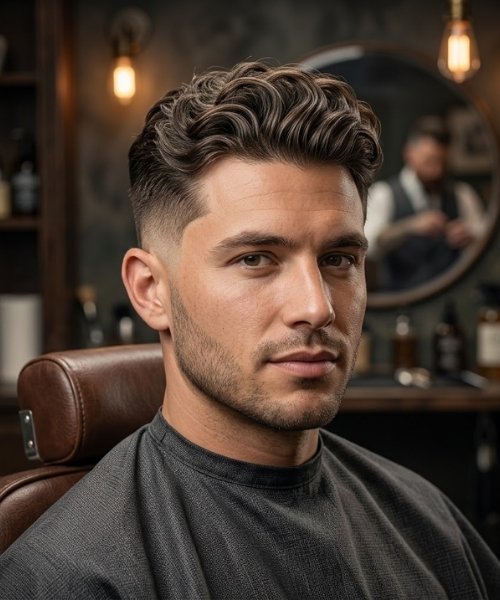
Wavy hair adds movement without requiring as much deliberate styling as some straight hairstyles. A mid taper reduces bulk near the temples while allowing the waves to remain visible.
Use a lightweight curl cream or styling cream to enhance the wave pattern. Heavy products may flatten the top, especially if your hair is fine.
Best for: Hair with natural S-shaped waves.
17. Mid Taper Fade Perm
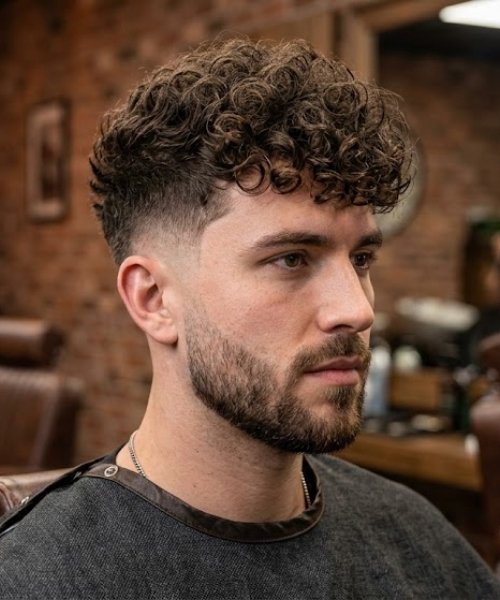
A perm creates curls or waves in hair that does not naturally have that pattern. Pairing it with a mid taper gives the sides a tidy finish while leaving the new texture on top.
Tell your barber whether you want loose waves, defined curls, or tighter curls. If you are considering a perm, discuss chemical processing and hair condition with a qualified stylist before booking.
Best for: Men who want a more textured top and are comfortable with extra care.
Mid Taper Fades for Black Men / Afro-Textured Hair
Afro-textured hair offers many styling possibilities, from short coils to longer afros, twists, locs, and braids. The key is to shape the taper around your existing style rather than removing length you want to keep.
18. Mid Taper Fade Black Male
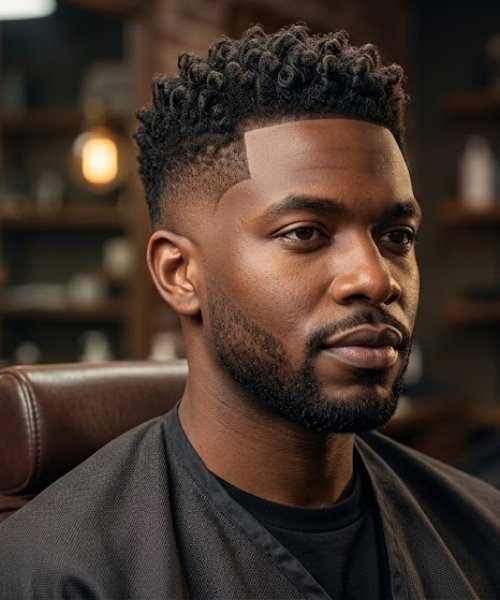
A mid taper for Black men can feature a short natural top, defined curls, waves, twists, or a longer afro. The temple area is shaped carefully to create a clean transition while preserving the intended top silhouette.
Tell your barber whether you want a natural hairline or a sharper line-up. If you wear your hair naturally, ask for the top to be shaped according to its dry volume and shrinkage.
Best for: Natural hair and a wide range of short-to-medium styles.
19. Mid Taper Fade Afro
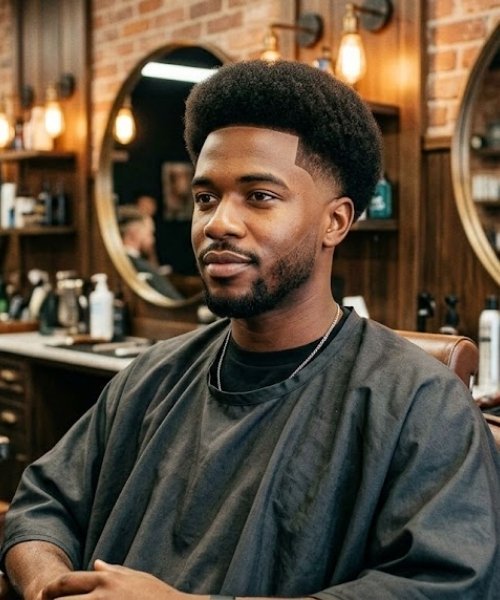
This haircut keeps the afro as the main feature and uses the taper to define the edges. The top can be rounded, slightly angular, or shaped to match your preferred silhouette.
Regular moisturizing and gentle detangling help maintain the hair’s condition. Avoid asking the barber to cut the afro too tightly if you want to preserve its full, rounded appearance.
Best for: Type 4 hair and other textures that form a natural afro shape.
20. Low Afro with Mid Taper Fade
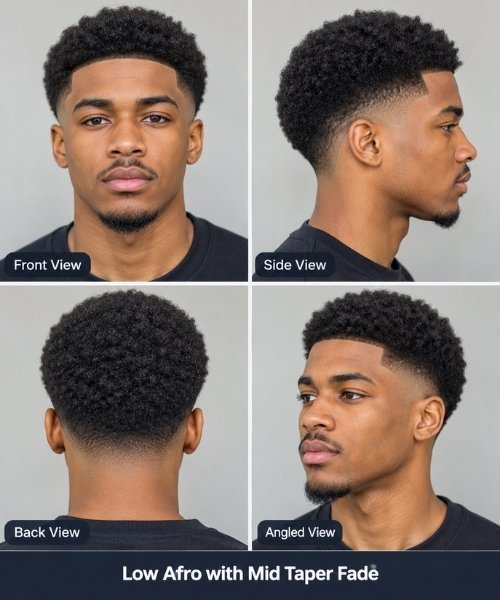
A low afro keeps the top relatively short while retaining visible texture. The mid taper adds definition around the temples without making the whole haircut look overly faded.
This is a useful choice if you like natural texture but do not want to maintain a tall afro. Ask for an even top shape and a gradual temple blend.
Best for: Short natural coils and compact afro styles.
21. Afro Hawk with Mid Taper
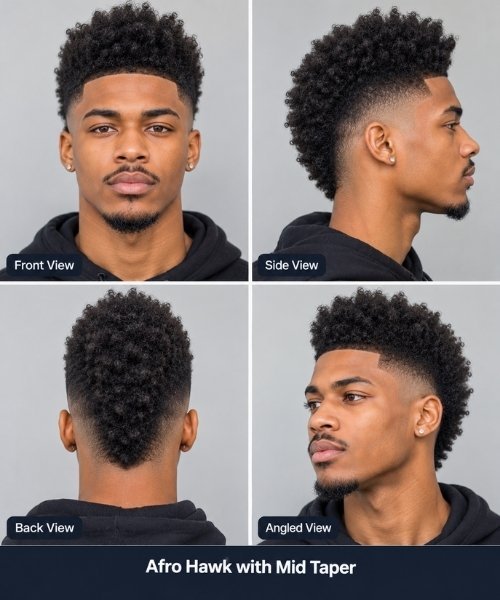
An afro hawk leaves more volume through the center of the head while keeping the sides shorter. The mid taper adds a clean finish near the temples, and the central shape creates a more dramatic silhouette.
The exact amount of length removed from the sides determines how strong the hawk looks. Discuss the width you want to preserve before your barber begins shaping it.
Best for: Men who want a bold natural style with noticeable height.
22. Mid Taper Fade with Dreads
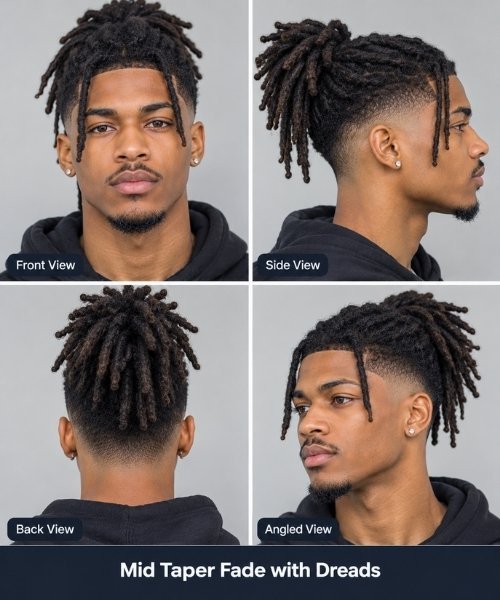
Locs can be worn hanging freely, swept backward, or arranged to one side. A mid taper keeps the temple and nape areas neat while allowing the locs to remain the focus.
Be clear about whether you want the taper around the temples only or also around the nape. If you maintain mature locs, work with a barber who understands how to preserve their placement and avoid cutting into the locs unintentionally.
Best for: Short, medium, or long locs.
23. Dreadlock Bun with Mid Taper Fade
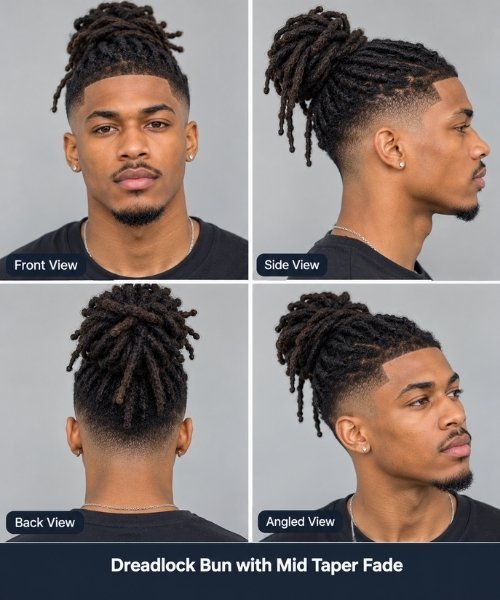
This style gathers longer locs into a bun, leaving the tapered temples and neckline visible. It offers a practical way to keep long hair away from the face while maintaining a defined outline.
Avoid tying the bun so tightly that it creates discomfort or excessive tension around the roots. The taper itself can remain subtle to complement the bun without competing with it.
Best for: Men with locs long enough to tie back.
24. Sponge Twist with Mid Taper Fade
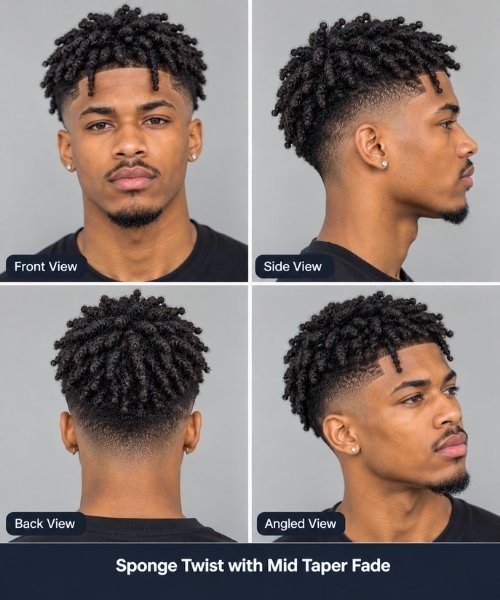
Sponge twists create small, textured sections across the top. The mid taper gives the style a more finished shape around the temples and neckline.
Use a suitable twisting product and follow a gentle technique to avoid unnecessary friction. Your barber should preserve enough top length for the twists to form properly.
Best for: Short natural coils and tightly textured hair.
25. Box Braids with Mid Taper Fade
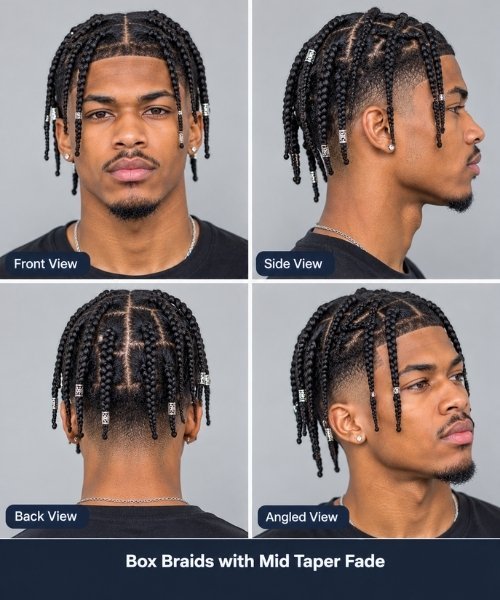
Box braids can be worn at different lengths, with a mid taper providing a clean finish around the temples. The contrast between the braided top and shorter edges creates a structured look.
The braid pattern and parting should suit your desired size and length. Avoid excessive tension, particularly around the hairline, and ask your braider or barber to preserve the areas needed for the style.
Best for: Men who want a protective braided hairstyle with clean edges.
26. Twisted Curls with Mid Fade
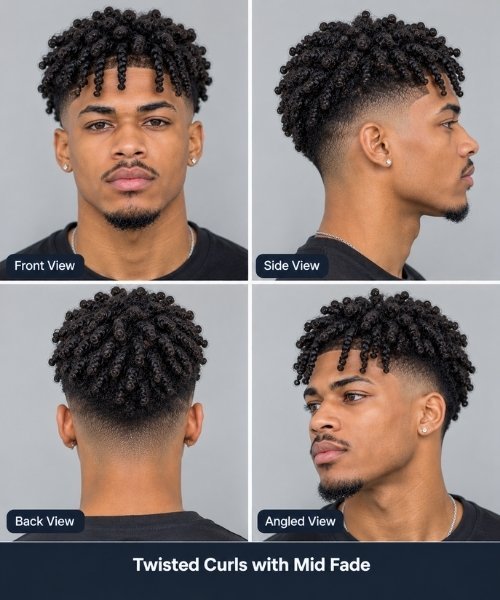
Twisted curls add definition to natural hair by separating it into small sections. Although this style is sometimes paired with a mid fade rather than a mid taper, the temple area can be tapered to create a similar clean finish.
Specify whether you want the sides lightly tapered or more extensively faded. That distinction matters because the two cuts leave different amounts of hair around the side panels.
Best for: Natural coily hair and defined twist styles.
Slicked & Refined Mid Taper Fades
These looks create a more controlled appearance and work well for formal occasions or anyone who prefers a polished finish.
27. Mid Taper Fade Slick Back
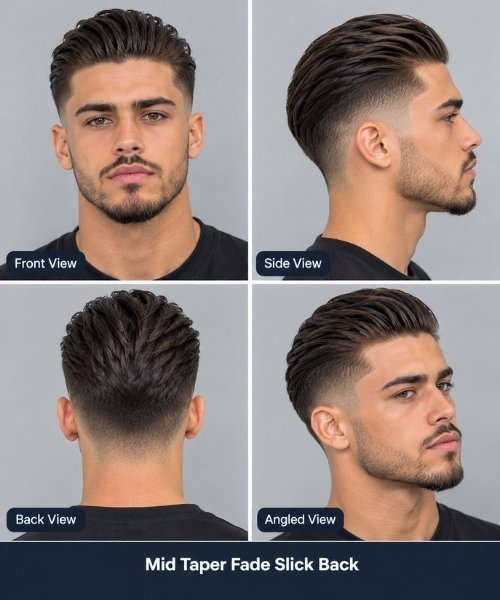
The slick back directs the top away from the forehead, creating a clean line from the front toward the crown. The mid taper keeps the edges tidy without requiring the entire side to be cut extremely short.
Use a styling cream or pomade based on how much shine and hold you want. If your hair naturally falls forward, you may need extra length and blow-drying to train it backward.
Best for: Straight and wavy hair with medium or longer top length.
28. Mid Taper Fade with Beard
A beard can make the taper look more integrated when the sideburn area transitions smoothly into the facial hair. The beard may be short, medium, or full, depending on your preference.
Ask your barber to check the proportions of the beard, temple, and neckline together. A sharp beard outline can create a more defined look, while a softer connection appears more natural.
Best for: Men who wear facial hair and want a coordinated finish.
Asian & Straight Hair Mid Taper Fades
Straight hair often shows the shape of the haircut clearly. The right layering and styling technique can prevent the top from appearing too flat or heavy.
29. Mid Taper Fade Asian
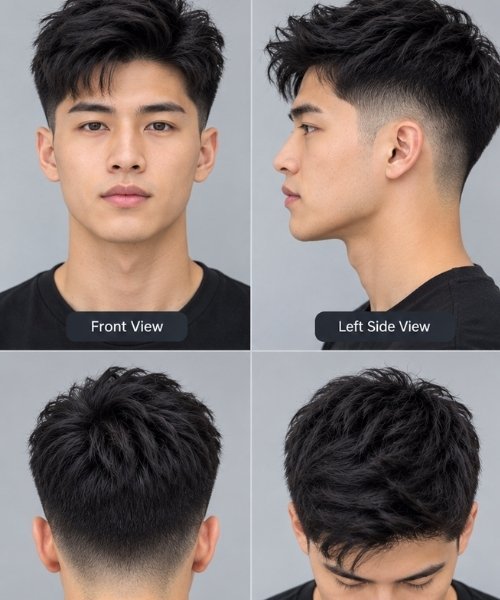
This variation pairs a mid taper with the top style of your choice, including a textured crop, middle part, short quiff, or side-swept fringe. The best approach depends on your hair’s thickness and natural direction.
If your hair is thick and tends to stick outward, ask for internal texture without excessive thinning at the sides. If it is fine, keep enough density on top to avoid making the scalp too visible.
Best for: Straight or slightly wavy hair with a customized top shape.
30. Mid Taper Fade Straight Hair
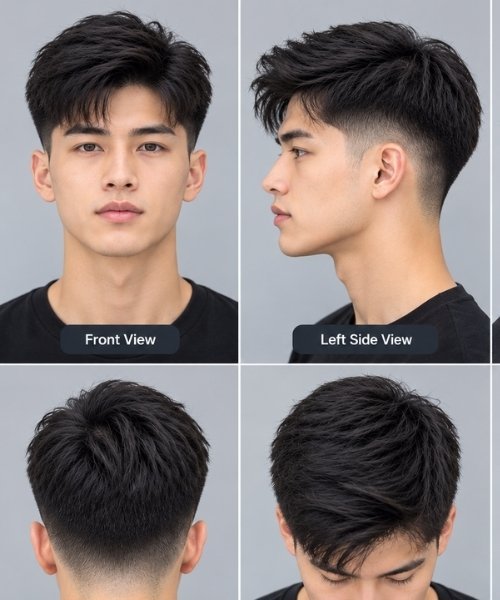
Straight hair creates a crisp outline and makes the transition around the temples easy to see. It can be styled upward, forward, sideways, or backward depending on the length.
Ask your barber to add subtle texture if the top looks too heavy. A small amount of matte clay can provide separation without creating a greasy finish.
Best for: Straight hair of fine, medium, or thick density.
Long Hair & Modern Mullet Mid Taper Fades
Longer styles combine a clean temple area with enough length to create a distinctive shape.
31. Mid Taper Fade Long Hair
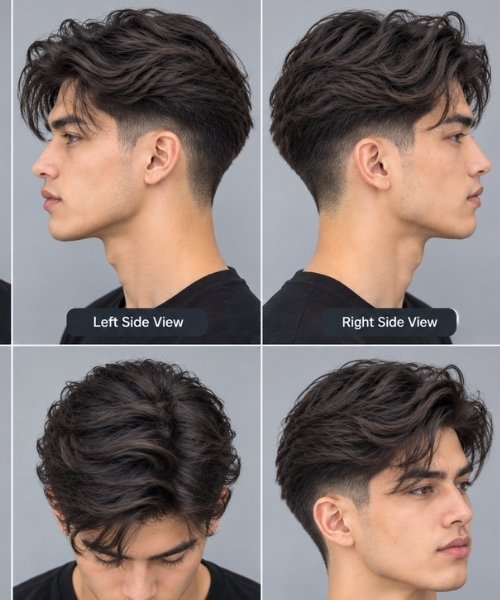
A long top paired with a mid taper creates contrast between the clean edges and flowing hair. You can wear the top loose, sweep it backward, or tie it up when the length allows.
The most important instruction is to preserve the length you want. Ask your barber to blend the temples and neckline while avoiding unnecessary cutting into the longer sections.
Best for: Men who want long hair with a tidier outline.
32. Mid Taper Fade Mullet
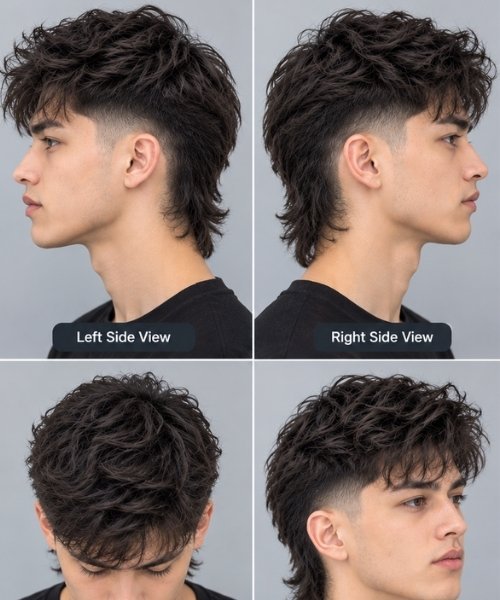
A mullet keeps extra length toward the back while the front and sides are shaped differently. A mid taper adds definition around the temples without removing the longer back section that gives the mullet its identity.
Tell your barber how much length you want behind the neck. If you want a softer mullet, ask for gradual blending; if you prefer a more pronounced shape, discuss stronger separation between the sides and back.
Best for: Men who enjoy modern, expressive hairstyles.
33. Man Bun with Mid Taper Fade
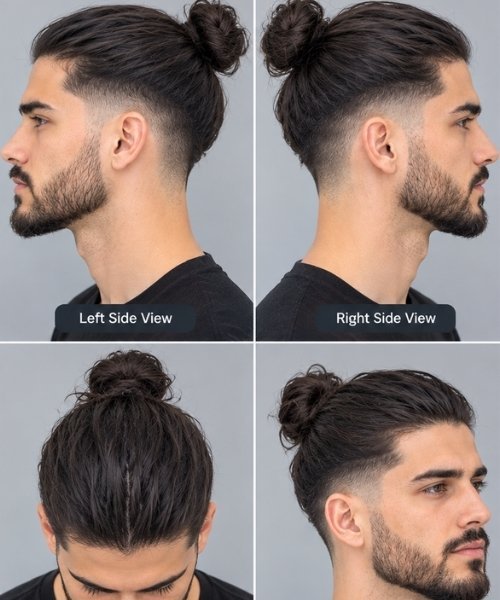
The man bun gathers long hair into a bun while the mid taper cleans up the temples and neckline. It creates a useful balance between longer hair and a neat perimeter.
You need sufficient length to tie the hair comfortably. Ask your barber to taper only the intended areas so the shorter sections do not interfere with your bun.
Best for: Men with long hair who want a tidy finish.
Edgy & Custom Mid Taper Fades
These options add a more distinctive shape through fringe, designs, or a specialized fade pattern.
34. Mid Taper Fade Edgar
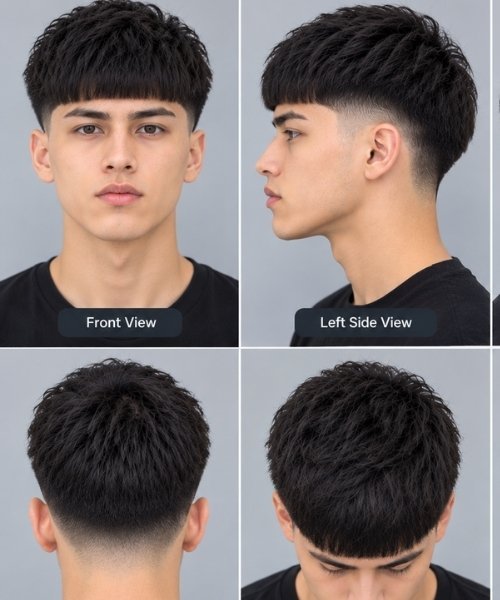
The Edgar haircut typically features a defined fringe and a short, structured top. Combined with a mid taper, it creates a strong outline around the forehead and temples.
The fringe can be blunt or slightly textured. If you want a softer appearance, ask for a less rigid front edge and a top that follows your natural hair growth.
Best for: Men who prefer bold, structured haircuts.
35. Mid Taper Fade with Line Design
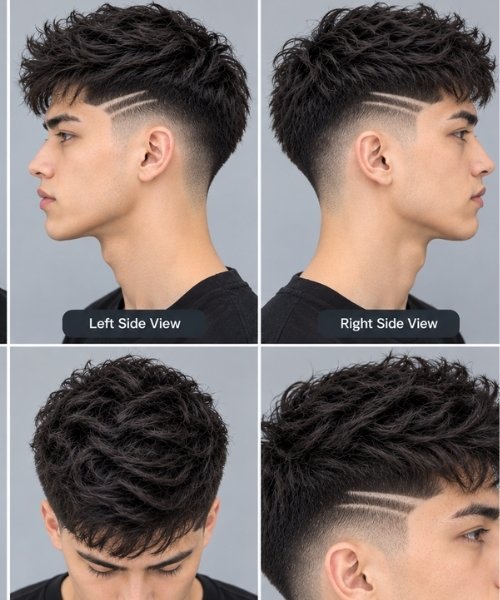
A line design adds a shaved detail around the temple or side of the head. It may be a single curved line, a double slash, or a simple geometric shape.
Keep the design simple if this is your first time trying one. Fine lines grow out quickly, so expect to visit your barber for touch-ups if you want the pattern to remain sharp.
Best for: Men who want a personalized, creative finish.
36. Mid Taper Drop Fade
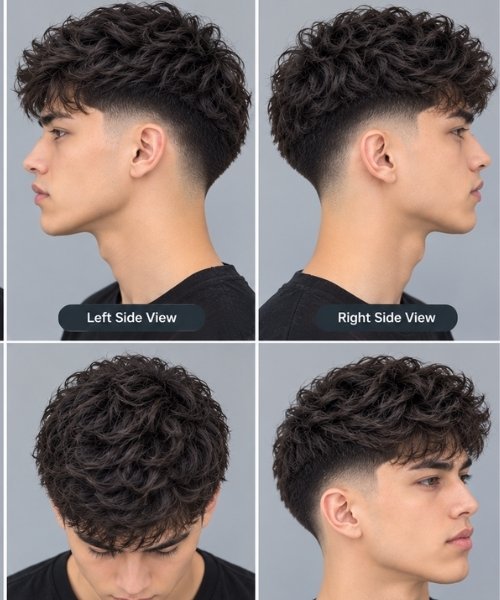
This variation combines a mid-height transition with a drop-shaped curve behind the ear. It is important to explain the curve clearly because a standard mid taper does not automatically include a drop fade.
Show a side-and-back reference image to communicate the shape. Your barber can then decide how much hair to remove around the curve while preserving the intended top length.
Best for: Men who want a more contoured side and back profile.
Blonde & Colored Mid Taper Fades
Color can change how the top contrasts with the sides. Consider both the shade and the maintenance required before choosing a lighter finish.
37. Mid Taper Fade Blonde
A blonde top paired with a darker natural base or shorter sides creates visible contrast. The style can be subtle with dark-blonde tones or more dramatic with a much lighter shade.
If you are bleaching dark hair, consult a qualified colorist about the number of sessions needed and the condition of your hair. The haircut and color do not have to be done in the same appointment.
Best for: Men who want color to emphasize their top texture.
38. Mid Taper Fade Blonde Hair
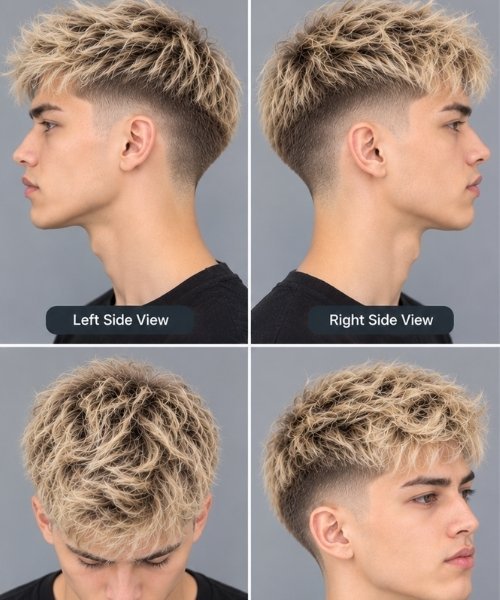
This variation focuses on an overall blonde look, from warm honey tones to cool platinum shades. The mid taper keeps the perimeter defined while the color draws attention to the hairstyle’s shape.
Use products intended for color-treated hair and avoid excessive heat. If your scalp is sensitive or your hair is already damaged, discuss the risks of lightening before proceeding.
Best for: Men who want a coordinated blonde hairstyle with a clean outline.
Medium & Balanced Length Mid Taper Fades
These styles preserve enough hair for movement without requiring the length of a full long-hair cut.
39. Medium Mid Taper
A medium mid taper keeps a moderate amount of length on top, giving you room for a side sweep, loose quiff, textured style, or relaxed middle part. It offers a balance between styling flexibility and manageable edges.
Ask your barber to shape the top according to how you normally wear it. Hair that looks good pushed backward in the chair may fall differently when you style it forward at home.
Best for: Men who want flexibility without very long hair.
40. Mid Taper Fade Low Cut
A low cut keeps the top short and simple while the mid taper adds definition around the temples and neckline. It is a practical choice when you want a clean shape without a detailed styling routine.
Be specific about the top guard length because even a small change can affect the overall appearance. If you want the scalp to remain less visible, avoid going too short without first discussing your hair density.
Best for: Men who prefer compact, easy-to-maintain haircuts.
Bonus Styles
These additional ideas overlap with other categories but give you more ways to personalize the cut.
41. Curly Mid Taper
A curly mid taper leaves the curls as the main feature and creates a neat transition around the temples. It can look compact with short curls or fuller when the top is left longer.
Use a curl-friendly moisturizer or leave-in product that suits your hair. Ask your barber to account for shrinkage, especially if you want the top to retain a particular height when dry.
Best for: Natural curls that you want to keep defined.
42. Short Hair with Mid Fade
This final option is a short-hair variation with a broader mid fade rather than a temple-and-neckline-focused taper. It is included because many people use the two terms interchangeably when looking for short, clean-sided haircuts.
If you specifically want a mid taper, clarify that you do not want the entire side faded. If you prefer shorter sides across a wider area, this mid-fade variation may be a better match.
Best for: Men who want short hair and a more visible side fade.
Which Face Shape Suits a Mid Taper Best? (Complete Guide)
A mid taper can work with almost any face shape because the barber can adjust the top length, temple height, and overall silhouette. The most useful approach is to balance your natural proportions rather than follow a strict rule about which face shapes can wear a particular haircut.
| Face shape | Recommended top style | What to consider |
|---|---|---|
| Oval | Quiff, crop, middle part | Most styles can work |
| Round | Textured quiff, lifted top | Add some height and definition |
| Square | Side part, textured crop | Keep the shape balanced |
| Heart-shaped | Fringe, medium textured top | Avoid excessive height at the front |
| Diamond | Textured fringe, side sweep | Retain some fullness around the temples |
| Oblong/long | Fringe, side part, moderate volume | Avoid excessive height |
| Triangle | Textured top, soft quiff | Balance a broader jaw with upper volume |
Mid Taper for Oval Face
An oval face usually has balanced proportions, so you have plenty of freedom when choosing a mid taper style. A comb over, curly top, French crop, or middle part can all work well.
Choose according to your hair texture and daily routine. If you want a classic look, try a side part; if you prefer something more relaxed, a textured fringe can add movement without much styling.
Mid Taper for Round Face
A round face typically has softer angles and similar-looking width and length. A slightly lifted top can create the appearance of extra length, while the taper adds definition around the temples.
Consider a quiff, short pompadour, or textured top with moderate height. Avoid adding excessive width at the sides if your goal is to create a more elongated appearance.
Mid Taper for Square Face
A square face often has a broad jaw and a relatively straight-looking hairline. A mid taper can complement these features by keeping the sides controlled and the overall haircut balanced.
Try a side part, textured crop, or short quiff. If you prefer a softer appearance, choose a natural blend instead of an extremely sharp outline.
Mid Taper for Heart-Shaped Face
A heart-shaped face is generally wider around the forehead and narrower toward the chin. A fringe or medium-length textured top can help balance the upper and lower portions of the face.
A mid taper works well when the sides are not taken too high. You can also keep some fullness around the temples to avoid emphasizing the forehead excessively.
Mid Taper for Diamond Face
A diamond-shaped face usually has prominent cheekbones, with a narrower forehead and chin. A textured fringe, side-swept top, or medium-length style can help create a balanced silhouette.
Ask your barber to avoid removing too much hair around the temples if you prefer a fuller appearance near the upper sides. The right amount of top texture can also soften the overall shape.
Mid Taper for Oblong/Long Face
An oblong face is longer than it is wide. A mid taper can work well, but excessive height on top may make the face appear longer.
Try a textured crop, fringe, or side part with moderate volume. These styles keep the haircut balanced without relying on a tall quiff or pompadour.
Mid Taper for Triangle Face
A triangle-shaped face typically has a broader jawline and a narrower forehead. A textured top or modest quiff can add visual balance around the upper face.
Keep the side transition natural and choose a top style that complements your hair density. You do not necessarily need a very tall hairstyle; even a little extra texture can change the overall proportions.
Mid Taper for Different Hair Types: Curly, Wavy, Straight & More
Your natural hair texture affects how the taper looks, how much volume you retain, and how you should style the top. A good barber adapts the cut to your actual hair rather than forcing every texture into the same shape.
Mid Taper for Straight Hair
Straight hair shows the haircut’s outline clearly, making the blending around the temples especially important. It works with crops, side parts, quiffs, slick backs, and middle parts.
If your hair is thick, ask for carefully placed layers to reduce bulk. If it is fine, avoid excessive thinning because removing too much density can make the top look sparse.
Mid Taper for Wavy Hair
Wavy hair adds movement and texture to a mid taper. You can leave the waves natural, brush them backward, or use a fringe to bring them forward.
Apply a lightweight styling cream to damp hair and allow it to dry naturally or use a diffuser on a suitable setting. Heavy products may flatten loose waves, so start with a small amount.
Mid Taper for Curly Hair
Curly hair pairs naturally with a mid taper because the shorter edges contrast with the curl pattern on top. You can keep the curls short and defined or grow them out for a fuller silhouette.
The most important factor is shrinkage. Hair that looks long when wet can appear considerably shorter after drying, so discuss the intended dry length with your barber.
For home care:
- Use a suitable moisturizing conditioner.
- Detangle gently to avoid unnecessary breakage.
- Apply a curl cream or leave-in product if your hair benefits from one.
- Avoid brushing dry curls aggressively if it disrupts their definition.
Mid Taper for Natural/Coily Hair (Type 4)
Type 4 hair includes tightly coiled textures commonly described as 4A, 4B, and 4C. A mid taper can complement a short natural cut, a fuller afro, sponge twists, or other styles that preserve the natural texture.
Because coily hair can shrink significantly, the barber should assess the top in its natural state and understand how you usually wear it. If you want a rounded afro, make sure the taper does not remove too much hair from the shape you are trying to maintain.
Moisturize according to your hair’s needs, handle the hair gently, and avoid excessive friction when styling.
Mid Taper for Thick Hair
Thick hair can create a full, substantial top, but it may become bulky around the temples and upper sides. A mid taper removes some of that weight around the perimeter while preserving the top’s density.
Ask your barber for controlled blending and suitable layering. Avoid requesting aggressive thinning without discussing the result, as poorly placed thinning can leave thick hair looking uneven or spiky.
Mid Taper for Fine/Thin Hair
Fine hair can work with a mid taper, but the cut should preserve enough density to make the top appear balanced. Short textured styles and compact side parts can be easier to manage than very long, heavy styles.
If you have thinning areas, explain which areas you want to keep covered. A barber can adjust the direction of the hair and the taper placement, although a haircut cannot change the underlying density of your hair.
How to Ask Your Barber for a Mid Taper
The best way to get the haircut you want is to explain where you want the taper, how short you want the sides, and what you want to keep on top. Do not rely on the words mid taper alone, because barbers may interpret the term differently.
The Golden Rule of Barber Communication
Show your barber a reference photo with a clear side view and, ideally, a back view. Then explain what you like about it: the temple blend, top length, neckline, fringe, or overall shape.
1. Explain the taper placement
Say that you want a mid taper around the temples and neckline. Specify whether you want the blend soft and natural or tight and sharply defined.
2. Describe the top length
Tell the barber whether you want a short crop, medium textured top, curls, a fringe, or longer hair. Give a length in inches if you have a specific target.
3. Choose the edge finish
Decide whether you prefer a natural hairline, a sharp line-up, a tapered neckline, or a more defined outline. These details can change the final look.
What to Tell Your Barber: Ready-to-Use Script
You can use this simple script at your next appointment:
“I want a mid taper around the temples and neckline, with a smooth blend. Please keep the sides fuller rather than fading the whole side of my head. Leave the top at my preferred length and shape it to match this photo. Keep the hairline natural unless I ask for a sharper line-up.”
Customize the last part depending on your style. For curls, ask the barber to account for shrinkage. For a comb over, specify which direction you part your hair. For a longer style, make it clear that you want to preserve the top length.
What Guard Numbers Should You Ask For?
There is no single guard combination that works for every mid taper. The right starting length depends on your hair density, scalp visibility, desired contrast, and the barber’s blending technique.
| Desired finish | Possible starting point | What to know |
|---|---|---|
| Soft, subtle taper | #2 or #3 in the lower transition | Leaves more hair visible |
| Defined taper | #1 or #2 in selected areas | Creates a shorter, cleaner outline |
| Very tight taper | #0.5 or #1 in selected areas | Produces more contrast |
| Skin-level temple finish | Clipper or trimmer work down to skin | Not required for a standard taper |
These are discussion points, not a fixed cutting formula. A guard number does not define the taper height, and the barber may use several guards and clipper-over-comb techniques to create a smooth blend.
If you are unsure, ask for a conservative version first. Your barber can remove more hair later, but cannot immediately restore hair that has already been cut short.
Mid Taper Maintenance: How Often Should You Get a Trim?
A mid taper generally looks sharpest when the edges and neckline are freshly cleaned up. How often you need a haircut depends on how quickly your hair grows and how precise you want the outline to remain.
| Maintenance task | Suggested interval | Why it helps |
|---|---|---|
| Full haircut and taper | About every 2–4 weeks | Maintains the overall shape |
| Edge touch-up | Around 1–2 weeks if desired | Keeps the temple and neckline crisp |
| Top reshaping | About every 3–6 weeks, depending on length | Prevents unwanted bulk and uneven growth |
| At-home styling | As needed | Maintains the desired daily appearance |
These intervals are general starting points, not strict rules. A softer taper can grow out comfortably for longer, while a skin-level finish or intricate line design may need more frequent attention.
Common Mid Taper Mistakes to Avoid
- Asking for a mid fade when you want a taper: Explain that you want the temples and neckline cleaned up without necessarily fading the full sides.
- Choosing a reference photo with different hair texture: Use a photo for the shape, but let the barber adapt it to your natural hair.
- Cutting curly hair too short: Remember that curls can shrink as they dry.
- Removing too much top length: Confirm how much length you want to keep before the cut begins.
- Ignoring the neckline: Decide whether you prefer a natural, tapered, or sharply outlined finish.
- Overusing styling products: Start with a small amount and add more only if necessary.
- Expecting a line design to last indefinitely: Shaved details become less visible as the hair grows.
Frequently Asked Questions
1. Is a mid taper a good haircut?
Yes. A mid taper is a versatile choice if you want clean temples and a neat neckline while keeping more hair around the sides than many full-fade styles. You can adapt it to professional, casual, curly, and longer hairstyles.
2. What is the difference between a mid taper and a mid taper fade?
The terms are often used interchangeably in barber shops. Technically, a taper focuses on the temples and neckline, while a fade can describe a more extensive transition across the sides and back. Ask your barber to clarify the exact shape before cutting.
3. Does a mid taper look good on curly hair?
Yes. A mid taper can complement short curls, a curly fringe, a longer curly top, or tightly coiled hair. The barber should account for shrinkage and preserve the curl pattern you want.
4. Is a mid taper better than a low taper?
Neither is automatically better. A low taper creates a more subtle transition near the bottom of the hairline, while a mid taper offers more definition around the temples. Choose according to your preferred look and how much contrast you want.
5. How long does a mid taper last?
A mid taper may retain a tidy shape for several weeks, depending on hair growth, taper length, and your preferred level of sharpness. Many men schedule a full haircut every two to four weeks, while others wait longer.
6. Can I get a mid taper with long hair?
Yes. You can combine a mid taper with long hair, a middle part, a man bun, locs, braids, or a mullet. Tell your barber which sections must remain long so the taper does not interfere with the overall style.
7. Does a mid taper require a skin fade?
No. A mid taper can be created with clipper guards and a gradual blend without exposing bare skin. A skin finish is an optional variation for men who prefer a tighter, higher-contrast result.
Final Thoughts
The mid taper haircut is a flexible option for men who want clean edges without automatically committing to a full fade. Its main advantage is that you can pair the same basic taper with many different tops, from a short crop or comb over to natural curls, an afro, braids, or a longer mullet.
To choose the right version, consider your hair texture, face shape, desired top length, and maintenance routine. Most importantly, show your barber a clear reference photo and explain how much hair you want to preserve. That simple step can help you get a mid taper that suits your style instead of just a haircut that matches its name.
1 thought on “Mid Taper Haircut: 40+ Best Mid Taper Fade Styles for Men (2026)”