
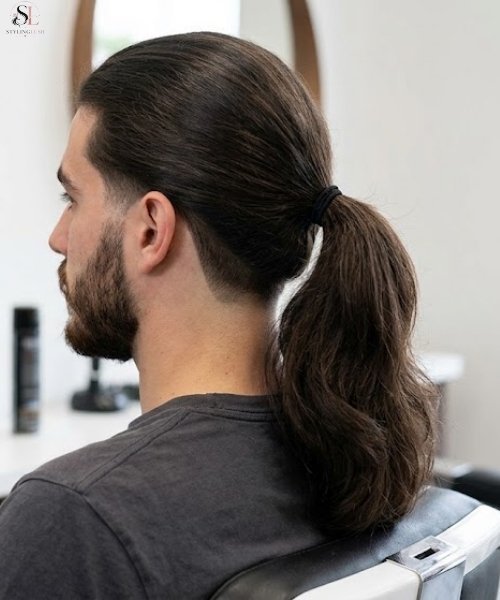
A low taper fade paired with long hair on top gives you the best of both worlds: a clean, barely-there fade at the sides and back that keeps things sharp and low-maintenance, with enough length up top to style, sweep, tie back, or leave naturally textured depending on the day. It’s one of the most versatile cuts in men’s grooming right now precisely because it adapts to almost any hair type, face shape, and lifestyle from the office to the gym to a night out without demanding a full restyle in between. This guide walks through 35 variations of the look, how to match one to your face shape and hair texture, and exactly what to say to your barber to get it right the first time.
Key Points
- 35 style variations grouped by commitment level, from classic to bold
- Face-shape and hair-type matching so you pick a style that actually suits you
- Word-for-word barber scripts, guard sizes, and reference photo tips
- A realistic maintenance and product routine to keep the fade crisp
What Is a Low Taper Fade with Long Hair, and Who Does It Work Best For?
A low taper fade with long hair pairs a subtle fade that starts just above the ears and neckline with noticeably longer hair on top, letting you keep length and texture up top while the sides stay clean and low-maintenance. It works best for men who want a fade that reads as “barely there” from a distance but still frames the face, and for anyone growing hair out who isn’t ready to abandon a groomed silhouette.
What Is a Low Taper Fade with Long Hair?
A low taper fade with long hair is a haircut where the fade begins low on the head typically just above the ear line and blends into 3+ inches of hair on top left long enough to style, sweep, or tie back. The style grew out of the broader taper-fade family that barbers have refined for decades, adapted specifically to accommodate longer top lengths without losing the clean, tapered edge at the sides. It sits at the intersection of low-maintenance grooming and high-commitment length, which is part of why it’s crossed over from niche barbershop request to mainstream trend.
Defining traits:
- Fade begins low, near the top of the ear or just above it
- Sides and back stay closer to skin near the neckline, gradually blending upward
- Top length stays long — generally 3 to 8+ inches depending on the style
- Clear contrast between the tapered sides and the long top, but no harsh line
- Works with straight, wavy, curly, coily, and fine hair types alike
How Is a Low Taper Fade Different from a Regular Taper?
A regular taper fade blends gradually from the top all the way down without ever reaching skin, while a low taper fade specifically compresses that blend into the lowest third of the head, keeping more length and coverage everywhere else. The result is a subtler, less dramatic fade than a mid or high taper, which makes it a safer starting point for first-time fade clients.
Where Exactly Does a Low Taper Fade Start?
The fade starts roughly at or just above the top of the ear, running around the back of the head at a similar height. Anything higher and it becomes a mid taper; anything that reaches the temple or above is considered a high taper.
Also read: High Taper Fade with Design: 29 Razor-Cut Styles to Show Your Barber
Why Is the Low Taper Fade Long Hair So Popular in 2026?
The style has surged for a few practical reasons: it lets men keep length for versatility (ponytails, buns, waves) without sacrificing a groomed edge, it photographs well for both social media and professional headshots, and it suits nearly every hair texture without heavy daily styling. It’s also the natural next step for men who’ve been growing out a short fade and want a maintenance style that bridges the “awkward growing-out phase” gracefully. For related inspiration, check our guide to [mid fade long hair styles] and our breakdown of [textured crop haircuts for men].
35 Best Low Taper Fade Long Hair Styles for Men
1. Long Hair with Low Taper Fade (The Classic)
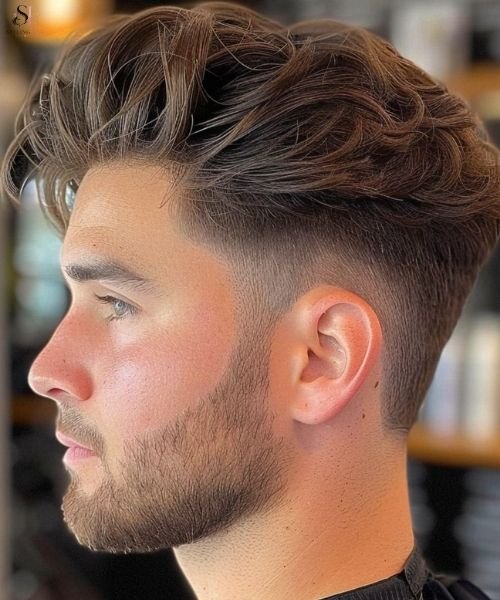
This is the foundational version of the look: a clean, subtle fade at the sides paired with hair left long and unstyled on top. It works with almost any texture and requires minimal daily upkeep, since the top is designed to be left natural rather than heavily styled. It’s best suited to straight or wavy hair, and it flatters oval and square face shapes especially well since it doesn’t add extra width or height. It’s the easiest entry point if you’re trying the style for the first time, and it grows out gracefully, giving you more flexibility between barber visits than sharper, more defined cuts.
2. Low Taper Fade with Long Slicked Back Hair
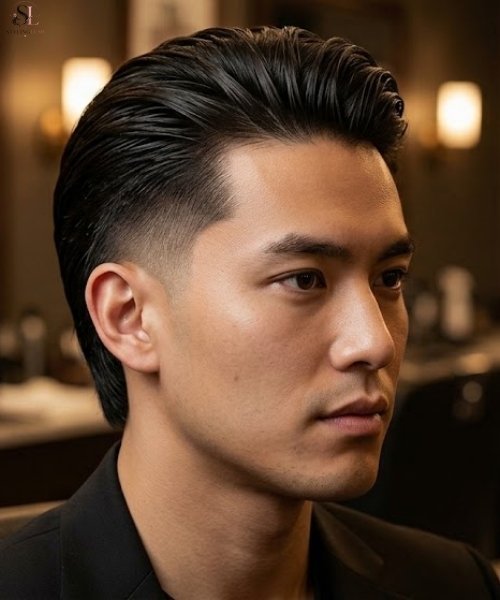
The top is combed straight back using a light-hold pomade or gel for a polished, put-together finish. It suits straight or fine hair best, since those textures hold the slicked shape without extra product weighing them down. Round and long face shapes benefit most, as the backward direction adds the illusion of length and structure. This variation reads as sharp enough for office or formal settings, and it’s quick to recreate each morning once you’ve got the right amount of product dialed in.
3. Low Taper Fade with Long Wavy Hair
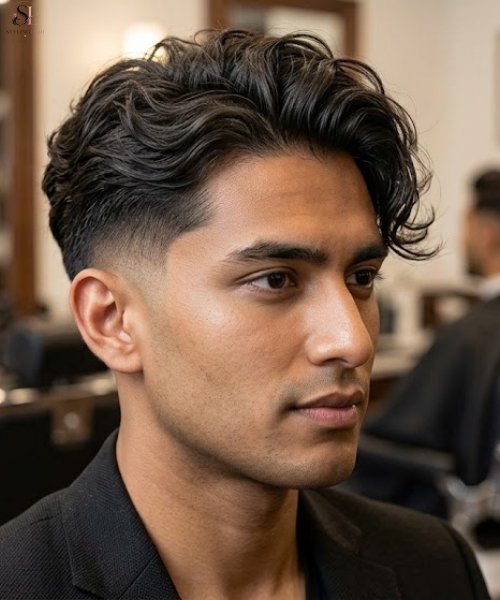
Natural waves are left long and enhanced with a texturizing spray or sea salt product, while the low fade keeps the sides controlled and out of the way. It’s built specifically around wavy hair, letting the natural pattern do most of the styling work. Oval and diamond face shapes suit this look particularly well, since the loose waves soften angular cheekbones. This style also tends to require less frequent top trims than straighter cuts, since uneven ends blend naturally into the wave pattern.
4. Low Taper Fade with Long Straight Hair
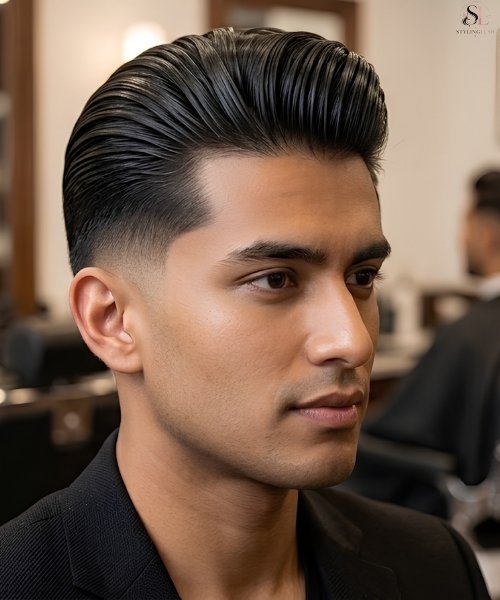
A single, uniform length runs across the top with no layering, creating a minimalist, almost architectural contrast against the tapered sides. It’s a clean, low-fuss option for straight hair types, since one consistent length is easy for a barber to maintain precisely. Square and oval face shapes pair well with this style, since the straight lines echo strong, balanced features. Because there’s no texturizing to hide split ends, this style calls for slightly more frequent trims to keep the blunt line looking sharp.
5. Low Taper Fade with Long Curly Hair
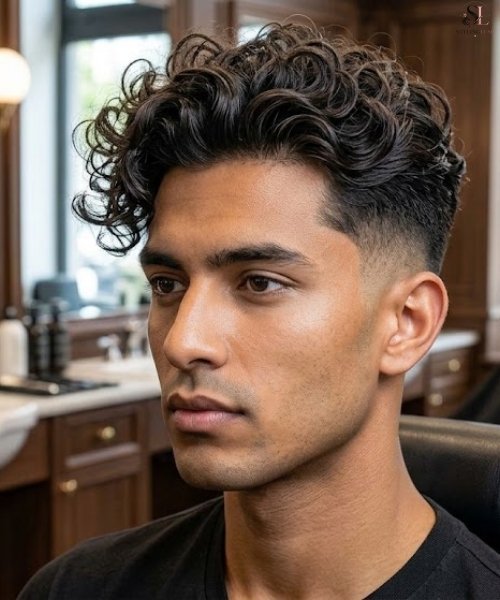
Curls are left at full length and ideally cut dry to preserve their natural pattern, while the fade manages volume at the sides only. This style leans into texture rather than fighting it, making it ideal for naturally curly hair. Heart and oval face shapes suit it especially well, since the curl volume balances a narrower chin or jawline. It works well for men who want maximum definition with minimal daily effort, since the curls largely style themselves once cut correctly.
6. Low Taper Fade with Man Bun
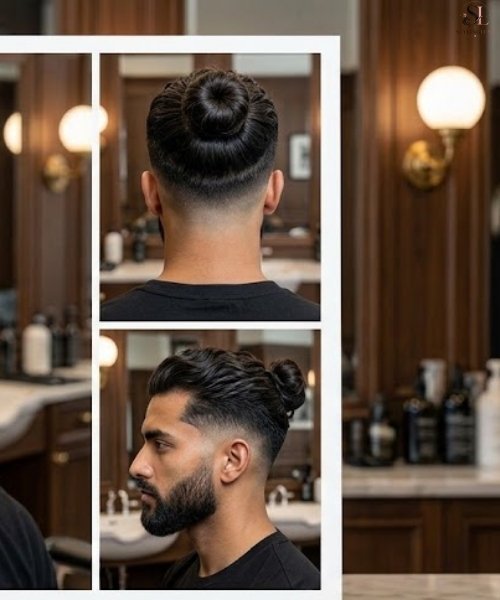
Enough length is kept on top generally a minimum of six inches to gather into a small bun, while the fade keeps the base looking tidy even when the top is pulled back. It suits straight to wavy hair best, since those textures gather smoothly without excessive frizz. Oval and long face shapes work well with this style, since a bun sitting higher on the head doesn’t add unwanted height. It’s a practical option for anyone growing their hair out long-term or wanting a functional style for active days.
7. Low Taper Fade with Half-Up Long Hair
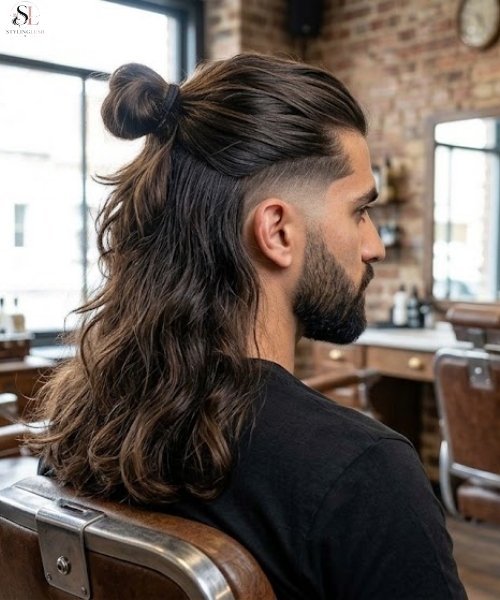
Half the top is tied back while the rest falls loose, striking a balance between structure and natural movement. It works particularly well with wavy or curly textures, since the loose sections show off natural texture while the tied-back portion stays out of the face. Round and heart face shapes benefit most, as the tied-back crown adds subtle height and structure. This style is a strong choice for warmer weather, offering some of the practicality of a full updo without fully committing to one.
8. Low Taper Fade with Slick Back Bun
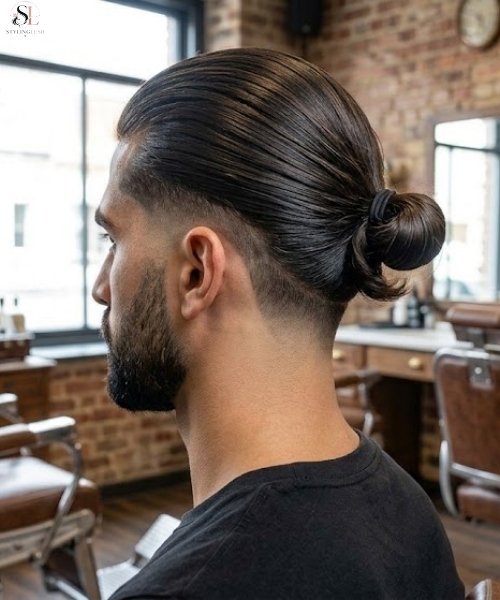
All top hair is slicked back with a strong-hold pomade before being pulled into a tight, low bun for a sharp, formal finish. It’s best suited to straight or fine hair, which slicks down smoothly without flyaways. Square and oval face shapes suit this look well, since the pulled-back style keeps the focus on strong, defined features. The trade-off is a longer morning routine compared to looser styles, since achieving a smooth, bump-free finish takes more product and patience.
9. Low Taper Fade with Curtain Hair
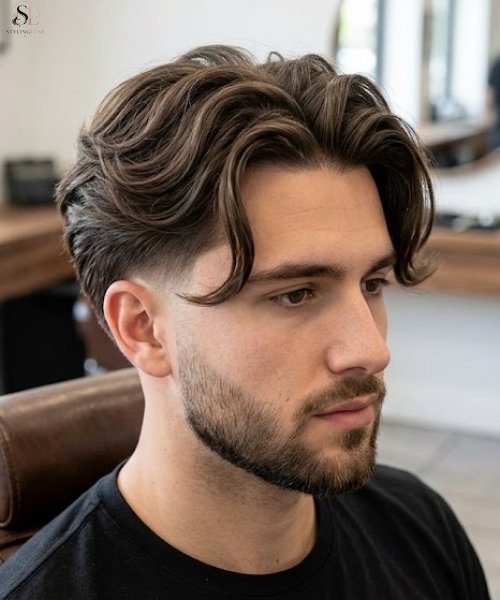
Center-parted strands fall softly on either side of the face, framing it above a clean, low fade. It works best with straight to wavy hair that holds a soft part naturally. It’s especially flattering on oval and diamond face shapes, since the framing effect softens angular or narrow features. This style benefits from a light texturizing cream to keep strands separated, and it generally needs a trim every six to eight weeks to keep the front length in check.
10. Low Taper Fade with Center-Parted Long Hair
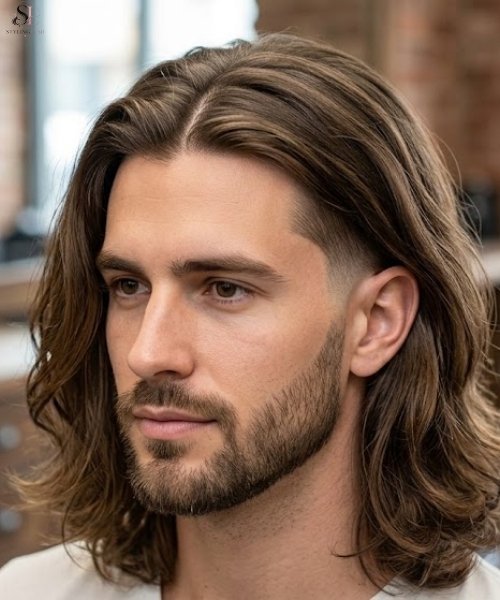
A precise, even center part divides longer top hair for a symmetrical, modern look. It pairs best with straight hair that holds a part well without flipping to one side throughout the day. Oval and heart face shapes suit this style especially well, since the symmetry balances a narrower chin or jaw. Because symmetry is the whole point of this look, it requires more precise cutting at each barber visit to keep both sides even.
11. Low Taper Fade with Side Part
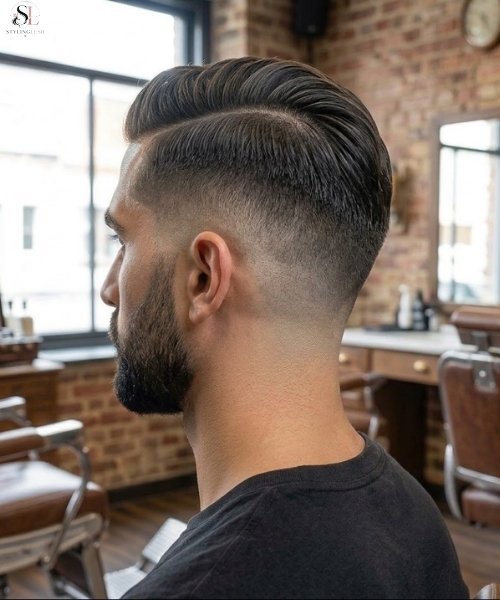
A defined side part adds structure to the top length while the low fade keeps the overall shape neat and controlled. It works well with straight or wavy hair that holds a part cleanly. Round and square face shapes benefit most, since the diagonal part line helps break up strong or rounded features. This style transitions easily between casual and professional settings depending on how much product you use.
12. Low Taper Fade with Long Fringe
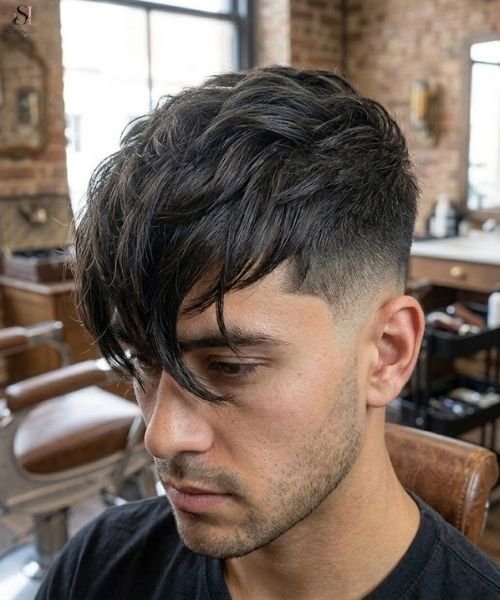
A heavy fringe sweeps over the forehead, softening angular features above the tapered sides. It’s best suited to straight to wavy hair, which allows the fringe to fall naturally rather than sticking up. Square and long face shapes benefit most, since the horizontal fringe line adds width and shortens visual face length. This style needs slightly more frequent trims around the front hairline to prevent it from growing into the eyes.
13. Low Taper Fade with Long Pompadour
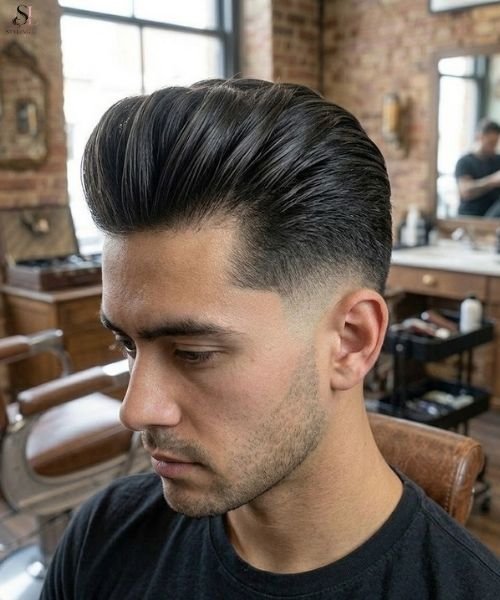
Extra length and volume are built at the crown and swept upward, creating dramatic height above a low, understated fade. It suits thicker, straight or wavy hair best, since fine hair often struggles to hold the volume without heavy product buildup. Round and oval face shapes benefit most from the added height, which elongates the face visually. Daily styling typically involves blow-drying the roots upward before applying a strong-hold pomade.
14. Low Taper Fade with Quiff
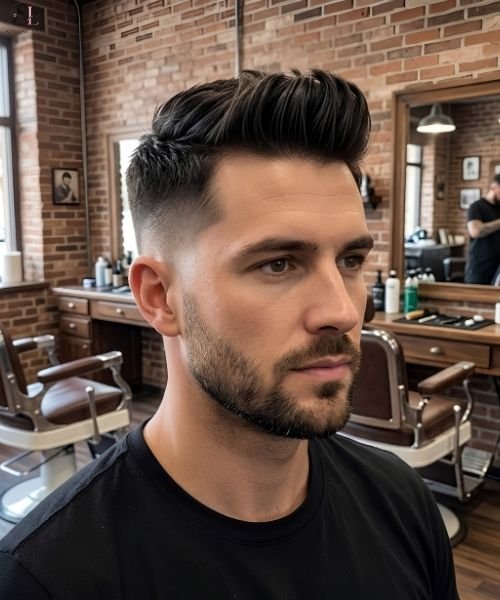
A shorter, forward-swept take on the pompadour that’s easier to style day-to-day. It works with straight to wavy hair and suits oval and square face shapes especially well, offering some height and texture without overwhelming balanced features. It’s a great middle ground between low- and high-maintenance looks, usually achievable with just a matte paste and a few minutes of finger-styling.
15. Low Taper Fade with Messy Long Hair
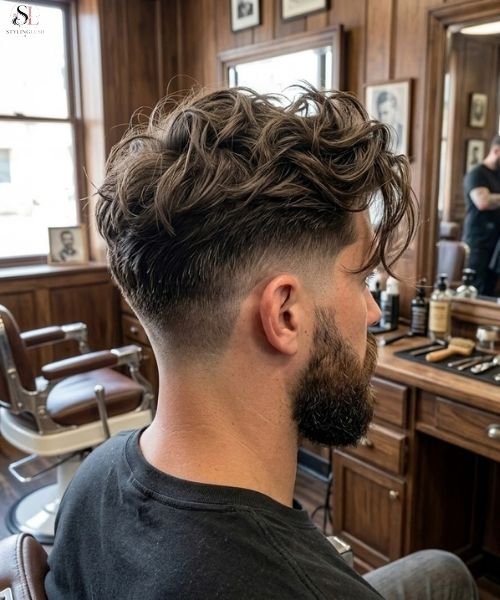
The top is cut for texture rather than precision, giving an intentionally undone, tousled finish. It works with wavy or curly hair best, since those textures naturally create the tousled effect this style is built around. It’s one of the few styles on this list that suits any face shape, since the loose, undone nature doesn’t emphasize any particular feature. This style is forgiving of second- or third-day hair, making it one of the lowest-effort options here.
16. Low Taper Fade with Blowout Long Hair
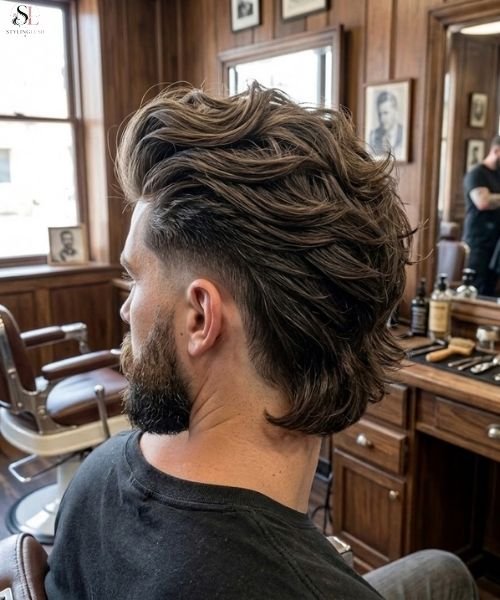
Hair is blow-dried upward and back using a round brush for maximum volume, while the low fade keeps the sides from competing for attention. It’s best suited to thick, straight to wavy hair that can hold the shape through the day. Round and long face shapes benefit most, since the added height and volume balance out face proportions. This look requires the most active styling time on this list but delivers a distinctly voluminous, salon-fresh finish.
17. Low Taper Fade with Mullet
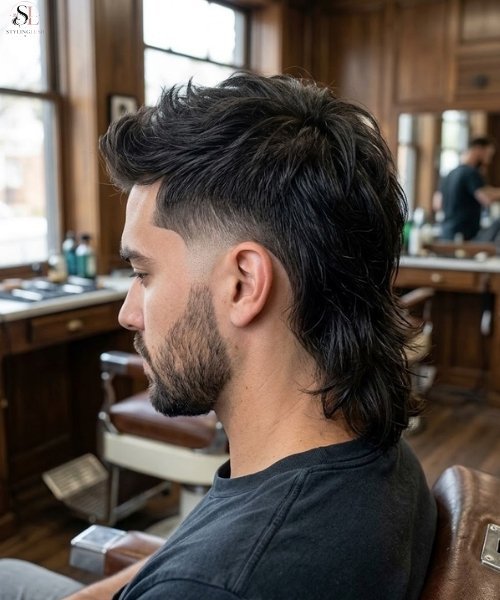
Short-to-medium length on the sides and top blends into distinctly longer hair at the back and nape. It suits straight or wavy hair best, since those textures let the length at the back fall cleanly. Oval and square face shapes pair well with this bold, retro-leaning choice. Because the back length grows more slowly into shape than the top, this cut often takes a couple of sessions with your barber to fully establish the intended silhouette.
18. Low Taper Fade with Curtain Mullet
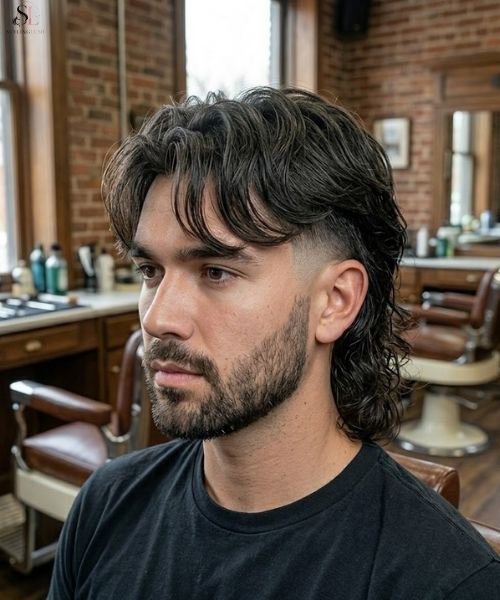
This hybrid combines a curtain fringe at the front with mullet-length hair at the back, blending two retro trends into one cohesive look. It works best with wavy hair, which supports both the soft front framing and the longer back length. Oval and heart face shapes suit it particularly well. Styling usually just involves parting the front curtains and letting the back length fall naturally.
19. Low Taper Fade with Comb Over
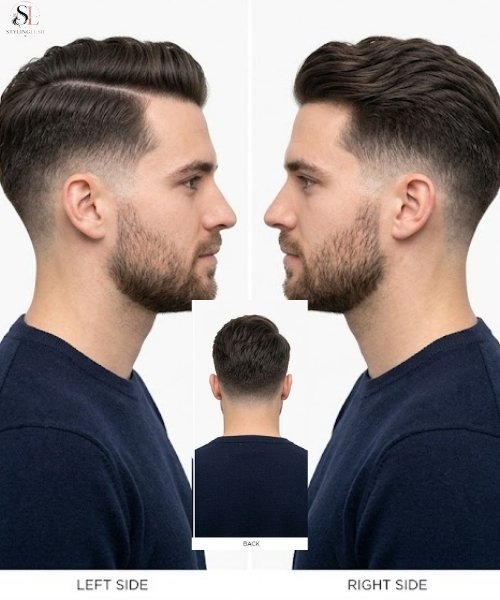
A classic, side-swept comb over sits above a subtle fade for a smart-casual finish. It’s best suited to straight or fine hair, which holds the combed direction without excess bulk. Square and round face shapes benefit most, since the diagonal sweep helps balance stronger or rounder features. A light pomade combed through damp hair is usually all that’s needed to keep the part in place throughout the day.
20. Low Taper Fade with Long Wolf Cut
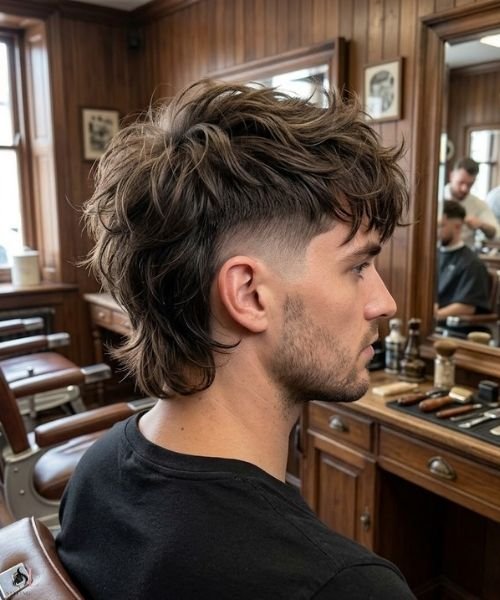
Heavy layering throughout the top creates the shaggy, textured shape associated with the wolf cut trend. It’s a strong choice for wavy or curly hair looking for extra movement and volume without added length. Oval and diamond face shapes suit it especially well, since the layered volume softens sharper cheekbones. Because the style relies on layers rather than a single length, it holds its shape well even as hair grows out.
21. Low Taper Fade with Braided Top
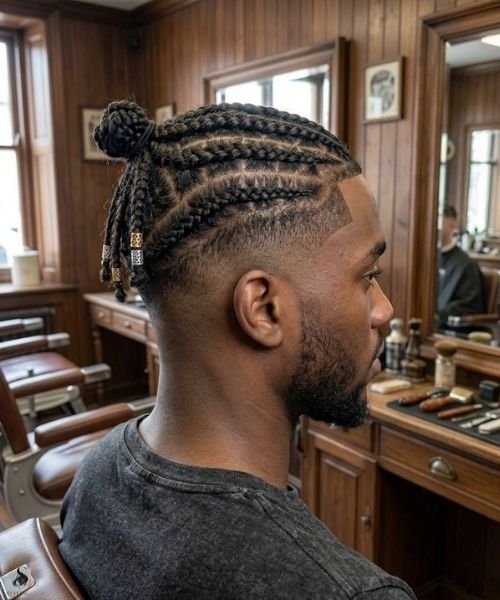
Long top hair is braided into cornrows or plaits while the low fade defines a crisp, clean perimeter. It’s designed specifically for coily or curly hair, since those textures hold braid patterns well and benefit from the protective styling. Oval and long face shapes pair nicely with this look, since the braid direction can be adjusted to add width or length. This style also protects hair from daily manipulation and heat styling, supporting length retention over time.
22. Low Taper Fade with Twist Out Top
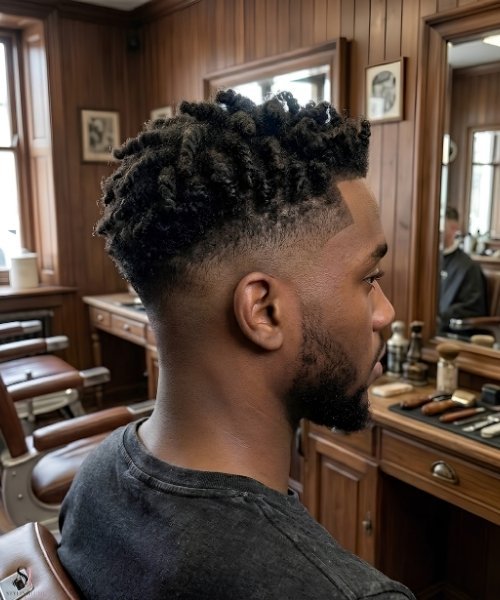
Two-strand twists are installed on damp hair and later unraveled to reveal defined, springy curls above the fade. It’s built for coily hair specifically, which holds the twist pattern and springs back into defined curls once unraveled. Round and heart face shapes suit this look well, since the curl volume adds fullness without excess height. The twists can be worn for a few days before being taken down, offering two looks from one styling session.
23. Low Taper Fade with Long Afro-Textured Hair
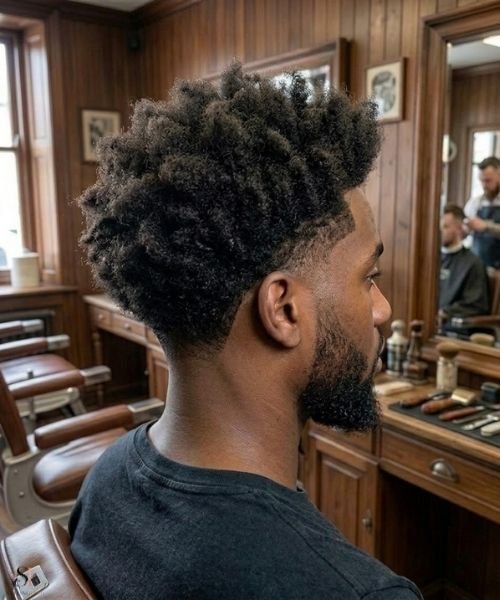
Natural coily hair is left long and full on top without thinning, contrasted by the clean low fade at the sides. It’s designed around coily or afro-textured hair, celebrating natural texture with minimal alteration. Oval and square face shapes benefit most, since the fullness on top balances stronger jawlines evenly. This style requires the fade itself to be kept sharp, since the contrast between the tight sides and full top is what gives the look its structure.
24. Low Taper Fade with Two-Block Cut
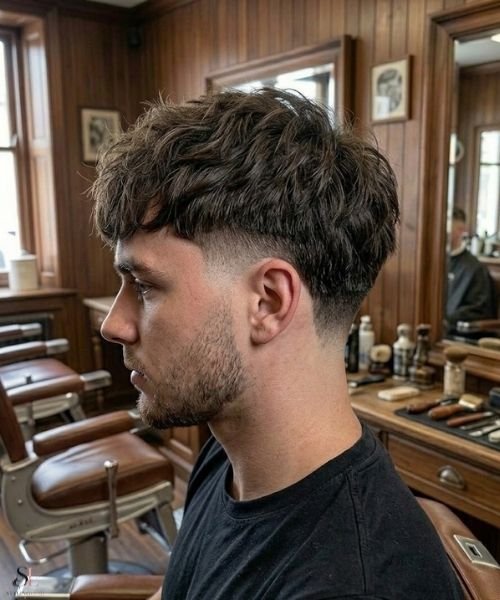
A sharp length disconnect separates the short sides from a voluminous top, a style popularized by Korean fashion and now widely adopted internationally. It suits thick, straight hair best, which can hold structured volume without collapsing throughout the day. Oval and square face shapes pair well with the clean, geometric lines of this cut. The disconnected sides mean this style holds its shape especially well as it grows out.
25. Low Taper Fade with Fluffy Long Top
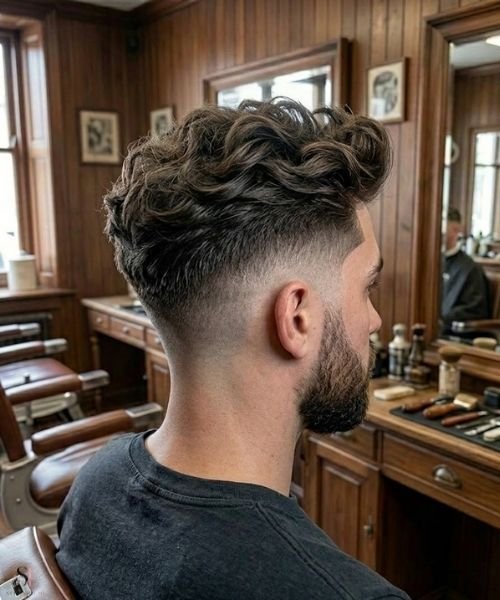
Soft, rounded volume is built through light layering and blow-drying with a round brush for a full, airy top. It pairs well with wavy or straight hair of medium density, since very fine hair may need extra volumizing product to match the fullness. Oval and long face shapes benefit most, since the rounded volume softens overall proportions. This look tends to flatter most features, making it an easygoing, versatile choice.
26. Low Taper Fade with Textured Long Top
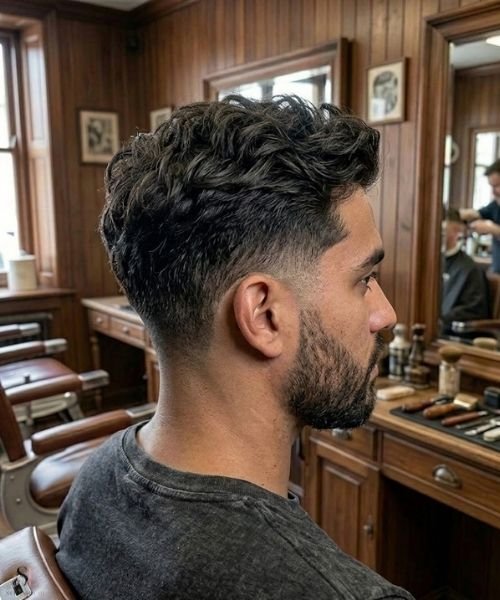
Point-cutting and texturizing shears add movement and separation throughout the top length, breaking up any heaviness in thicker hair. It works with any hair type and medium density, and it’s flexible enough to suit any face shape, since the texturizing can be adjusted to add or reduce volume as needed. Most men can style it in under a minute using a matte clay or paste worked through slightly damp hair.
27. Low Taper Fade with Ponytail
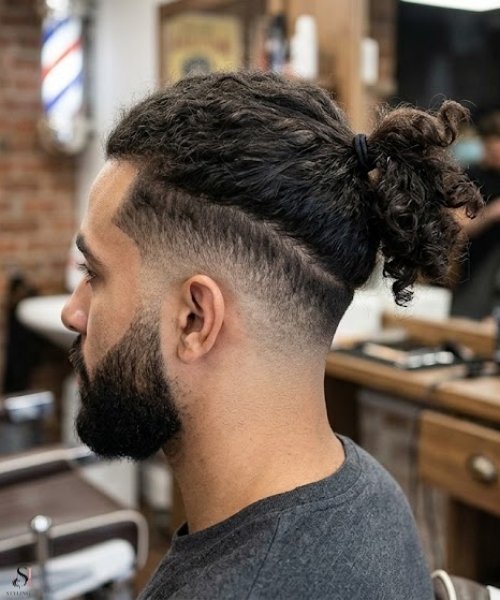
Sufficient length is kept on top usually a minimum of six inches to gather into a low or high ponytail, while the fade stays discreet underneath. It’s best suited to straight or wavy hair, which gathers smoothly without excessive flyaways. Oval and long face shapes benefit most, since the pulled-back style keeps the focus on balanced features rather than added width. It’s ideal for anyone actively growing their hair out or needing hair secured for sports and workouts.
28. Low Taper Fade with Beach Waves
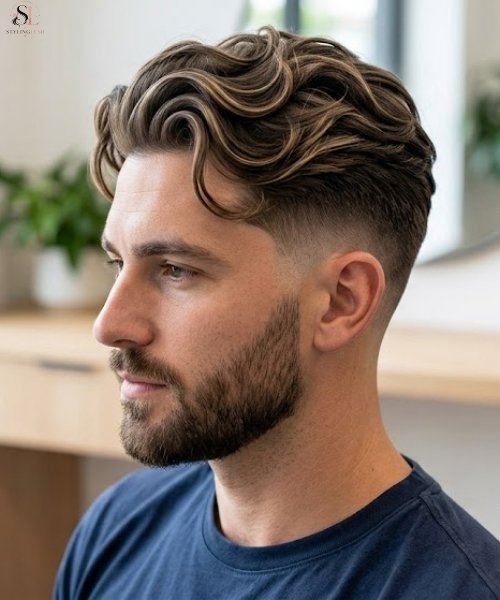
Loose, salt-spray waves run through the long top hair for a relaxed, sun-worn look. It’s designed around wavy hair specifically, which responds best to texturizing salt sprays. Oval and diamond face shapes suit this style well, since the loose waves soften angular cheekbones. This style is intentionally low-maintenance, since the slightly undone, wind-blown finish is part of the appeal rather than something to correct.
29. Low Taper Fade with Long Side Swept Hair
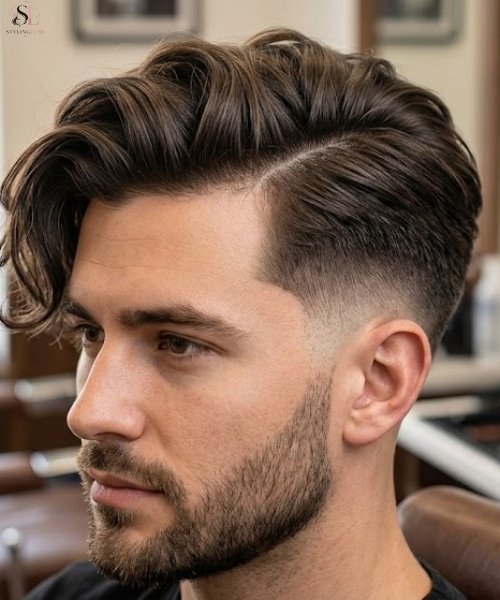
Length is directed in a soft diagonal sweep to one side, adding asymmetry above the low fade. It works well with straight to wavy hair, which holds the swept direction throughout the day. Square and round face shapes benefit most, since the diagonal line helps break up strong or rounded features. A light styling cream applied while blow-drying in the desired direction helps the sweep hold.
30. Low Taper Fade with Long Shag Cut
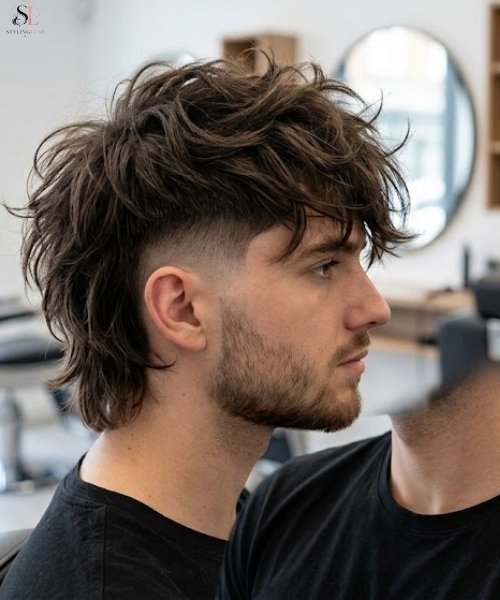
Heavy, rock-inspired layering throughout the top creates a textured, dimensional silhouette with plenty of movement. It’s a bold option for wavy or curly hair types wanting maximum texture. Oval and heart face shapes suit it especially well, since the heavy layering adds fullness without extra height. The heavy layering also means this cut tends to look intentional even as it grows out, extending the time between trims.
31. Low Taper Fade for Coily Long Hair
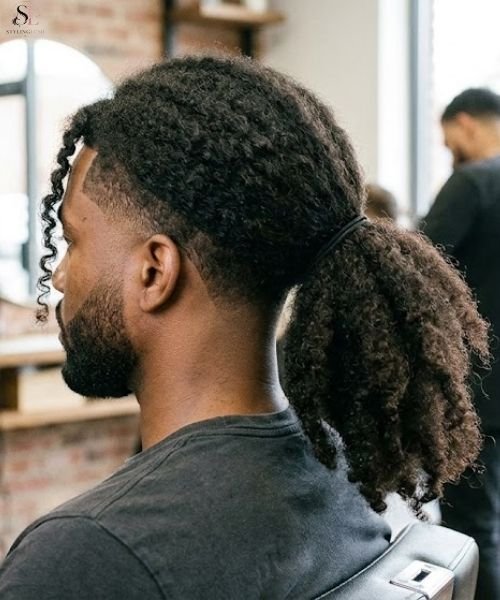
Natural coils are preserved and shaped on top, ideally cut dry to maintain accurate length and pattern, while the fade minimizes bulk at the sides. It’s built specifically for coily hair, and round and long face shapes suit it particularly well, since the natural volume balances face proportions evenly. Daily maintenance usually involves a moisturizing cream or oil to prevent dryness, since coily hair types are more prone to moisture loss than other textures.
32. Low Taper Fade with Flow Hairstyle
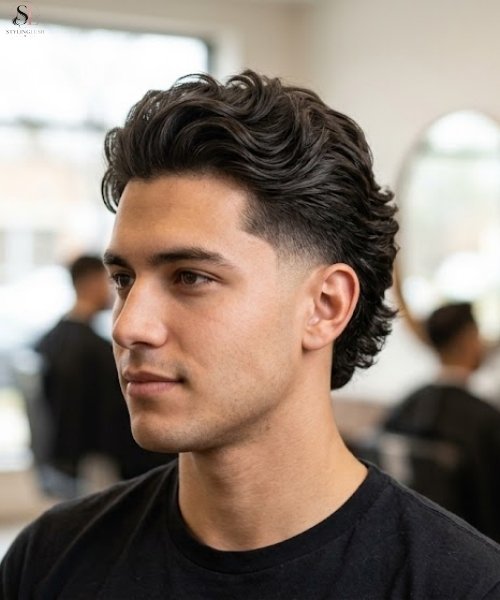
Popularized in soccer culture, hair is grown long and swept straight back with minimal layering for a clean, athletic silhouette. It suits straight or wavy hair best, and oval and square face shapes pair especially well with its clean, structured lines. It typically requires little more than finger-combing or a light styling cream to keep in place, and it’s one of the more forgiving styles as hair grows out between cuts.
33. Low Taper Fade with Long Faux Hawk
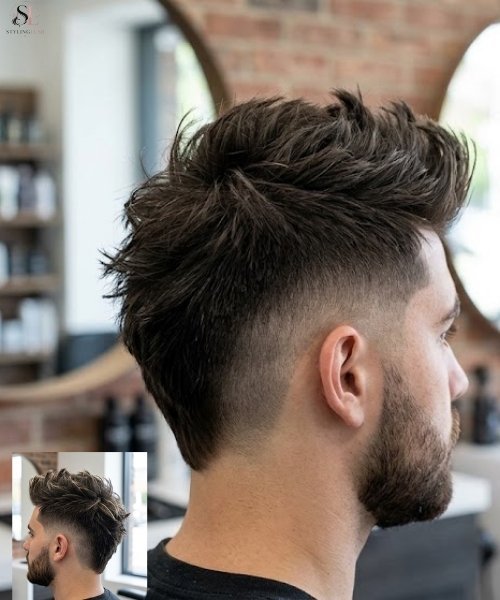
Length is concentrated down the center of the top and styled upward, tapering low at the sides for a bold, symmetrical shape. It’s best suited to thick, straight or wavy hair, since finer hair may struggle to hold the vertical shape without a strong-hold gel. Oval and long face shapes suit this striking look well, since the vertical emphasis elongates face proportions. This style draws the most attention on this list and works best for men comfortable with a bold, statement look.
34. Low Taper Fade with Sleek Long Top
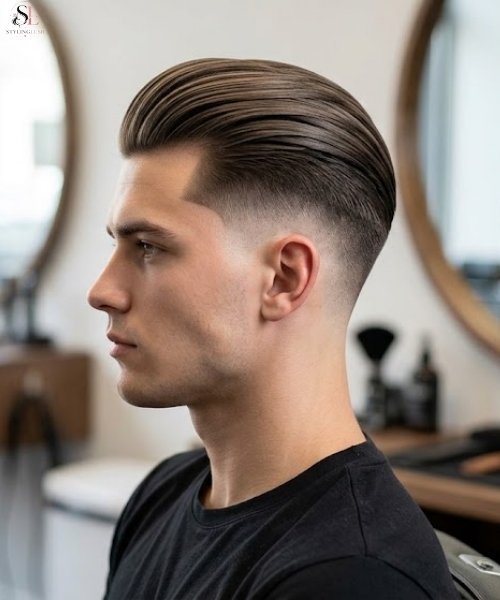
The top is smoothed into a glass-like finish using a flat iron or smoothing cream, with no layering to disrupt the sleekness. It’s best suited to straight hair, which holds the smooth finish without frizzing back up. Oval and square face shapes pair especially well with this polished, sophisticated look. This style typically requires a heat protectant if flat-ironing regularly to avoid damage over time.
35. Low Taper Fade with Long Natural Texture
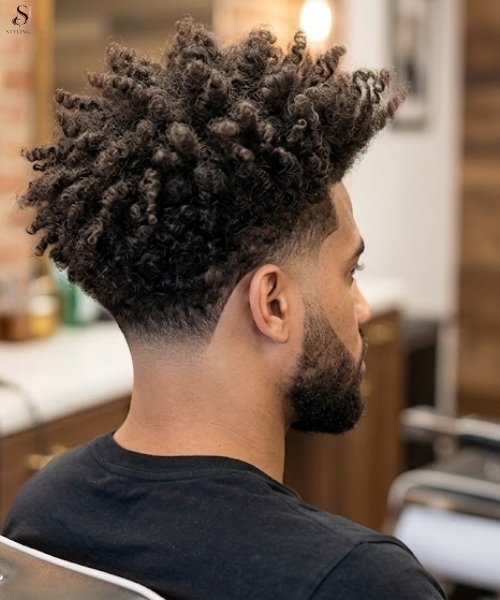
The top is left completely untouched by heat or heavy product, showcasing hair exactly as it naturally grows and moves. It suits any hair type, since there’s no styling technique to master or product routine to maintain, and it flatters any face shape for the same reason. This approach puts the most emphasis on the fade itself, since the contrast between the tapered sides and completely natural top is what carries the entire look.
Which Low Taper Fade Long Hair Style Suits Your Face Shape?
| Face Shape | Recommended Styles | Avoid | Why |
|---|---|---|---|
| Oval | Curtain hair, quiff, pompadour | Heavy fringe | Oval balances most styles well |
| Square | Side part, comb over, textured top | Blunt straight edges | Softens strong jawline |
| Round | Pompadour, faux hawk, blowout | Center part, flat tops | Adds vertical height |
| Heart | Twist out, curtain mullet | Heavy volume at crown | Balances wider forehead |
| Diamond | Waves, curtain hair | Slicked back styles | Softens cheekbone width |
| Long/Oblong | Side swept, fringe, two-block | Extra top height | Reduces face length visually |
What Hairstyle Works Best for Oval Face Shape?
Oval faces are the most versatile and can wear nearly any low taper fade style, though curtain hair, quiffs, and pompadours tend to highlight balanced proportions especially well.
What Hairstyle Works Best for a Square Face Shape?
Square faces benefit from styles with soft texture or a side part, like the comb over or textured long top, which soften a strong jawline rather than emphasizing it.
What Hairstyle Works Best for a Round Face Shape?
Round faces look best with height-building styles such as the pompadour, faux hawk, or blowout, which elongate the face visually.
What Hairstyle Works Best for a Heart Face Shape?
Heart faces do well with styles that add volume lower on the head, like a twist-out or curtain mullet, balancing a wider forehead against a narrower chin.
What Hairstyle Works Best for Diamond Face Shape?
Diamond faces suit soft, wave-forward styles like beach waves or curtain hair, which soften prominent cheekbones.
What Hairstyle Works Best for a Long or Oblong Face Shape?
Long faces benefit from horizontal emphasis, so side-swept styles, fringes, and the two-block cut work better than anything that adds height.
How Does the Low Taper Fade Work for Different Hair Types?
Low Taper Fade Long Hair for Straight Hair
Straight hair holds a clean, defined edge exceptionally well, making it ideal for sleek, slicked-back, or blunt-cut top styles that show off the fade’s precision.
Low Taper Fade Long Hair for Curly Hair
Curly hair adds natural volume and texture on top, which pairs well with looser styles like wolf cuts, shags, or messy finishes, since the curls do most of the styling work.
Low Taper Fade Long Hair for Coily or Afro-Textured Hair
Coily hair should be cut dry whenever possible to preserve shrinkage and true curl pattern, and it works especially well with braided, twisted, or fully natural top styles.
Low Taper Fade Long Hair for Fine or Thin Hair
Fine hair benefits from lighter layering and lower-maintenance styling, since heavy texturizing can make thin strands look sparse; a soft side part or quiff creates the illusion of density.
What Should You Tell Your Barber for a Long-Hair Low-Taper Fade?
What Is the Exact Script to Ask for This Cut?
- State the fade type and placement: Be specific about height so it doesn’t creep up. “I want a low taper fade — keep the blend starting just above my ear, not higher.”
- Specify the top length: Give a measurement, not a vague description. “Leave the top at least four inches long, don’t take more off than that.”
- Clarify the blend style: Confirm you don’t want a hard line unless you do. “Blend the fade into the top gradually, no visible line of demarcation.”
- Mention your hair type’s needs: Curly and coily clients should say this outright. “Please cut it dry so you can see the natural curl pattern.”
- Confirm the finish: Tell them how you’ll style it day to day. “I usually slick it back / let it air dry naturally — cut with that in mind.”
Mistake to avoid: Don’t just say “fade it low” without specifying the guard number and top length vague requests are the #1 reason clients leave unhappy with a fade that’s higher or shorter than expected.
Which Clipper Guard Sizes Are Used for a Low Taper Fade?
| Zone | Guard Size | Result |
|---|---|---|
| Nape/neckline | 0.5–1 | Near-skin blend |
| Lower sides | 2–3 | Short transition zone |
| Mid-blend | 3–4 | Gradual taper up |
| Top | Scissor length | 3–8+ inches, uncut by clippers |
What Reference Photos Should You Bring to the Barber?
Bring at least two photos: one clear front-facing shot showing the top length and style you want, and one side or back shot showing exactly where you want the fade to start. Photos of your own hair from a previous cut you liked are more useful than celebrity photos with different hair density.
When Is the Best Time to Book a Barber Appointment?
Book every 3–4 weeks to maintain the fade line while the top continues growing toward your target length; waiting longer lets the fade grow out unevenly and blur the contrast that defines the style.
How to Pair a Low Taper Fade Long Hair and a Beard
Which Beard Style Complements a Low Taper Fade with Long Hair?
A full beard balances longer top hair by adding proportional weight at the jaw, making it a strong match for round or oval faces. A stubble beard keeps things low-maintenance and works well with sleeker, slicked-back top styles. A circle beard pairs nicely with tighter, textured tops like the two-block cut, drawing attention to the jawline without heaviness. A faded beard mirrors the low taper on the sides for a cohesive, all-over blended look. A goatee suits diamond or heart face shapes by narrowing the chin visually against fuller top volume. A clean-shaven look keeps all the visual attention on the long top hair, ideal for statement or bold styles like the faux hawk or wolf cut.
How to Style Low Taper Fade Long Hair: Step-by-Step
How to Style Long Straight Hair with a Low Taper Fade
Towel-dry hair to about 80%, apply a dime-sized amount of light pomade or cream evenly through the top, then comb or brush into your desired direction back, to the side, or forward and let it set for a few minutes before touching it again.
How to Style Long Wavy Hair with a Low Taper Fade
Apply a sea salt spray or texturizing cream to damp hair, scrunch gently to encourage natural wave formation, and either air dry or diffuse on low heat to avoid flattening the texture.
How to Style Long Curly Hair with a Low Taper Fade
Apply a curl cream or leave-in conditioner to soaking-wet hair, scrunch upward without disturbing the curl pattern, and avoid touching it again until fully dry to prevent frizz.
Best Products for Low Taper Fade Long Hair
| Product Type | Best For | Hold Level | Finish |
|---|---|---|---|
| Matte pomade | Straight/wavy | Medium-high | Natural matte |
| Sea salt spray | Wavy/beach waves | Low | Textured, dry |
| Curl cream | Curly/coily | Low-medium | Defined, soft |
| Pomade (oil-based) | Slick back styles | High | Glossy shine |
| Texturizing powder | Fine/thin hair | Medium | Volumizing matte |
Choosing the right product comes down to your hair type and desired finish — glossy pomades suit slicked-back styles, while matte creams and salt sprays suit anything textured or natural-looking.
How to Maintain a Low Taper Fade with Long Hair
How Often Should You Get a Low Taper Fade with Long Hair?
Most men need a fade touch-up every 3–4 weeks to keep the low taper crisp, even while letting the top continue growing toward a longer target length. [VERIFY] specific dermatology or trichology sourcing on optimal haircut frequency before publishing, as no verified figure is cited here.
At-Home Maintenance Tips Between Barber Visits
Trim any stray flyaways at the neckline with clippers if you’re comfortable, use a boar-bristle brush to redistribute natural oils through longer top hair, and deep-condition weekly if your hair type runs dry, since longer hair is more prone to split ends than short styles.
Common Mistakes to Avoid with a Low Taper Fade Long Hair
- Waiting too long between fade touch-ups: The low taper blurs quickly as hair grows, losing its defined contrast. This makes the cut look unintentional rather than styled. Book every 3–4 weeks to keep the line sharp.
- Not specifying top length clearly: Vague instructions like “keep it long” leave room for the barber to cut more than you wanted. This often results in disappointment you can’t undo quickly. Always give an exact measurement in inches.
- Using heavy product on fine hair: Thick pomades weigh down fine strands, making hair look flat and greasy. This defeats the purpose of styling for volume. Switch to lightweight, matte-finish products instead.
- Skipping regular trims on the top: Long hair left ungroomed develops split ends that make styles look unkempt. This undercuts the crisp contrast the fade is meant to create. Get a light dusting trim every 6–8 weeks even while growing length.
- Ignoring hair type when choosing a style: Trying to force straight-hair styles onto curly or coily hair (or vice versa) creates constant styling battles. This wastes time and product daily. Match the style to your natural texture, as outlined earlier in this guide.
- Neglecting the beard-hair balance: A heavy beard with a very voluminous top can overwhelm smaller face shapes. This throws off overall facial proportion. Choose complementary beard styles as detailed above.
Is the Low-Taper Fade with Long Hair Suitable for Professional Settings?
Yes — a low taper fade with long hair reads as professional in most workplaces because the fade itself signals grooming and structure, even when the top is left long, as long as the top is styled neatly (slicked back, side-parted, or tied) rather than left loose and unkempt.
How to Style Low Taper Fade Long Hair for Different Occasions
For the office, opt for a slicked-back or side-parted finish with a matte product. For casual weekends, let natural texture or waves show through without heavy styling. For formal events, a slick-back bun or ponytail offers a polished, buttoned-up look. For the gym or workouts, a simple tie-back or headband keeps hair out of your face without extra product.
The Low Taper Fade Long Hair in 2026: History, Culture & Modern Influence
The taper fade traces back to barbershop traditions that have long balanced short, clean sides against longer top styling, evolving over decades through hip-hop, skate, and streetwear culture into today’s broad mainstream appeal. In 2026, the long-hair pairing reflects a wider grooming shift toward versatility — men wanting a cut that transitions between gym, office, and social settings without a full restyle. Cultural crossover from K-pop’s two-block cuts, soccer’s “flow” hairstyles, and natural-hair movements within Black grooming communities has broadened the style’s variations well beyond a single look, which is part of why this list spans 35 distinct interpretations. For a deeper look at how fades evolved, see our related piece on [the history of the taper fade].
Low Taper Fade vs. Mid Taper Fade with Long Hair: Which Is Better?
| Factor | Low Taper Fade | Mid Taper Fade |
|---|---|---|
| Fade start point | Above the ear | Mid-way up the side |
| Visual contrast | Subtle | More noticeable |
| Best for | First-timers, professional settings | Bolder, statement looks |
| Maintenance frequency | Every 3–4 weeks | Every 2–3 weeks |
| Face shape flexibility | Works on most shapes | Best on oval/square |
The low taper fade is the better choice for anyone wanting subtlety and lower upkeep, while the mid taper fade suits those who want more visible contrast and don’t mind slightly more frequent barber visits. Both pair equally well with long top hair, so the decision mostly comes down to how much contrast you want at the sides.
Expert Barber Tips for the Perfect Low Taper Fade Long Hair
What Do Professional Barbers Recommend for This Style?
Professional barbers generally recommend cutting the top dry first to assess natural fall and texture before wetting it down for precision work, since cutting curly or wavy hair while soaking wet can result in it looking shorter than intended once it dries and shrinks. They also recommend clients bring photos of their own hair at the target length rather than relying purely on verbal description, and to schedule fade touch-ups slightly before the blend visibly grows out rather than after, since it’s easier to maintain a sharp line than to recreate one that’s already faded away.
Frequently Asked Questions
Does a low taper fade grow out well?
Yes, a low taper fade grows out more gracefully than higher fades because the transition zone is smaller and less noticeable as hair fills in.
Can I get a low taper fade with long hair on curly hair?
Yes, curly hair works especially well with this style since the fade controls bulk at the sides while curls provide natural texture on top.
How long does hair need to be for a man bun with a low taper fade?
You generally need at least 6 inches of top length to comfortably tie hair into a small bun.
Is a low taper fade good for thinning hair?
Yes, a low taper fade can help disguise thinning by drawing the eye toward fuller length on top rather than the scalp.
How much shorter is a low taper fade compared to a skin fade?
A low taper fade never reaches the skin the way a skin fade does; it blends into short length instead, resulting in a softer, less dramatic contrast.
Do I need to visit the barber more often with long hair on top?
Not necessarily for the top length itself, but you’ll still want fade touch-ups every 3–4 weeks to keep the sides from growing out and blurring the taper.
4 thoughts on “Low Taper Fade Long Hair: 35 Best Styles for Every Face Shape & Hair Type”